
Mao Zedong’s arrival in the Soviet Union in December 1949 marked the beginning of one of the strangest state visits in diplomatic history. Officially, the President of the People’s Republic of China had only come to Moscow to celebrate Joseph Stalin’s 70th birthday. In reality, though, he wanted to secure a new Sino-Soviet friendship treaty. Since Stalin at first refused to hear of it, Mao decided to literally sit the matter out. He stayed in the Soviet Union for more than two months until Stalin gave in and signed the treaty.
As old as this anecdote may be, much of it still echoes today. First, because there’s been a recent renaissance around Mao in China, while Stalin is once again being openly celebrated in Russia.
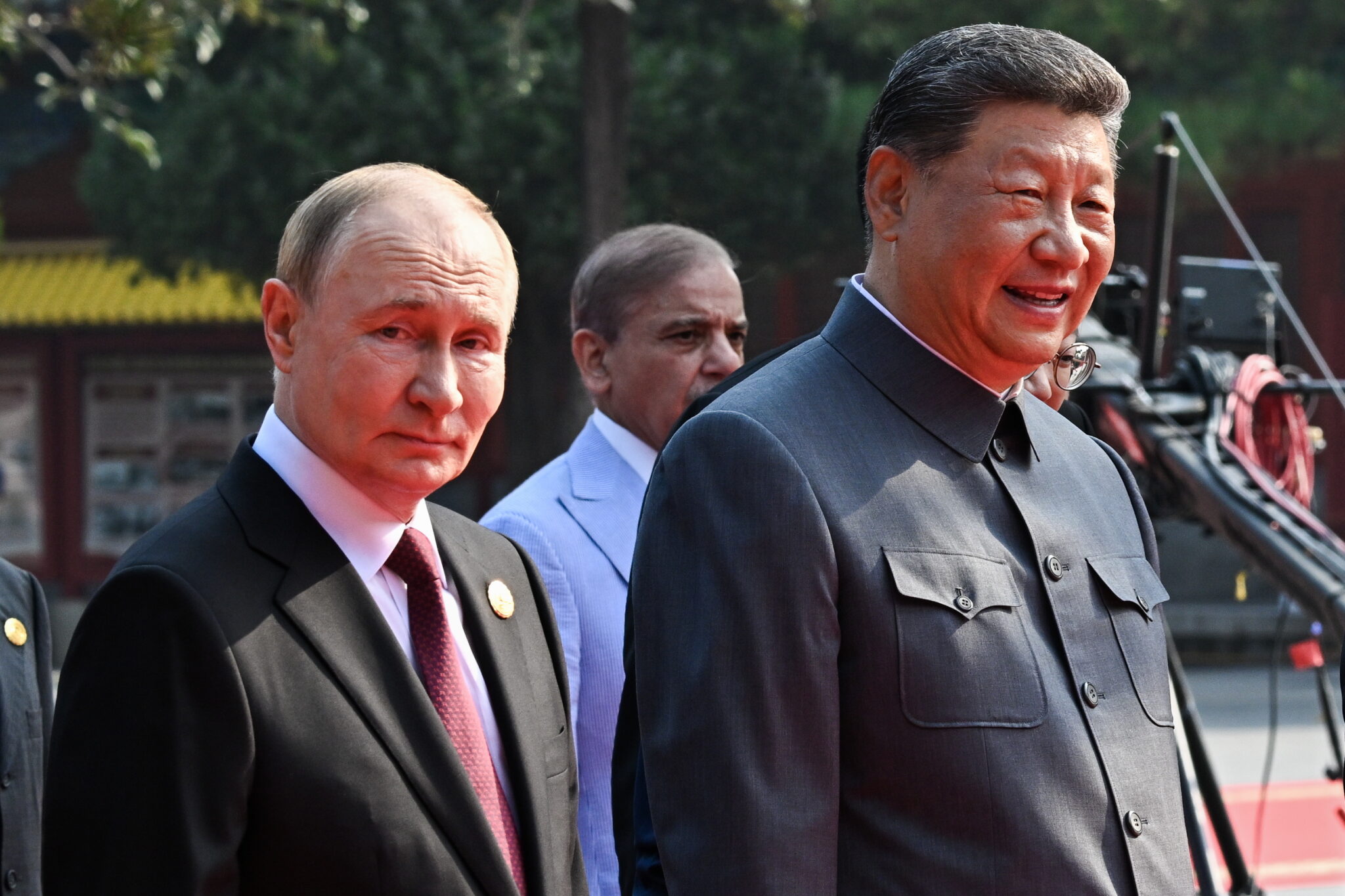
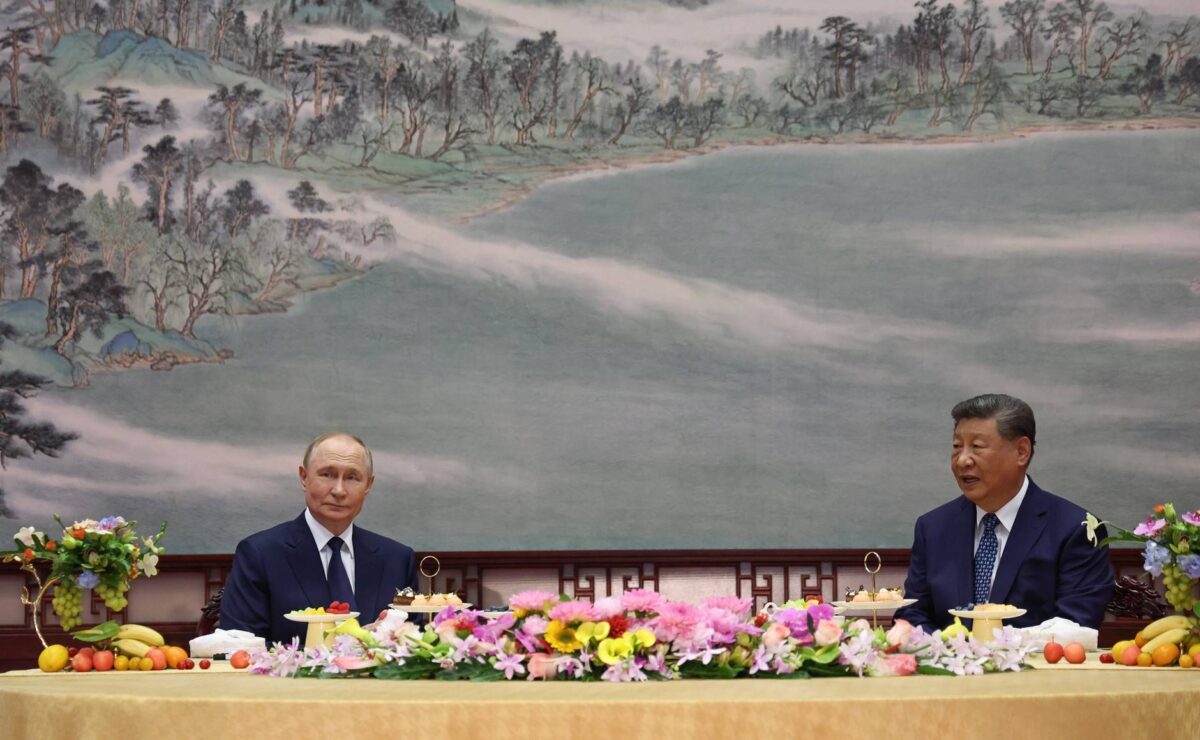
The balance of power, however, seems to have flipped. This time it was Vladimir Putin who, in the past few days, paid an unusually long state visit to China to show his respects to Xi Jinping. From August 31 to September 3, the Russian president was in the country, first attending the Shanghai Cooperation Organization (SCO) summit in Tianjin, then joining the large military parade in Beijing.
And then there is the second thread linking Mao’s Moscow visit to today: dictators’ peculiar but telling obsession with time. We are not talking about office hours and overtime on foreign trips, but rather about lifespan. As Putin and Xi marched at the front of the delegation of state guests, microphones picked up a conversation between the two leaders.
Putin noted that biotechnology is constantly advancing. With progress in organ transplants, the Russian president added, one could grow younger and younger, even “achieve immortality.” Xi replied that there are predictions humans might live to 150 before this century ends.
At a later press conference, Putin confirmed to a journalist that he had indeed discussed longevity with Xi. He added that he had already spoken about it with Silvio Berlusconi during a previous state visit. The former Italian prime minister, famous for his cosmetic surgeries, died in 2023.
The socialist myth of resurrection
On the one hand, it is possible that Putin and Xi timed their talk of immortality quite deliberately. After all, Putin and Xi are both totalitarian in their control of staging public events, and one would hardly expect them to launch into spontaneous, philosophical chats on the red carpet. Their exchange on eternal life could also be read as a thinly veiled message to the West: we’re here to stay, and for a very long time.
true communism would abolish the last great form of private property: human lifespan.
On the other hand, it would hardly be surprising if Putin and Xi genuinely wanted to live forever. Putin, in particular, would not need to look to Silicon Valley in the U.S., where “longevity” has long been a buzzword for radical life extension through technology. Nor would he need to read Oscar Wilde’s The Picture of Dorian Gray or watch Jim Jarmusch’s Only Lovers Left Alive to get such ideas. It was in Russia itself, more precisely in the late Russian Empire and early Soviet Union, that political fantasies of immortality were most widespread.
Over a century ago, an entire circle of thinkers had made the conquest of death their mission. In their 2005 anthology The New Humanity, cultural theorists Boris Groys and Michael Hagemeister outline the strange yet at the time influential visions of eternal life. It began with philosopher Nikolai Fyodorov, who died in 1903, and who claimed to have spotted a gap in socialism. Socialism, he argued, had to expand not only across space but also across time. It was therefore imperative to harness technology to put an end to death.
And not only that: the dead had to be revived so they too could share in socialist justice. The group known as the biocosmists, active in the Soviet Union in the early 1920s, took a similar line. For them, true communism would abolish the last great form of private property: human lifespan.
Lifetime and worldtime
The Soviet fight against death did not remain idle speculation. In the mid-1920s, Alexander Bogdanov, a companion of Lenin, founded an institute for blood transfusions to experiment with rejuvenating the mind. In his 1927 text The Struggle for Vitality, he tells of a 50-year-old revolutionary who received the blood of a 20-year-old. The older man supposedly became more productive, his vision improved, and he even stopped snoring.
The dream of eternal life is built into the DNA of dictatorship.
As we know, it did not work out: people are still dying today, and we do not live to 150. But the biopolitical utopias of eternal and resurrected life played a role in the decision to embalm Lenin after his death, just in case he could one day be brought back.
One might also assume that Putin and Xi, like their predecessors Lenin and Mao, would have no objection to embalming. Yet, as their conversation on the sidelines of the Beijing military parade suggests, they would prefer not to need it at all. It is no coincidence that these biopolitical utopias resonate so well with rulers of their kind. The dream of eternal life is built into the DNA of dictatorship.
The philosopher Hans Blumenberg highlighted this in his 1986 book Lifetime and Worldtime. The first refers to the finite span of the individual, the second to the open and potentially endless span of history. The gaping distance between the two inflicts a narcissistic wound on humankind. We are forced to accept with melancholy that, given the vastness of worldtime, our tiny lifetime on earth barely allows us to live out all the lives that might be possible. The world simply goes on without us.
Society of Vampires
To bridge what Blumenberg calls the “gap” between lifetime and worldtime, ordinary people try to buy time. We all know the tricks and tools of our fast-paced present: from bullet trains to voice messages. The idea is to make errands as quick as possible in order to make our free time as large as possible.
The flip side of the dictatorial will to eternal life is the death of others.
In his book, Blumenberg not only considers these often desperate attempts of ordinary people to gain time, but also the “absolute narcissism” with which dictators face the gap between lifetime and worldtime. He focuses especially on Adolf Hitler, who, in his totalitarian megalomania, sought a “convergence of life and worldtime.” The National Socialist world empire was to be completed within Hitler’s own lifetime, through blitzkrieg and supersonic missiles. And when Nazi defeat became unavoidable, the entire world, like in Richard Wagner’s Götterdämmerung, was supposed to collapse with him.
Now, Putin and Xi are not Hitler. Even so, at least in Putin’s case, one can see how the flip side of the dictatorial will to eternal life, whether biological or political, is the death of others. The biopolitical utopias in 1920s Russia ultimately envisioned what Boris Groys once called a “society of vampires.”
Dictators like Putin cast themselves as political Draculas-in-chief. They are ready to do virtually anything to secure immortality in the history books. Xi has locked up the entire Uyghur population in Xinjiang. Since the start of the full-scale invasion of Ukraine, Putin has been responsible for a million soldiers killed or wounded, and these were just on the Russian side. Even a real vampire could not drink that much blood.
On Tuesday in Beijing, Putin also met with Slovak Prime Minister Robert Fico, who had traveled to attend the parade. Fico, rather sycophantically, asked the Russian president in front of reporters how he was doing. Putin replied: “As long as I’m alive, I’m fine.”