
-Analysis-
PARIS — An African proverb sums the situation up neatly: “When two elephants fight, it’s the grass that suffers.” The two elephants are China and the United States — and the grass is the rest of the world.
What began as the Chinese front of Donald Trump’s trade war has evolved into something much bigger: a struggle between superpowers. That rivalry makes it more volatile — and far more dangerous. In the latest twist, just two weeks before a planned Trump–Xi Jinping summit in Seoul on the sidelines of the Asia-Pacific meetings, Beijing has rolled out heavy artillery to tilt the balance of power.
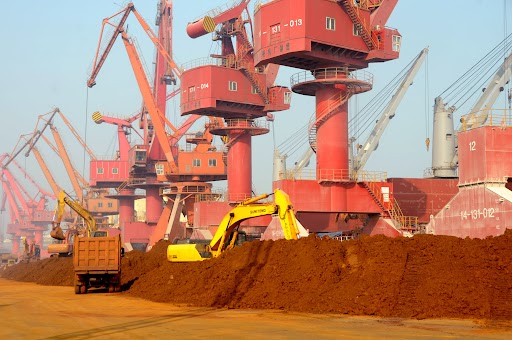
China has declared the extraterritorial reach of its export restrictions on rare earths — strategic minerals which are vital to everything from electronics to weapons systems. This means, for example, that if a French company uses even 0.1% of Chinese rare earths in a product, it now has to get Beijing’s approval before exporting it, even to a third country.
This measure has infuriated Trump.
No longer immune
Interesting, because the real precedent for this move comes from the U.S. itself. China has simply turned the tables, adopting the same tactics the Americans has used against it in the past — most notably in the case of telecom giant Huawei. For decades, Washington has wielded extraterritorial laws as a tool of economic power, assuming its own market dominance made it immune to similar treatment. China is now proving otherwise.
The new rule could spell serious trouble for a range of companies, and not only American ones, given China’s near-total control of rare-earth refining. If strictly enforced, it could leave U.S. industry scrambling for substitutes to critical minerals that are, in practice, irreplaceable.
In recent years, Western governments have vowed to “de-risk” their supply chains — a response to COVID-19, the war in Ukraine, and growing tensions with China. But both the U.S. and Europe remain deeply dependent on Beijing. And Xi is hitting right where it hurts most.
The rest of the world is at risk of becoming collateral damage.
The Chinese leader has learned another lesson from Trump: you don’t turn the other cheek. Instead, he’s fighting fire with fire — a strategy that seems to have caught the U.S president off guard.
Collateral damage
It’s a clever move by Beijing in the run-up to the Seoul summit. Trump, in response, threatened to cancel the meeting and slap 100% tariffs on Chinese goods — only to send the stock market into a tailspin. “Don’t worry about China,” he told rattled American investors, who seem as wary of Beijing as they are of their own unpredictable president.
Meanwhile, the rest of the world finds itself caught in the middle, held hostage by this high-stakes standoff between two economic giants. We are at risk of becoming collateral damage in a trade war we neither started nor wanted — one that is being fought, at least in part, at our expense. Some of the Chinese products shut out of the U.S. market by Trump’s tariffs are now flooding into Europe and Southeast Asia, distorting prices and competition.
Globalization was built on the idea of interdependence. The flip side is that it has created new dependencies that could have disastrous consequences.