-Analysis-
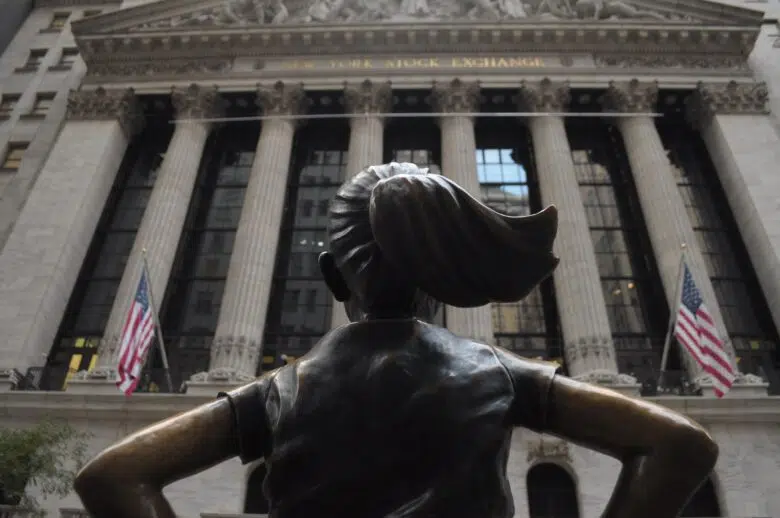
What a difference a Friday afternoon can make. All week long, Wall Street had been in a festive mood: record highs for several U.S. blue chips, tech stocks soaring on the Nasdaq, optimism everywhere. Then, just before the New York Stock Exchange closed, came the news: the trade war with China was flaring up again. In response to new export curbs from Beijing, the U.S. planned to slap a 100% punitive tariff on all imports from China, which, President Donald Trump said, would be “on top of all the other tariffs they’re already paying.”
For the latest news & views from every corner of the world, Worldcrunch Today is the only truly international newsletter. Sign up here.
The reaction was a sharp, brief panic. Stock indices in the U.S. and Asia sank, and billions in value evaporated within hours in the high-risk crypto market. It was as if the president’s agitated post had thrown a match into a dry haystack. Over the weekend Trump tried to tamp it all down, as he often does after his outbursts, writing on Truth Social, “Don’t worry about China!”
Yet the flash of fear on the markets revealed a deeper anxiety running through trading floors from New York to Singapore. What if the next spark, a Trump post, a major corporate failure, a fresh war, triggers something far worse. In 2008 the spark was the collapse of Lehman Brothers, and the blaze that followed brought the worst recession of modern times.
Dimon’s warning
Seasoned voices are now warning of a similar risk. Jamie Dimon, who runs JPMorgan Chase, the largest U.S. bank, recently said investors are “systematically underestimating” today’s dangers. He puts the likelihood of a massive market crash in the near term at 30%. And that would only be the start of the trouble.
In recent years a steadily growing risk has been building almost out of sight in global finance. Insiders call it “private credit,” and it could set off a chain reaction at the next shock, knocking over financial firms, companies, pension funds, and insurers, and threatening prosperity across entire economies. Private credit, Dimon warned at an event in Miami, is among the most dangerous problems facing the world economy. At 69, after a career spent riding out crises, he knows the terrain.
Crises often share a pattern. They are preceded by great confidence.
Crises often share a pattern. They are preceded by great confidence while hidden risks quietly pile up. In 2008, when Lehman’s failure unleashed a global meltdown, the hazard was the trade in shaky mortgage loans that turned out to be all but worthless overnight. In the Asian crisis of 1997 to 1998, banks and companies in emerging markets borrowed in dollars until the greenback rose and the concealed currency risk surfaced. The European debt crisis of 2010 to 2012 exposed how deeply some countries had sunk into debt behind the gleaming facade of a single currency and seemingly equal credit quality.
The theme repeats. Dangers lurk in the shadows, growing inside structures that neither watchdogs nor investors fully grasp. Then comes the break.

Private credit refers to lending outside the banking system. That in itself is not new. Private investors and funds have long provided loans directly to companies without a bank in the middle or a traded bond.
What has changed is the scale. The Bank for International Settlements (BIS) in Geneva estimates that private credit totaled about $100 billion in 2010. It now stands near $2.2 trillion. Even the BIS cannot be certain, despite its network of central banks, because these loans do not have to be reported.
Investment firms take over the role of banks
The specialists who dominate this business owe their rapid rise to the post-2008 rulebook. To keep another Lehman from happening, regulators made bank lending tougher and costlier. Governments in the U.S. and EU vowed that bad loans on bank balance sheets would not again tip the economy into crisis. Banks had to post hefty cushions against each loan.
As banks pulled back, others moved in. Firms like Blackstone, Apollo, and Ares launched debt funds. Unlike banks, they face few transparency requirements, yet they now finance entire buyouts, corporate investments, and infrastructure projects. Much that used to be standard bank work now sits with them.
Will private credit be the tinder that feeds the next market blaze. That worry is gaining ground. Allianz chief executive Oliver Bäte recently told CNBC that the unchecked growth of private credit reminds him of the build-up to the systemic failures of 2008. “One day something will happen, and then the question will be, will the system hold.”
Earlier this week, Bank of England governor Andrew Bailey wrote to G20 finance ministers, gathered in Washington, warning that the global system is “vulnerable to shocks” and naming private credit as a key risk. Bailey also chairs the Financial Stability Board, the international forum that brings together finance ministries, central banks, and supervisors.
Millennium, one of the world’s largest hedge funds, is now staring at billions in losses.
Why are the warnings getting louder now? A first test case has arrived, the collapse of a company heavily reliant on private credit that has given shape to some of the worst fears.
The case involves First Brands, an auto parts maker based in Ohio. Until recently it was unknown outside the industry. Then, at the end of September, it filed for bankruptcy and the names of its big-ticket creditors surfaced. Millennium, one of the world’s largest hedge funds, is now staring at billions in losses tied to First Brands. The link between a manufacturer of wiper blades and fuel filters and the Masters of the Universe on Wall Street. Private credit.
The most common way these loans are made works like this. A finance company raises money from investors and lends it on to companies like First Brands. To juice returns, however, the lender does something else: it borrows additional funds for itself and relends that money too, often with creative features that no traditional bank would offer. One example is a loan in which the borrower pays no periodic interest. Instead, the accrued interest is added to the principal. The term is payment in kind, or PIK. That is extremely risky because for a long time creditors may have no clear view of whether the borrower can pay. According to credit analysis firm Lincoln International, PIK now features in roughly 12% of private credit deals.

First Brands was founded in 2013 by Patrick James, a young entrepreneur who began buying companies after university, among them Westfalia Automotive, the German trailer hitch maker from North Rhine Westphalia. He sourced his financing from various private credit firms, which seemed happy to extend fresh loans again and again. In the end, outstanding debt reached at least $11 billion against annual revenue of $4 billion, an alarmingly high leverage ratio. Goldman Sachs estimates that First Brands paid interest of up to 30% on some lines of credit.
A dangerous chain reaction
Eleven billion dollars is small next to Wall Street’s scale, yet the Ohio saga still rattles nerves. How did multiple lenders advance such sums to the same borrower? Did they fail to scrutinize the risk? There is also debate over whether the company pledged the same collateral to more than one creditor. “If you see one cockroach, there are probably more,” JPMorgan’s Dimon said at an analyst conference on Tuesday. Everyone should consider themselves warned.
What happens if private credit lenders turn cautious, reprice risk, call loans, and shut off new credit? That is how the most dangerous chain reactions start. Suddenly companies cannot roll financing, they fail, and their defaults trigger further losses.
It has also become clear that many banks, hemmed in by the post-crisis rulebook, helped lay the kindling for private credit’s surge. A wrinkle in the capital regime made it attractive. When a bank lends to a company, it must set aside large reserves against potential loss. When it lends to another financial firm, it has to set aside much less, around one-fifth as much. In practice, that means it can lend five times more if the counterparty is a private credit fund.
So the First Brands bankruptcy did not hit only private credit firms. UBS, Switzerland’s largest bank, and Jefferies, the New York investment bank, were also exposed. They had not lent directly to the auto parts maker but had channeled funds through private credit vehicles.
Pension funds, insurers, sovereign wealth funds, private investment funds, and ETFs have piled in too.
Claudia Buch, who heads banking supervision at the European Central Bank, complained in June about the lack of transparency in this corner of finance, “since banks’ exposures to private markets can pose risks to solvency and liquidity that are not adequately captured by risk management systems.” Her concern likely reflects the fact that large home market banks such as UBS are active in these transactions.
Pension funds, insurers, sovereign wealth funds, private investment funds, and ETFs have piled in too. After the 2008 crisis, private equity groups even looked like saviors for some life insurers. With central banks cutting rates, how were insurers supposed to deliver the returns promised in contracts? Private credit funds could generate roughly nine percent a year. By now, according to Moody’s, about one third of the $6 trillion managed by U.S. life insurers is tied up in private credit, much of it parked in offshore centers such as Bermuda.
With so much money sloshing around, scores of private credit firms have levered up. Over the past 15 years, the ratio of borrowed funds to equity has jumped from a risky 30% to a precarious 90%, the Bank for International Settlements estimates. At the same time, more and more clients of these lenders are buckling under debt loads. By the end of 2024, more than 40% of companies using private credit had negative cash flow, meaning their outlays exceeded their income, according to the International Monetary Fund. The tinder is in place.