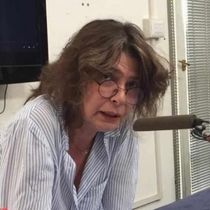
What will we do if that happens? The question posed by Zakhar Prilepin — a well-known writer, spokesman for Vladimir Putin’s election campaigns, and a paramilitary leader from the war in Donbass — is sending shivers down the spines of many Russian hawks.
The “that” in question is the prospect of a summit between the Kremlin leader and Ukrainian President Volodymyr Zelensky. Even without any final agreement, such a face-to-face encounter would signal a turning point. All of it, of course, is still quite nebulous, as Russian Foreign Minister Sergey Lavrov notes.
For the latest news & views from every corner of the world, Worldcrunch Today is the only truly international newsletter. Sign up here.
President Putin, unlike Donald Trump, is an old-school diplomat — and therefore for him, summits are the culmination of talks, not where they begin. Currently, the Russian leader has nothing to say to his enemy in Kyiv. But, above all, before looking him in the face across the negotiation table, he must dismantle the fortress of propaganda he himself has helped build. How, for example, can one negotiate with a “cocaine-addicted Nazi,” an “expired puppet,” as Prilepin calls him?
It’s true that Putin can at any time contradict his Foreign Minister, this “Mr. No,” who for years has been more engaged in propaganda than diplomacy. When the Russian dictator needs someone to agree with him, he calls upon much more pragmatic figures, such as the head of the Russian sovereign wealth fund, Kirill Dmitriev — a Harvard graduate who took Steve Witkoff on a tour of Moscow restaurants — or the oligarch Roman Abramovich, who negotiated hostage swaps in Turkey.
Panic setting in
Putin’s phone call to Recep Tayyip Erdogan this week could signal a search for compromise. But the most unmistakable sign comes from the propaganda itself: Talk show hosts who called for missiles on Florida now post sappy clips of a little girl dressed in the Russian tricolor, twirling in a romantic dance with a boy in the stars and stripes.
And since nothing is broadcast on TV in Russia without authorization from above, the hawk camp is panicking: “Putin learned to betray first in the streets of Leningrad,” declared one pro-war blogger. Another denounced “the return to Gorby’s détente.”
No more threat of nuclear war, businessmen no longer falling out of windows…
The clash between hawks and doves of the Kremlin inner circle, of course, can’t happen in public: Officially, in Russia, one cannot say anything opposed to the war. Over just the past few days, courts handed down sentences of two, five, and eight years in prison for criticism of the “special military operation” on social media. Polls can’t measure the number of those against the war, only those “in favor of negotiations,” which have now accounted for more than half of Russians for two years and are continuing to grow.
And in Putin’s nomenclature, the “pacifist” hides behind pragmatism. It’s similar to the government technocrats who stoically reel off devastating data on various sectors of Russian industry. The budget deficit has quintupled compared to the start of the year’s estimates, military spending has quadrupled since 2022. And according to a government source interviewed by Reuters, the military allocation has reached 8% of GDP, while in the 2026 budget, Russia will continue to allocate 40% of spending to the military and police.
Despite this, the economic slowdown is increasingly visible. Economic Development Minister Maxim Reshetnikov declared that the numbers “are in the rearview mirror,” without taking into account a further impact from the war. Indeed, Ukrainian drone strikes against Russian refineries also contribute rising prices of gasoline, with a new record this week, up 47% since the beginning of the year. Meanwhile, rationing has been introduced in Crimea and Siberia.

File photo of a previous meeting between Presidents Zelensky and Putin in France, hosted by Emmanuel Macron back in 2019. — Photo: kremlin
Pacifists’ hopes, warmongers’ fears
It’s not hard to identify the government’s economic officials and the oligarchs as those most eager to see an end to hostilities in Ukraine — which could lead to at least a partial easing of economic sanctions. For Putin’s friend among the Russian elite, a truce could mean a return to their seized villas and yachts in Europe, as well as the opportunity to escape the increasingly widespread reprisals of the regime, which has banned officials from leaving the country.
The Russian economy’s return from the military to civilian track could have a devastating impact.
“They too would like a return to normalcy, with TV no longer threatening nuclear war, businessmen no longer falling out of windows, and ministers no longer shooting each other,” writes political scientist Abbas Galyamov, Putin’s former speechwriter.
Before responding to Zelensky and Trump, Putin must assess not only the hopes of the “pacifists” but also the fears of the “warmongers.” And it’s not just ideologues: The war has been a blessing for a new generation of “autarchic” oligarchs, and paradoxically for the poorest segments of the population, paid thousands of euros to enlist.
Economist Elina Rybakova told the Financial Times that the Russian economy’s return from the military to civilian track could have a devastating impact. Wars tend to drive growth — and oil prices won’t be high enough to replace the engine of tanks and fighter planes.