
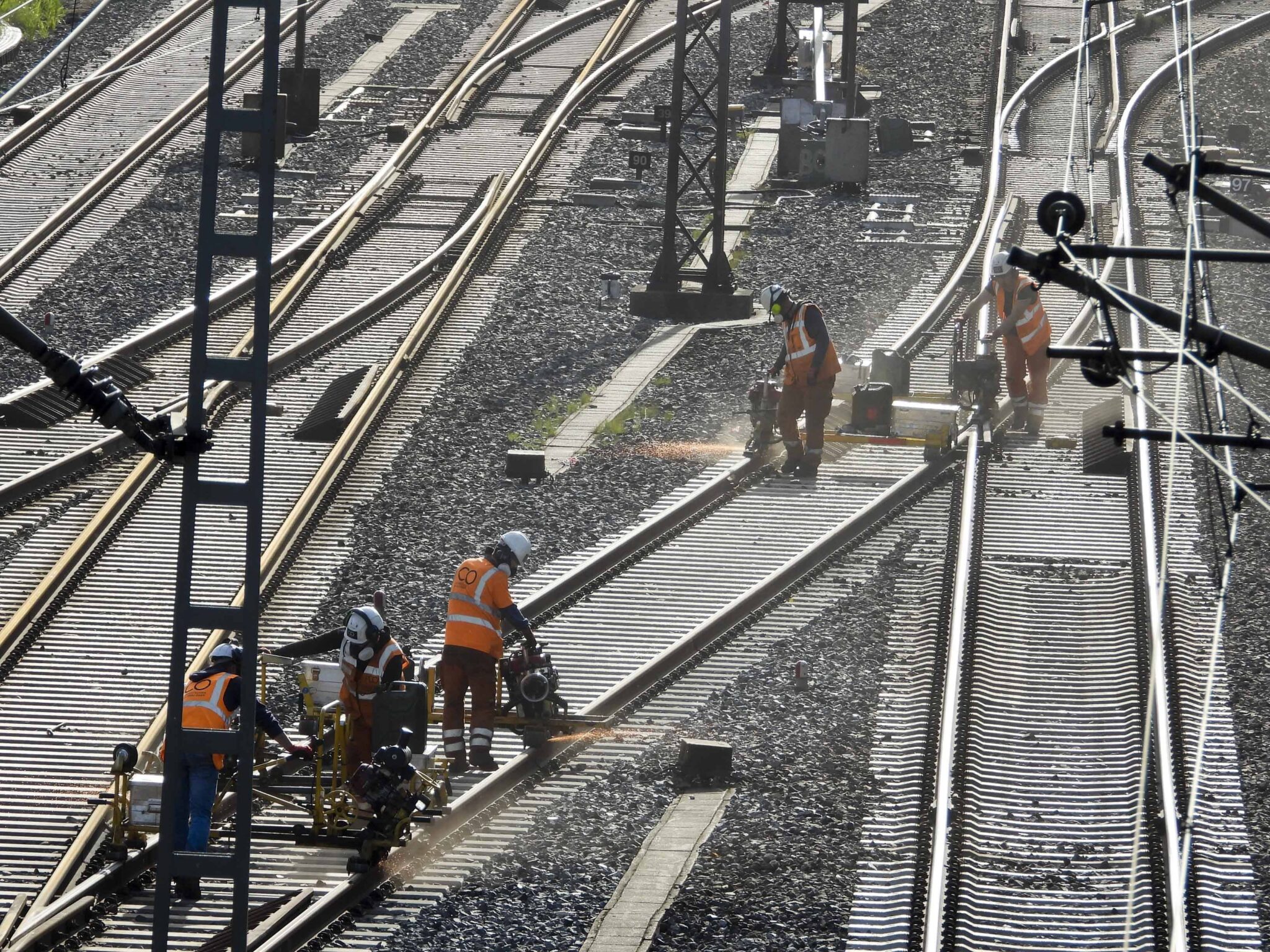
BERLIN — Between Stuttgart and Crailsheim, overcrowded trains, delays and construction sites shape the daily commute. In the future, a regional train connecting Stuttgart and Nuremberg is expected to run on the partially single track Murr Railway line.
Given the state of the route today, this could put further strain on local transport, lawmakers in the German Bundestag and the Baden Württemberg State Parliament warn from across party lines. For years, the demand has been the same: the Murr Railway must finally be upgraded to a fully double track line.
But hope is now coming from unexpected quarters: the halls of Brussels and from a European Union military package. The expansion of the roughly 100 kilometer route could be included in the EU’s so-called Military Mobility Program. At least that is what Ralf Nentwich, a Green Party member of the state parliament in Baden Württemberg, is counting on. As an east-west corridor, Nentwich argues: the line also matters for military logistics.
Revived railway lines, renovated tracks, and repaired roads because of Russia’s attack on Ukraine? It is not an implausible idea. In the coming years, significant funding is set to flow into infrastructure projects with military relevance at both the German and EU levels. That could give many stalled construction plans a decisive boost.
Bureaucracy paralyzes transport
Germany’s central position in Europe explains a lot. “If a crisis emerges, military forces must be moved not only from Germany, but through Germany,” says Jannik Hartmann, Associate Fellow at the NATO Defense College in Rome, a military academy run by the alliance.
If tanks, troops, or supplies need to travel from the Atlantic coast to NATO’s eastern frontier, the key transport routes run straight through Germany. With the expanded military presence there, pressure is mounting to repair failing bridges and defective switches on the rail network.
The initial focus will be on removing barriers, particularly bureaucratic ones.
The European Commission therefore plans to present a package on military mobility later this year. The initial focus will be on removing barriers, particularly bureaucratic ones. At present, securing approval for military transport between countries can take weeks. That is far too slow for operational needs.
“NATO has a planning horizon of three to five days,” says Hartmann. “It would be best for all member states to align with that.”
With the next EU funding period beginning in 2028, projects that contribute to national security and European resilience will receive greater financial backing. Funding for the Connecting Europe Facility, known as CEF, which supports military mobility, is expected to increase tenfold to 17 billion euros. CEF is an EU program for the development of trans-European networks, currently under renegotiation as part of the EU budget.
Railway lines: a defense expenditure?
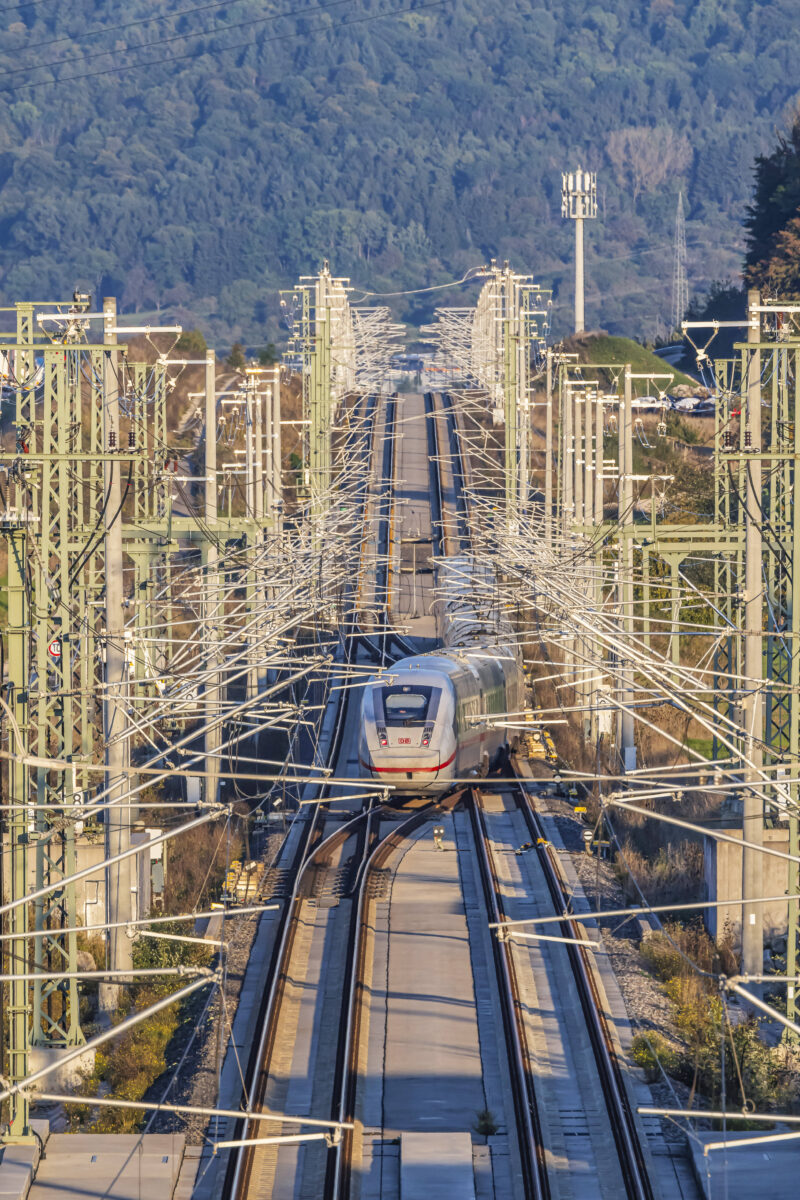
Rail plays a central role in the European plans. “You can load far more vehicles onto a rail trailer than onto a road convoy,” says Hartmann. The largest rail lobby group in Brussels, the Community of European Railway and Infrastructure Companies (CER), sees this as part of its responsibility. CER Director Alberto Mazzola points out: “In Ukraine, we see the role rail plays in a crisis. It is not only that trains continue to move people safely, but that stations serve as shelters.” All parties emphasize that military infrastructure can also serve civilian needs. Everyone stands to benefit from so called dual-use infrastructure.
However, the question of which projects qualify as militarily necessary and should be prioritized leaves room for interpretation. Spending on civilian infrastructure with military relevance can be classified as military expenditure and counted toward NATO’s defense target. NATO has set a target of 1.5% of gross domestic product for investments in militarily relevant infrastructure. In total, NATO members are expected to invest five percent of their GDP in defense spending.
According to a spokesperson for the Ministry of Defense, the German Federal Government is still coordinating which expenditures should count toward the goal. But many countries hope to classify as many infrastructure projects as possible as militarily relevant. The Federal Ministry of Transport notes that the EU recognizes only projects identified as part of both the Trans European Transport Network (TEN T) and the European Military Transport Network.
New opportunity for major projects
The Murr Railway between Stuttgart and the Hohenlohe region is already part of the TEN T network. Nentwich stresses that modernization is also necessary to remove other bottlenecks. The Murr Railway fulfills a dual-use function, says the Green parliamentarian. If the line were included in the EU’s Military Mobility Program, up to half of the costs could be covered. The full upgrade of the Murr Railway could cost as much as 700 million euros.
Compared with other European projects, the Murr Railway may seem modest. Italy, for example, has wanted to build a bridge between the mainland and Sicily for decades. The estimated price tag is more than 13 billion euros. Italy’s Deputy Prime Minister Matteo Salvini wants to label the bridge as militarily relevant infrastructure. This would allow Italy to draw on EU funds and count the cost of construction toward its NATO defense spending, bringing it closer to the five percent target in the process.
Military benefits are being invoked to push through projects that were not built in past decades for good reasons.
Matthew Whitaker, the United States representative to NATO, considers such ideas counterproductive. Some countries have adopted a very expansive understanding of defense spending, Whitaker said at a conference in Bled, Slovenia, in September. It is crucial, he argued, that projects be genuinely relevant to defense.
Criticism comes from another direction as well. Jens Hilgenberg, head of transport policy at the environmental organization BUND, fears that the current sense of threat may be used for political ends. “Of course there are projects that make sense from a military point of view,” says Hilgenberg. “But we are concerned that in some cases military benefits are being invoked to push through projects that were not built in past decades for good reasons.”
Complaints and delays
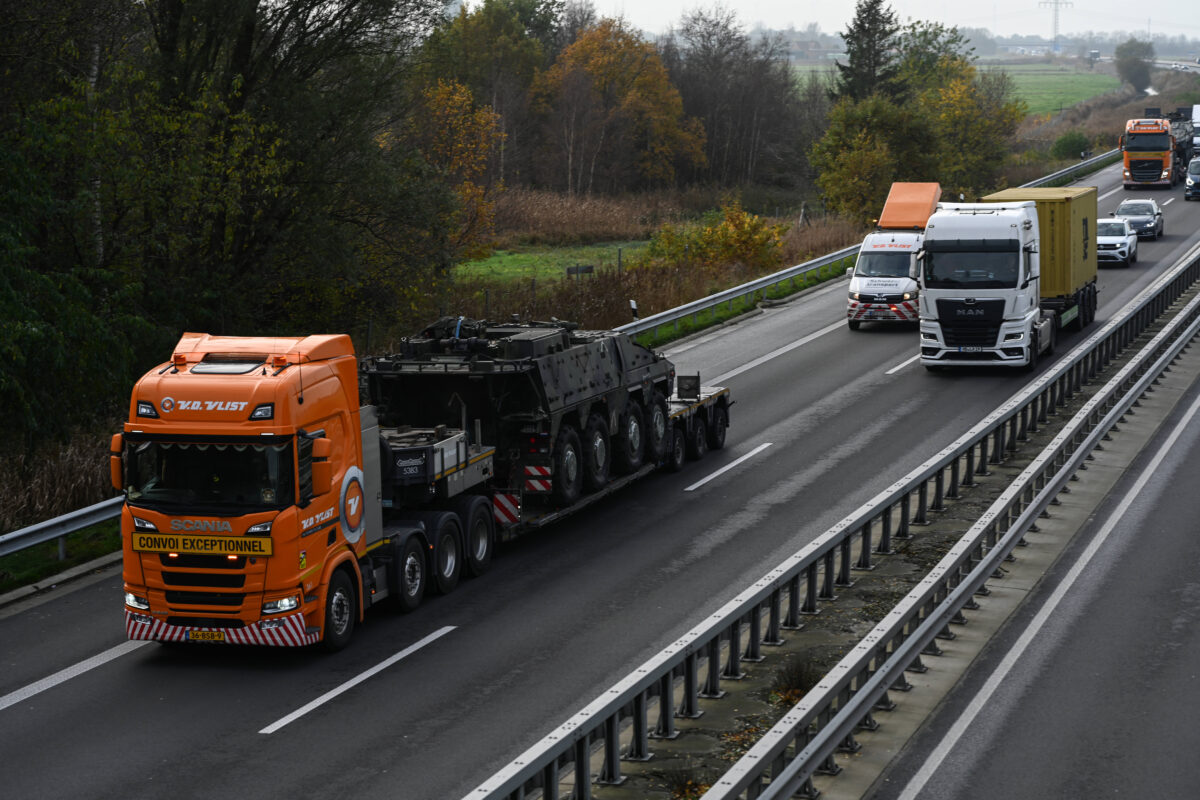
Military transport involves completely different requirements from civilian transport. A Leopard 2 tank weighs 64 tons, roughly twice the maximum weight of a standard 40-foot container. This places far greater demands on the route and generates more noise. Even so, military transports must be carried out quickly and without interruption.
“In an actual emergency, the priority is not to avoid noise.”
They should therefore be allowed to travel regardless of nighttime driving bans or noise protection measures, says Hartmann from the NATO Defense College. “A war is being fought in Europe,” Hartmann states. “In an actual emergency, the priority is not to avoid noise.”
Conflicts with local communities do not seem to trouble rail lobbyist Alberto Mazzola of CER. The existing rules, he points out, should only be relaxed during a crisis. Mazzola expects that everyone will benefit if the rail network is expanded more rapidly. Yet bureaucracy remains a serious obstacle. “Sometimes it takes 15 years to get the permits and another five to build,” he says. “Without change, we will not have completed anything by 2040.”