
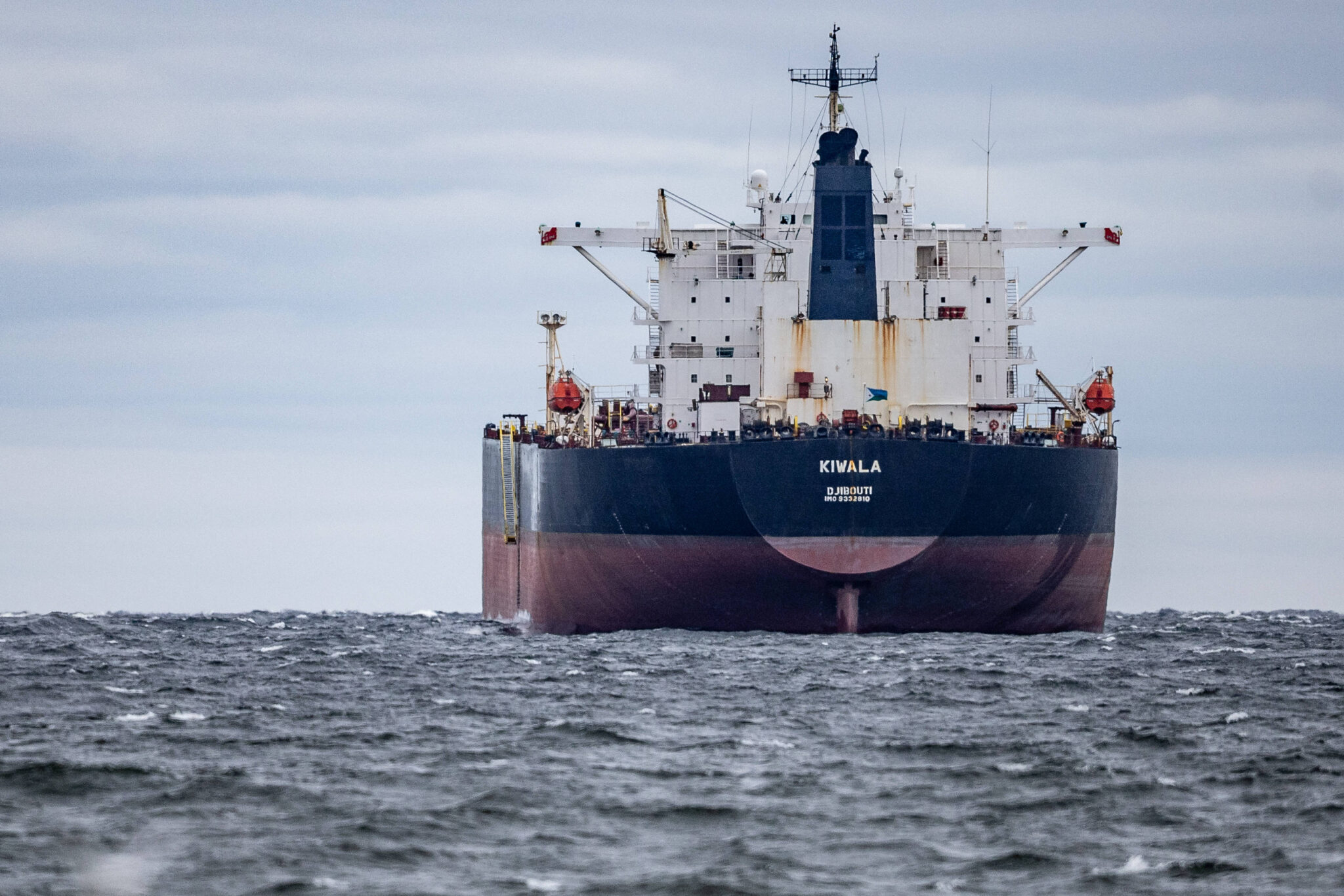
BERLIN — The Turkish coast guard had probably never received a call like this.
“Mayday. This is Virat. Drone attack. Need help…” The seaman repeats the Mayday call again and again in broken English, with a voice that’s tense, almost panicky. The oil tanker Virat, 250 meters long and 44 meters wide, had just passed through the Bosphorus Strait that Friday in late November. It was on course for the Russian Black Sea coast, where it was supposed to load Russian oil for export.
But then an explosion ripped through the ship’s hull.
That same day, only a few kilometers farther west, the crew of the Kairos also sent out a call for help, another tanker bound for Russia. This ship was also badly damaged by an explosion. Both ships are considered by the European Union and Ukraine to be part of the so-called shadow fleet, which Russia uses to keep exporting oil — and are barred from entering EU ports.
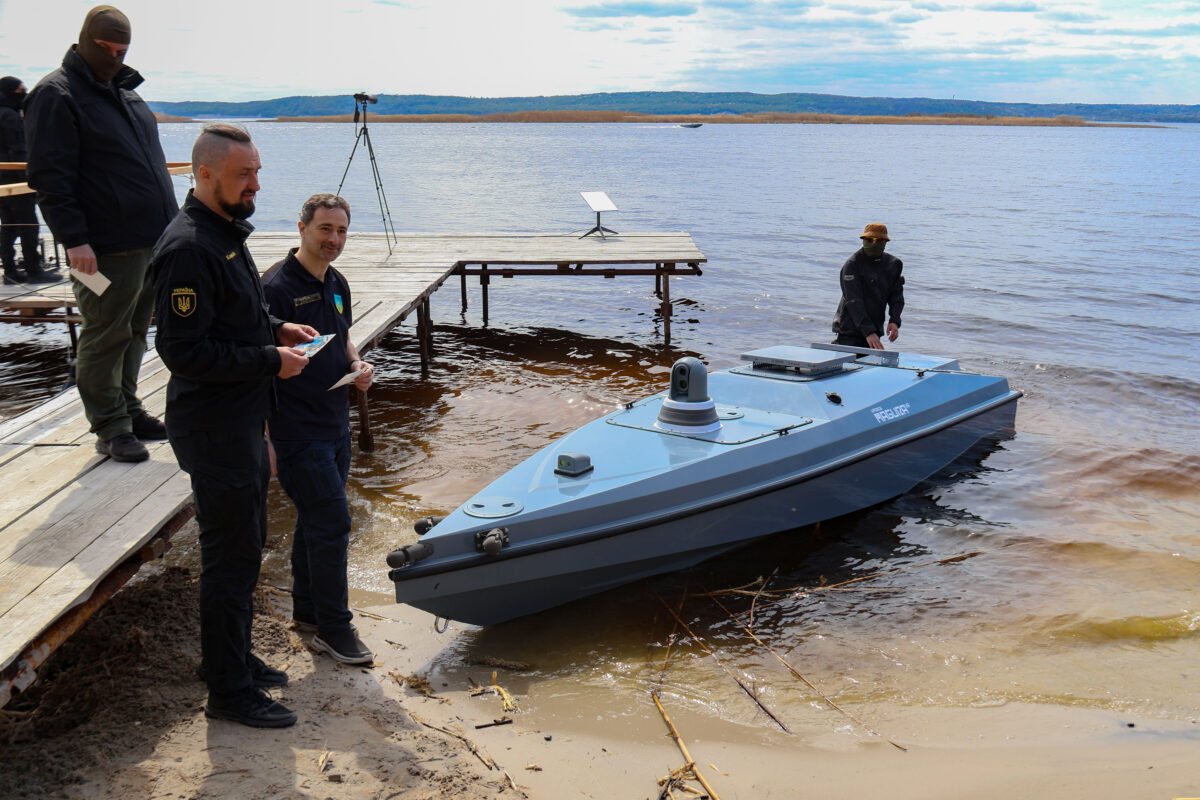
Sea Baby drones
It wasn’t until the following day that the identity of the attackers became clear. Ukrainian media received leaked videos from onboard cameras mounted on sea drones. The footage shows the unmanned craft gliding low over the water and closing in on the tankers. The recording cuts just as the vessels are struck. The outline of the Sea Baby drones, a Ukrainian design, is clearly recognizable in the images. They look like speedboats and have previously been used by the Ukrainian Security Service, the SBU, against Russian warships and oil terminals.
None of the 45 crew members on the two tankers were injured. The damaged ships were brought to the nearest port by the Turkish Coast Guard. Even so, the incidents could have far reaching consequences for shipping in the Black Sea and for Russia’s export business.

The Virat and the Kairos were the first merchant vessels to be directly targeted by the Ukrainian military in open waters. At the same time, the explosions fit into a pattern of more or less visible attacks and acts of sabotage against ships carrying Russian oil, which continues to fund the war against Ukraine.
On Wednesday, Kyiv reported that a similar Ukrainian drone attack disabled another tanker involved in trading Russian oil as it sailed through Ukraine’s exclusive economic zone in the Black Sea to the Russian port of Novorossiysk.
Concerted action
A few days before the first Black Sea attacks, the crew of the tanker Mersin, which also occasionally stops at Russian ports, reported four explosions along the ship’s hull. The incident took place off the coast of Senegal in West Africa. On December 2, a drone of unknown origin hit the Russian ship Midvolga 2 about 80 kilometers from the Turkish coast. It was the fourth such episode in a short time.
Several other unexplained attacks on tankers reach back months. In Italy, for example, authorities have been investigating suspected sabotage against three oil tankers. Small explosive charges detonated on board of each of them. These ships had previously made several stops at Russian ports to take on oil.
It is still unclear who carried out the attacks. Ukraine’s Foreign Ministry has so far denied any involvement in the strike on the Midvolga 2. A spokesperson said last week that the country had nothing to do with it.
Nevertheless, the attacks seem to fit into a broader pattern. “There are some indications of coordinated action by the Ukrainian side,” says Johannes Peters, head of the Maritime Strategy and Security department at the Institute for Security Policy at Kiel University. He says attacks on the Virat, Kairos, and Mersin appear to have been carefully planned. There was no oil in the ships’ tanks at the time, so the risk of an environmental disaster was avoided. Moreover, in all cases the engine rooms were targeted to disable the ships permanently.
“They clearly want to restrict the energy exports that help Russia finance the war”
“The Ukrainians could be trying to strengthen their position in negotiations over ending the war with these attacks,” Peters says. “And they clearly want to restrict the energy exports that help Russia finance the war.”
International ship owners have grown nervous. For shipping companies that still earn money transporting Russian oil, these attacks are alarming, says Sebastian Bruns, a fellow at the Royal Navy Strategic Studies Centre, a think tank of the British Navy. “These companies calculate everything down to the last detail. Losing a ship is the worst case scenario,” Bruns says.
It is likely that some companies will become hesitant about heading to Russia. Besiktas Shipping, which owns the Mersin that was attacked off Senegal, reacted swiftly. On December 3, two days after the attack, the company issued a statement saying it would no longer call at Russian ports.
Costs rise, revenues fall
This comes at a difficult moment for Russia. Freight costs in the Black Sea have risen due to the recent U.S. sanctions imposed on the oil companies Rosneft and Lukoil. Some shipping companies are now demanding higher transport prices, according to the Moscow business daily Kommersant. Anyone moving Russian oil risks ending up as a target of U.S. sanctions. Some companies are pulling out entirely, while others are demanding higher fees. This means Russian oil producers must offer bigger discounts to keep their oil competitive on world markets despite the rising freight charges.
All of this results in less money flowing to Russia. Tax revenues for the Russian Finance Ministry from oil exports were already about 7.6% lower in November than in October.
The latest attacks could push revenues down even further. In addition to higher freight costs and price cuts, insurance premiums may also increase. According to the marine insurer Marsh, the price of war insurance for Black Sea voyages rose from 0.3% to 1.0% of a ship’s value within the past week.
Putin promises revenge
Vladimir Putin responded with visible anger when he addressed the recent attacks during a press briefing a few days ago. He accused Ukraine of piracy and threatened retaliation, warning that Russia would intensify its strikes on Ukrainian ports and the ships located there.
The Russian military has the resources to do it. At the end of August, Russia used its own sea drones against a Ukrainian warship for the first time, while Russian drones and missiles also continue to hit Ukraine’s port facilities. In mid-November, the Turkish gas tanker Orinda burned after Russian drones struck the port of Ismail in southwestern Ukraine.
“The attack was an “unacceptable escalation,” Erdogan said
Turkish President Recep Tayyip Erdogan stayed silent about that attack. But this time, after a recent Ukrainian strike off the Turkish coast, he lodged a protest. The attack was an “escalation” and “unacceptable,” Erdogan said last week, without naming any particular culprit. “All parties involved” should show restraint.
Ukraine’s European partners also expressed concern. Estonian Foreign Minister Margus Tsahkna warned Kyiv against carrying out similar operations in the Baltic Sea, where almost 60% of Russian oil exports pass through. “Ukraine has the right to attack Russian energy facilities on Russian soil,” Tsahkna said in a radio interview. But international waters are “a completely different story,” particularly given the high risk of an environmental disaster.
Under international law, however, experts agree that Ukraine is unlikely to face consequences. While tankers are protected as civilian merchant vessels under international law, as long as they are not sailing under the Russian flag, the shadow fleet often uses the flags of countries whose authorities exercise weaker oversight. The tankers Virat and Kairos, for example, sailed under the Gambian flag. “As the flag state, Gambia would also be responsible for prosecuting Ukraine or holding it accountable,” says Peters of the Institute for Security Policy. The likelihood of that is extremely low. So far, no official in Gambia has made any comment.