
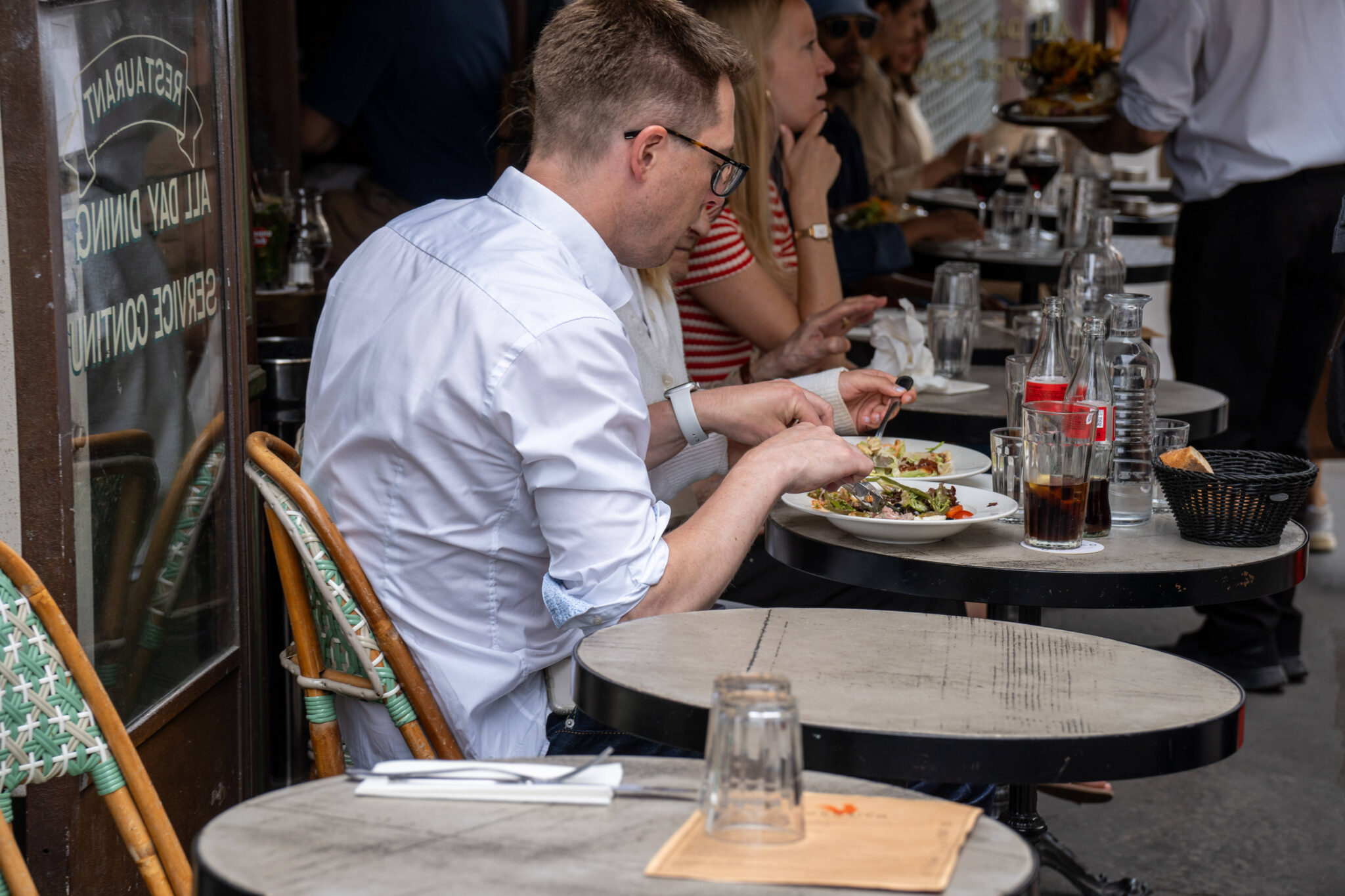
PARIS — One Friday afternoon in September, on a busy street in the capital, a surprising scene is unfolding. Tourists wander by, busy executives cross the streets in suits and a local brasserie boasts its daily special: “Basque chicken, €18.90 ($22.2).” Yet at 1 p.m., only three tables are occupied.
The owner, wearing a black apron and a tired smile, looks around the sparsely populated room. “Before, at this time of the day, we used to turn people away. Today, we’re fighting to fill up the place,” he says. It’s no surprise, as restaurants everywhere in France are getting emptier. The problems causing this declining attendance are well known: inflation, remote working, changing eating habits and the rise of fast food.
This is compounded by growing distrust from the consumers, who denounce a gap between increasingly high prices and a culinary experience that doesn’t always meet their expectations. “We no longer want to pay for something we could make at home,” says Chloé, 47. The Parisian has stopped going to restaurants because of “expensive, not good, sometimes even processed dishes.”
Jean, a more selective regular, goes “only to places [he] knows,” as he explains: “A lot of mid-range restaurants are using processed products. I don’t blame them, but the price has to be aligned with this type of cuisine.”
The uproar was particularly strong this summer, especially on social media. Many restaurant owners, even in tourist areas, saw their terraces empty, while users were raging online. Outraged comments multiplied: “On Thursday, in a bar in Bordeaux, seven drinks cost me 42 euros ($49). Now they can go to hell,” wrote one user.
Others bemoaned a widespread trend: “At what point do you offer a dessert for 8 euros ($9.4), a Coke for 4 ($4.7) and a microwaved meal for 25 ($29.3)? It’s natural selection. Restaurant owners have gone too far, and the consumer has voted: They now pay for average, but cheaper, food elsewhere.”
Restaurant owners are charging well above the fair price.
Beyond the food itself, many believe that restaurant owners are charging well above the fair price. “I really feel like customers are being taken for fools. Just look at the wine alone. A bottle that a restaurateur will pay 10 euros ($11.7) for will end up being between three to six times more expensive on his menu,” says Thibaut*, 34.
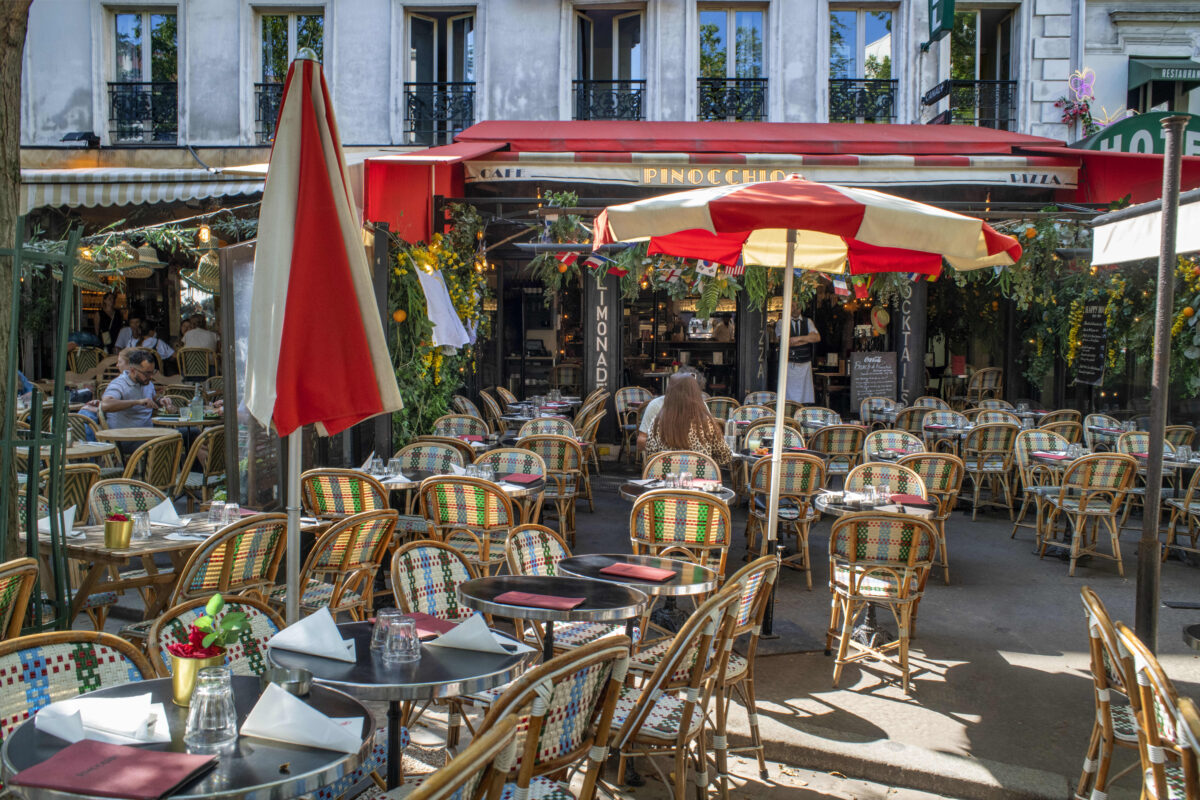
Sophie, 52, a marketing executive living in Amiens, also points out the pitfalls of many restaurants: “We sometimes pay nearly 20 euros ($23.5) for a lukewarm dish served by unfriendly staff. After a while, we don’t want to pay that much to be disappointed. Now, I prefer to order. With delivery, I have access to a very wide range, I choose the level of quality, and at least I know what I’m getting.”
A luxury that’s being rationed
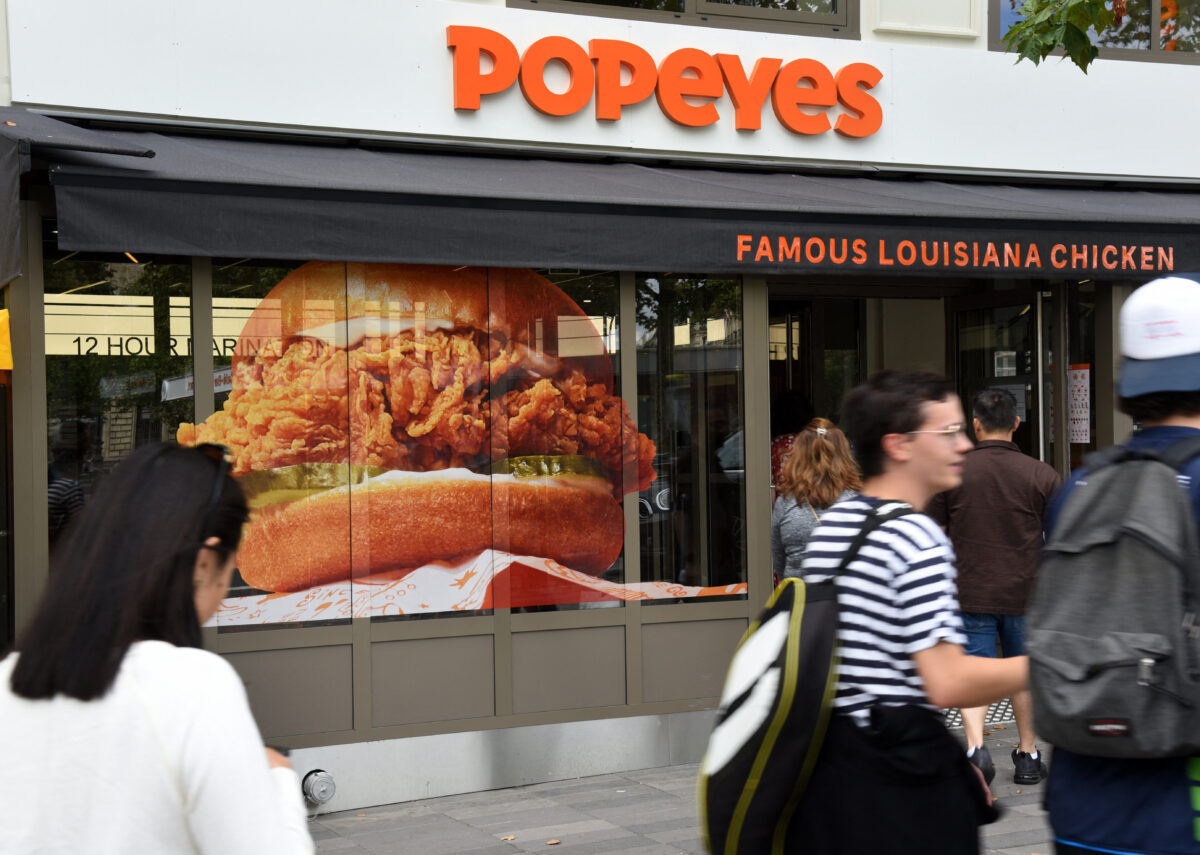
Sophie is not alone in this: Faced with successive disappointments, the French are increasingly favoring other options — often more affordable or more convenient. Fast food restaurants and sandwich shops are popular, partly thanks to their low prices and accessibility. “We’re seeing an Americanization of meals: fast food restaurants, sandwich shops, and chain restaurants,” says Alain Fontaine, president of the French Association of Master Restaurateurs.
Success is also evident for the restaurants that choose to focus on relatively low prices. “I often pass by Bouillons, these restaurants that embrace the codes of traditional cuisine with unbeatable prices. They’re packed, while all the restaurants around them are empty,” adds Chloé.
This is hardly surprising, after years of difficult times for household purchasing power. “Restaurants were the last item the French didn’t want to touch in their budget,” explains Bernard Boutboul, director of Gira Conseil.
Jean-Pierre Poulain, sociologist and professor emeritus at the University of Toulouse, confirms: “Fixed expenditure items such as rent, subscriptions of all kinds, and services are increasing. Food and leisure are the first items to be cut. Fast food restaurants, which are less expensive, are the big winners.” This is enough to cause a profound cultural upheaval, where the French art of “eating well” is gradually losing its relevance…
Food and restaurant expenses are the first to bear the brunt when people want to save money.
Clara Soppo Priso, partner at Simon Kucher, describes a contraction affecting all profiles. “Even those who can afford it are limiting their meals in these establishments. Restaurants are becoming a luxury that is being rationed,” she explains. For this specialist in consumer habits, the problem also lies in the offering: “The quality-quantity-price equation has deteriorated. When there are excesses, customers make a decision accordingly.”
The trend is confirmed by a recent study by Circana, which shows that food and restaurant expenses are the first to bear the brunt when people want to save money. This study also highlights that the French are eating out less but want to spend more wisely. As Bernard Boutboul points out, “it’s not that they can’t afford it, but they believe that restaurants are inflating prices.”
Alternatives gaining ground
Home delivery has also taken a bite out of the pie. “A quarter of French people who became accustomed to meal deliveries during COVID-19 are now continuing to order at home,” Boutboul continues. For many, delivery offers a wider selection and consistent quality that some restaurants no longer provide.
Similarly, meal kits are also experiencing significant growth. With Hello Fresh and Quitoque, consumers are finding “practical options for cooking at home, with an average budget of around €30 ($35) for four meals, often offering much better value than eating out,” explains Tristan, a thirty-something from Bordeaux, who has chosen this option for his weekday meals.
Finally, consumers are also increasingly turning to delicatessens and quality products that are now more accessible. “Food manufacturers have introduced products previously reserved for restaurants into supermarkets. So why pay 18 or 20 euros ($21 or ($23.3) for a dish that you can buy ready-made?,” asks Felipe Licandro, owner of the eponymous Bistro. Passionate about cooking, he admits to avoiding restaurants himself as a customer.
Furthermore, new specialty shops are multiplying, offering customers alternatives that are both “more economical” and “better quality,” according to Isabelle, a student from Lyon.
This is the choice Marc made: “I stopped going to brasseries where I paid a lot for mediocre quality. Instead, I go to a small Italian grocery store that opened in my neighborhood,” says the 48-year-old from Toulon. “For 15-20 euros ($17.5-$23.3), I get fresh, tasty products, and at least I know where they come from.”
A moderate appetite
Due to inflation, restaurant customers are now tending to tighten their belts. They “share their dishes” and scrutinize prices closely, notes the manager of the Orial restaurant in Arles, southern France. Manager of the Lulu Café Gourmand in Aix-en-Provence, Caroline Garnier, manages to sell “a single dish, little or no alcohol, rarely a dessert.”
This is a profound change, experts note. “Restaurant owners initially saw an evolution in quantities: no more bottled water, no dessert. Now, it’s the number of customers themselves that is declining,” says Clara Soppo Priso, partner at Simon Kucher. The Orial restaurant is recording “a drop in customers of around 20%.”
A part of French culture is faltering.
This is enough to precipitate closures, which are already numerous… France had 110,000 restaurants with seating positions ten years ago, compared to 94,000 today. According to Thierry Marx, chef and president of the Union of Hotel Trades and Industries (UMIH), the sector is losing “between 25 and 30% of its customers, while about 25 restaurants are closing down every day.”
Behind these figures, a part of French culture is faltering. “We risk losing our appeal and seeing a part of French gastronomy disappear. In 15 years, there will only be low-end restaurants and very high-end restaurants inaccessible to tourists,” warns Alain Fontaine of the French Association of Master Restaurateurs.
This crisis is a “cyclical problem,” believes Bernard Boutboul. “Costs have skyrocketed, and many restaurateurs have passed these increases on to their menus, by up to 23%. Some have raised their prices too high or lowered their quality too much, and this has hurt the entire sector.”
This observation is shared by Agnès Crozet, Deputy Director General of the Society and Consumption Observatory (ObSoCo): “Our barometer already showed a decline in restaurant visits in 2024, primarily for financial reasons. But 30% of French people also said they were less interested in them. We are thus seeing a shift toward domesticity: people prefer to invite guests into their homes, have their meals delivered, and socialize differently.” She adds that “overall consumption is stalling.” Furthermore, consumers remain wary: “Many customers remember that the VAT reduction on restaurants was not reflected in prices. This has left its mark.”
For Bernard Boutboul, the key lies in adaptation: “You have to accept earning a little less to last.” Yet everyone agrees on one point — preserving the French art of dining, while staying accessible and appealing, is a major challenge for traditional restaurants. Between delivery, delis, fast food, and meal kits, French consumers now have more choice than ever.
*Name has been changed