
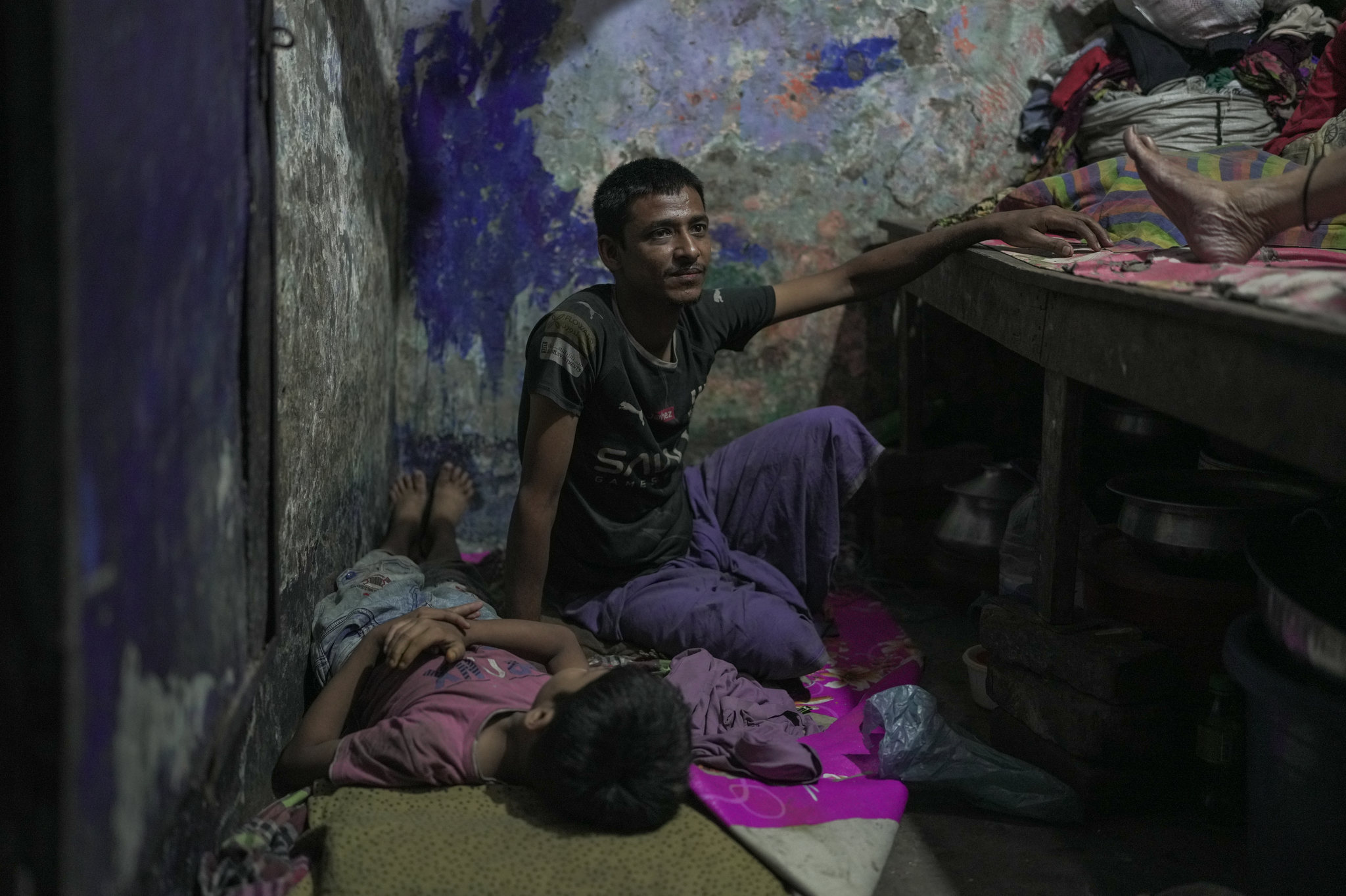
DHAKA — The house in the Geneva Camp where Md. Emon, now 18, was born is barely big enough to hold a bed. His family of seven lives there. In some cases, rooms like this host up to three generations, with narrow passageways separating dwellings.
This is life for Emon and most Biharis, the Urdu-speaking people who migrated from the northeast Indian state of Bihar in the 1940s to what was then East Pakistan – now Bangladesh. Today, most live in 116 camps across the country. Geneva Camp, in central Dhaka, the largest of the camps, is home to between 30,000 and 50,000 Biharis.
Emom’s education ended at 10th grade. Young people from Geneva Camp don’t easily gain admission to upper schools and universities.
“I stopped trying,” he says.
Emon runs a box-sized clothing store. Most of his friends live in Geneva Camp.
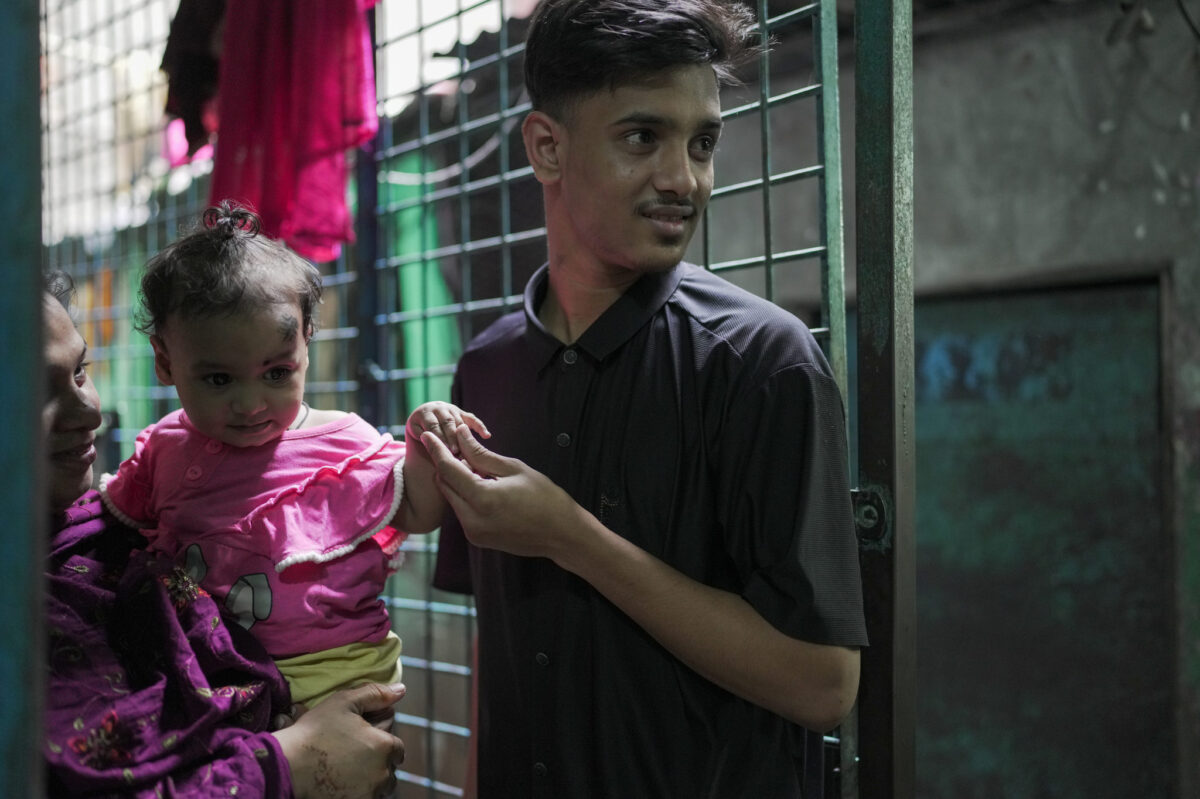
Md. Emon, 18, stands in an alley with his niece in Geneva Camp. Credit: Fabeha Monir/GPJ Bangladesh
It’s been nearly two decades since the Bangladesh High Court recognized the Biharis’ right to citizenship, which included the right to vote. It was a landmark decision, but Biharis say they don’t have access to documents or essential services.
The government didn’t keep its promises, says M. Shoukat Ali, president of the Stranded People’s General Rehabilitation Committee and head teacher at Non-Local Junior High School in the camp.
We are not welcomed anywhere.
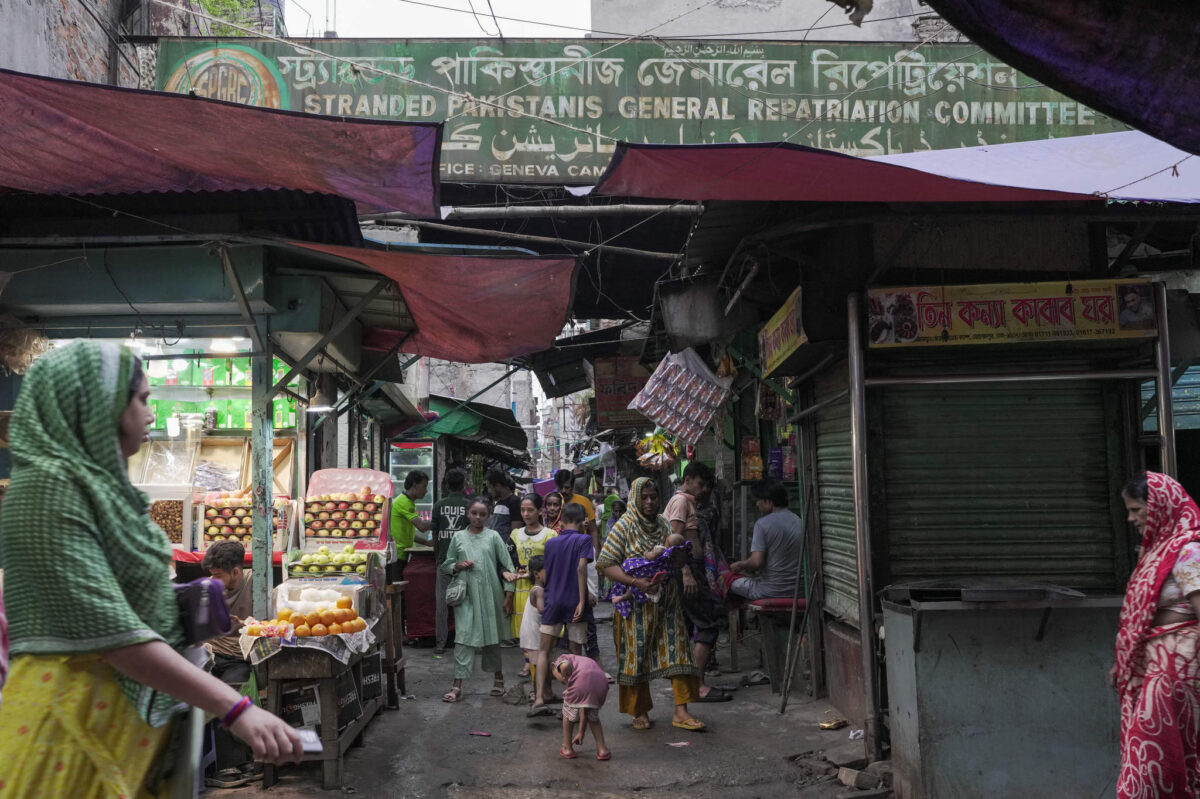
Incremental improvements are afoot, though Biharis doubt they’ll make a difference. In early May, advocate Abdullah Al Noman issued a legal notice to the Ministry of Foreign Affairs seeking the immediate cessation of the use of the term “stranded Pakistanis” to describe Biharis. The term is inaccurate and a violation of the constitutionally guaranteed fundamental rights of equality and nondiscrimination, Noman says.
But even Biharis who vote say they’re disenfranchised. Md. Sajjad, 22, who voted in the last election, says politicians make lots of promises leading up to election day. Biharis are told that they’ll get schools and government jobs.
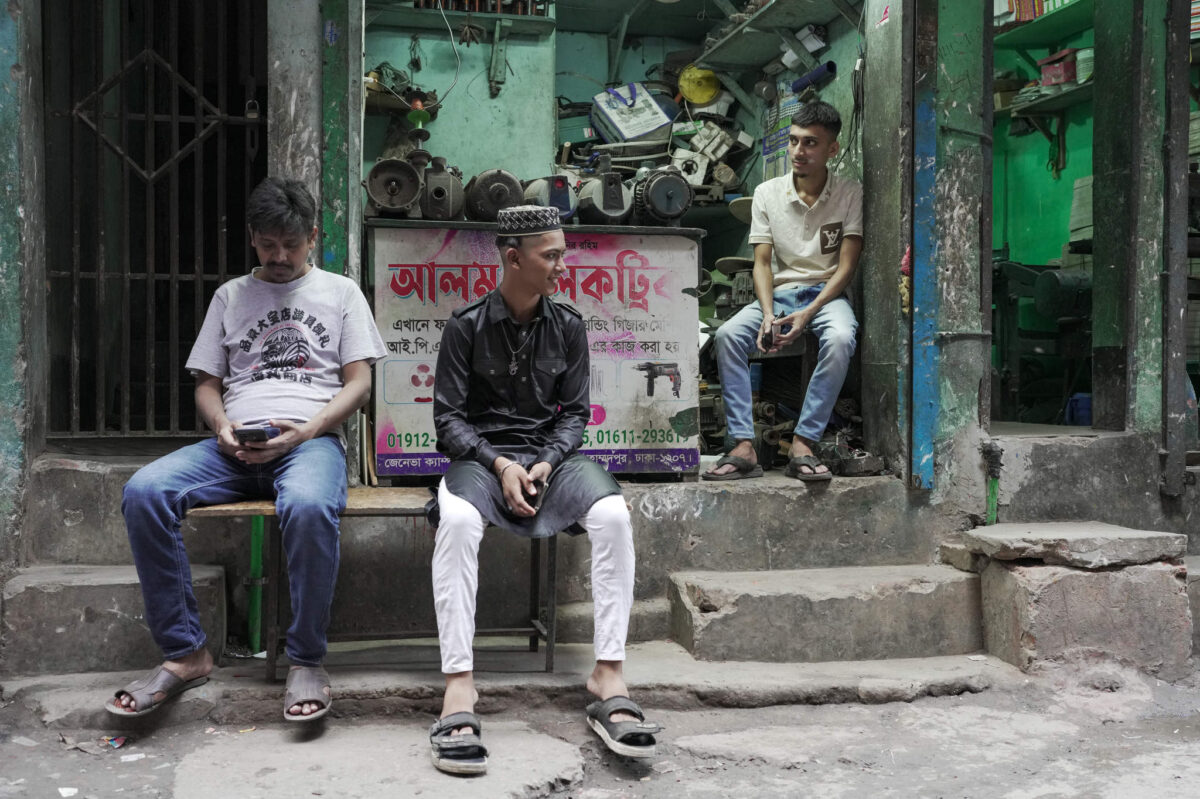
“Nothing happens,” he says.
Sajjad dropped out and started working at about 11 years old. The water pipe in front of his small electrical shop is 17 years old and has never been maintained. It leaks, he says. Now, he expects little from the government.
“As always,” he says, “we are not welcomed anywhere.”