
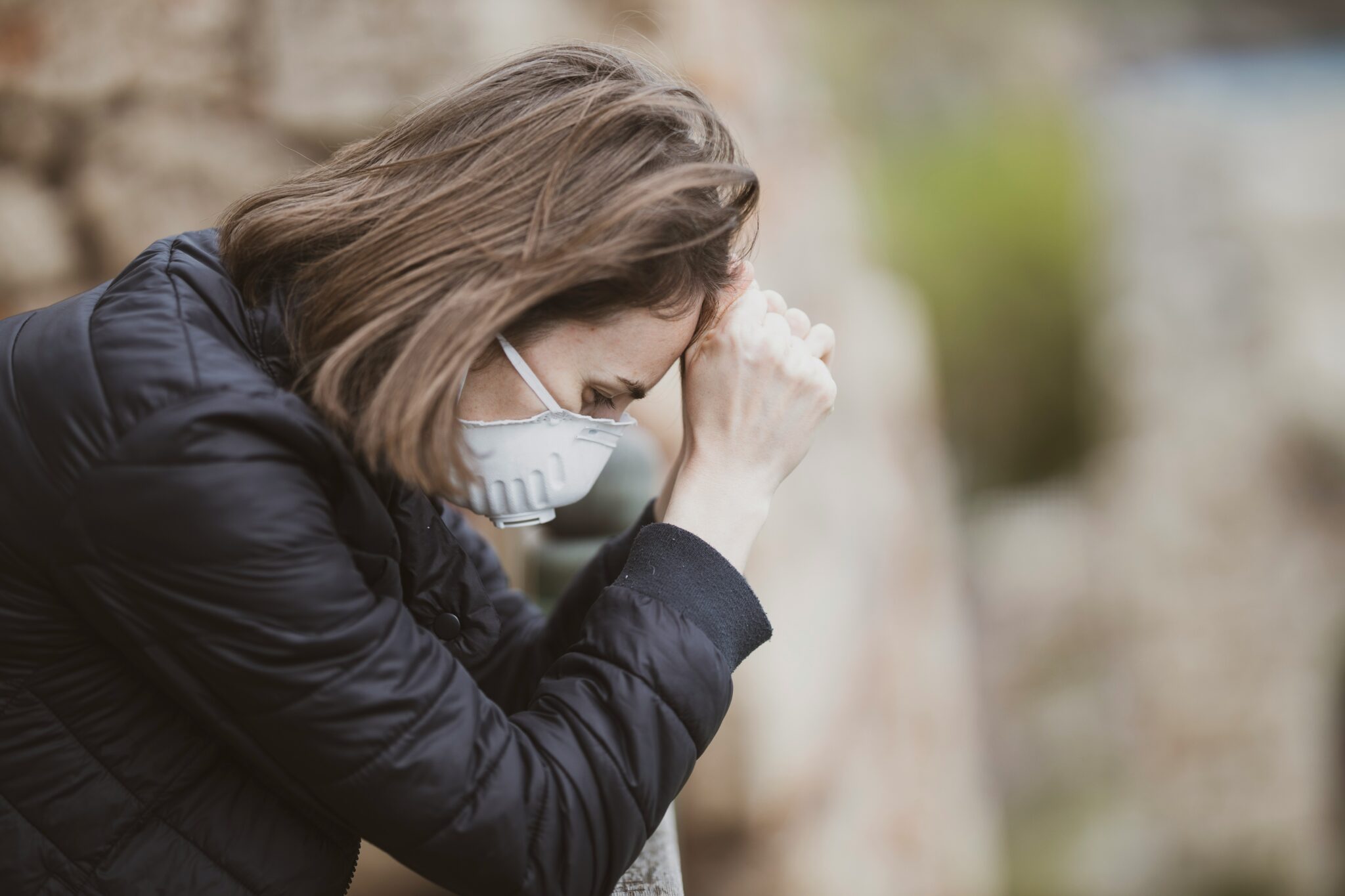
HAMBURG — A cold can feel like a punishing experience. Not only for the body, but for the spirit too. When tissues pile up and sheets get rumpled, when your nose swells, your throat burns, and even a feather soft pillow makes your head throb, a kind of despair sets in for many. You can feel low, wretched and terribly down.
Scientists say that what we go through during a cold can genuinely resemble a mild depression. Almost everyone becomes listless, apathetic, withdrawn, slower to move, and slower to think during an infection. Your head feels wrapped in cotton wool, and your appetite fades. Some people also feel sad, hopeless, anxious, or irritable, symptoms you will also find in diagnostic manuals under “depressive episode.”
Experts even have a name for it: sickness behavior. It is not unique to humans, animals show it as well. At the very least they grow lethargic when their bodies are fighting an infection. Bats stop grooming one another. Hamsters curl up in the corners of their nests. Monkeys get sleepy. Fish drift listlessly in their tanks. Lizards eat less, sparrows chirp less.Research has shown that the immune system is responsible for this illness behavior.
How the immune system ruins your mood
When the body fights an infection, most often caused by viruses and sometimes by bacteria, the immune system in humans and animals releases cytokines, the messenger substances that activate and steer immune cells and either promote or dampen inflammation. Cytokines orchestrate the body’s immune response.
They also send signals to the brain, for example via the vagus nerve or by crossing the blood brain barrier. The brain then appears to direct the sickness behavior. This part has been studied mainly in animals and less in humans, but several studies back it up.
Researchers such as Julie Lasselin, a psychoneuroimmunologist at the Karolinska Institute in Sweden, assume it works similarly in us. “Cytokines signal to the brain that an infection is present. The brain then realigns its priorities,” she says. It changes course, and suddenly all motivation is aimed at resting, conserving energy and recovering.
This is why we turn listless, tired, withdrawn, and less able to concentrate. That is what researchers call sickness behavior, and in humans it overlaps strikingly with symptoms of depression.
The overlap is striking enough that scientists are also asking whether both the depression-like experience of illness and true depression might share some biological traits. People with depression sometimes show elevated levels of certain cytokines in their blood. Conversely, cancer or hepatitis C patients who are treated with cytokines more often become depressed. Could a misdirected immune response trigger or contribute to depression, at least in some cases? There is evidence to suggest so.
It takes energy
Despite the overlap, Lasselin stresses that depression and sickness behavior are not the same thing. Depression feels much more existential. And, she says, “Depression has no long term benefit. It makes people so inflexible that they cannot resolve the causes of depression.” With a cold or flu, by contrast, it makes sense to feel weak, listless, and joyless.
A body battling an infection needs a lot of energy. Producing immune cells, running a fever, all of this consumes energy. Raising body temperature by just one degree burns at least ten percent more calories. If you do not move, do not digest, do not think, and ideally just sleep, you conserve energy. “The fact that we suffer so much when we are sick is a protective mechanism of the immune system,” says Lasselin. Lethargy keeps us from wasting energy.
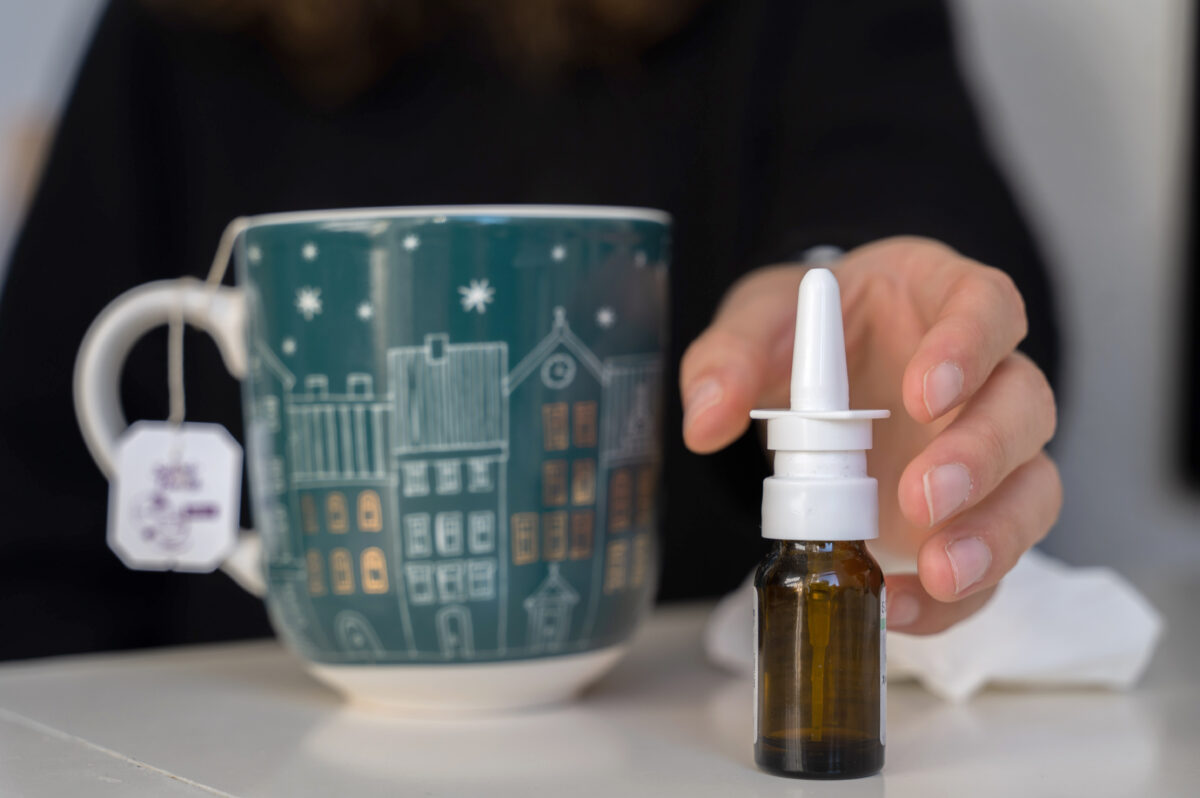
Even the fact that we feel anxious, unhappy, and antisocial serves a purpose. We avoid other people who will in all likelihood only cost us energy and might make us even sicker. Studies show that we assess social situations very differently during an infection. We land in a kind of dilemma.
On the one hand, we long for affection, on the other, we want to be alone and sense danger everywhere. Sick people, for instance, often mistake healthy people for being ill. Strangers generally seem more threatening. And when you are sick it can be harder to cope with a sideways glance or a sharp remark than it would be when healthy.
“Being sick means focusing attention on yourself,” says Lasselin. “Who could harm me, and who can help me?”
When you are sick it can be harder to cope with a sideways glance or a sharp remark.
It is not just the sick person who reacts more sensitively to others. Other people also react more sensitively to the sick. People who are ill are avoided. The mere sight of someone with a cold apparently puts the body on alert. In experiments, it was enough to watch videos of sniffling, nose blowing people or avatars with chickenpox or scarlet fever, and the immune systems immediately moved into position. Immune cells responded as if they were already fighting a real pathogen.
In general, people, even children, are remarkably good at recognizing whether someone has an infection. Not only from a runny nose or hacking cough, but from subtler cues too, such as a person’s scent, a stiff gait, or pale skin. People we think are sick are liked less and trusted less. We keep our distance.
Feeling isolated during a cold is, in a sense, also produced by the immune system, both your own and that of those around you.
Sick and miserable? That’s good news!
At the same time, the immune system does not explain everything. How we feel during an infection also depends on other factors. After all, everyone experiences illness differently, something friends, couples, and families observe, and something research confirms. “People react very differently, even when their immune response, measured for example by cytokine levels, is the same,” Lasselin says. Some doze the day away in bed, others pace anxiously around the house. Above all, not everyone becomes low or anxious, and if they do, it is not to the same degree, she adds.
People who are fundamentally anxious or pessimistic, or who are going through a hard time, suffer more during a cold.
She is currently studying which factors might shape this. There is evidence that attitudes and general mood play a role. Studies show that people who are fundamentally anxious or pessimistic, or who are going through a hard time, suffer more during a cold. The same is true for people who struggle to accept a fever, sore throat, or cough. Lonely people are also more likely to be knocked off balance by a cold, perhaps because when they are weakened they feel their aloneness even more acutely.
There is, incidentally, no evidence for a so-called man flu. Men simply seem to express their suffering differently from women. They sigh more, or breathe more heavily.
Since she began working in this field, Lasselin says she handles infections differently. “When I get sick and feel miserable, I think, great, my immune system is working. Now I have to help it fight the pathogen.” That, she says, is the only thing she can really recommend. Do not resist the misery. Accept it, rest, and wait for it to pass.
So if you are currently curled up in bed, sniffling and coughing, feeling weak, small and miserable, remember this: Everything is proceeding as it should.