-Analysis-
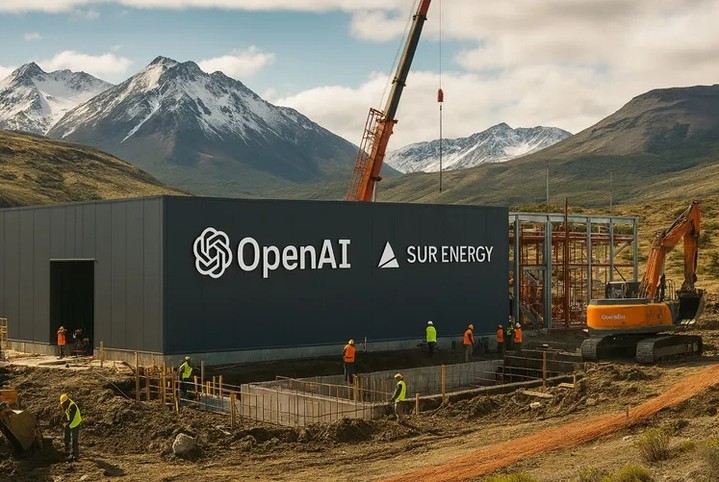
BUENOS AIRES — It is a geopolitical milestone for Argentina. OpenAI — in partnership with Sur Energy — has decided to invest up to $25 billion to build a mega data center in Patagonia under the name Stargate Argentina.
The move places Argentina as the third pole of artificial intelligence in the West, alongside the United States and Saudi Arabia, which would redefine the map of global digital power.
For the latest news & views from every corner of the world, Worldcrunch Today is the only truly international newsletter. Sign up here.
Until now, the development of AI has been structured around two main axes: the North American axis, which combines innovation, venture capital, universities, and military power; and the Arab axis, which promotes AI as a means of post-oil diversification and global projection.
The arrival of OpenAI in Patagonia will open up a new frontier: a southern hub that combines clean energy, scientific talent and stability, bringing the southern hemisphere into the competition for 21st-century knowledge and computing infrastructure. From now on, the territory will be a key geopolitical factor and will seal a strategic alliance with the world’s leading power.
The project plans for 500 MW for generative AI processing — unprecedented power in the southern hemisphere — making Patagonia the hub of the new South Atlantic energy-digital corridor. Where goods once used to flow, today data and massive computing capabilities will circulate: the new raw materials of the contemporary world.
Argentina is not improvising. It has a solid scientific infrastructure, a robust university system, and a growing technological ecosystem. Integrating these capabilities with OpenAI’s global infrastructure opens the door to a qualitative leap: moving from consumers of technology to producers of advanced digital knowledge.

Geopolitical move
Within the world of digital power, data centers now occupy the place once held by commercial ports or military bases. Whoever controls computing dominates the flow of information, innovation and the knowledge economy.
This is why OpenAI’s arrival is also a geopolitical move: to transfer computing power to territories that are energy-stable and politically reliable. And in that scenario, Argentina can become a strategic benchmark.
This is the possibility of generating value, skilled employment and technological sovereignty in the country.
This announcement poses a historic challenge: transforming a technological opportunity into state policy. The RIGI (Incentive Regime for Large Investments) provides an initial framework, but the key will be to maintain institutional continuity and guarantee legal certainty, fiscal predictability and environmental governance.
More than investment
The state must assume a strategic role: ensuring international connectivity, smart energy infrastructure, and training that empowers local talent. Universities, scientific institutes, and national technology companies must be integrated into this new phase.

The stakes are high: this isn’t just an investment; it’s also the possibility of generating value, skilled employment and technological sovereignty in the country. To achieve this, agreements that also guarantee the sustainable development of our nation will be essential.
If the country achieves political maturity, strategic unity and public-private cooperation, Patagonia won’t just be “the end of the world,” it could become the beginning of the age of knowledge.
There, where the wind feeds turbines and the cold protects servers, a historic cycle can begin: the south as the leading force in Western intelligence. It is not just a matter of housing machines, but of anchoring the future here and demonstrating that, from the geographical margins, it is possible to influence the center of global power. The opportunity is on the table: it is up to us to seize it. Are we up to the challenge?