CAMBRIDGE — On Monday, I was pedaling Lorenzo through the streets of Cambridge, Massachusetts, where we’ve just moved. We were heading to a Harvard University office, and I was already daydreaming about what our family life might look like in Boston over the next ten months.
At a red light, Lorenzo suddenly pulled me out of my little bubble. At six, his conversations appear without warning, no context, no build-up — just fired straight out like an urgent flare.
For the latest news & views from every corner of the world, Worldcrunch Today is the only truly international newsletter. Sign up here.
—Do you know anyone who’s died here, in the U.S.?
—No, no one.
—And in Greece?
—I’m not sure.
—But do you think you do, someone who died in Greece?
—Maybe, it could be… I don’t remember.
But I did remember. A newborn baby — the sister of one of Lorenzo’s preschool classmates — who died suddenly in her sleep. It was back when Irene was pregnant with León. I didn’t want to summon that memory.
Hours later, between mouthfuls at dinner, Lorenzo fired again:
—Dad! Did you cry when your dad died?
—Yes.
—And when your mom died?
—Of course. Yes, both times, a lot.
—And who took care of you when they died?
—No one, I was already living alone.
—Then why did you cry? Were you little?
—Tears aren’t just for kids. Grown-ups cry too.
—And what was your dad like dead? What are dead people like? Just like when they’re alive but asleep?
I thought about saying they grow cold, then fade away. That when someone we love dies — whether we expect it or not — it always feels sudden, and drags a trunk full of emotions along with it. That death carves a bottomless chasm, an instant recognition of no return. That after death, stories start to blur, and what remains is the narrative we carry of the life shared with that person who is now gone.

But all I told him was: yes, they fall asleep, they switch off. I wished I could understand Lorenzo’s fears, what was really weighing on him.
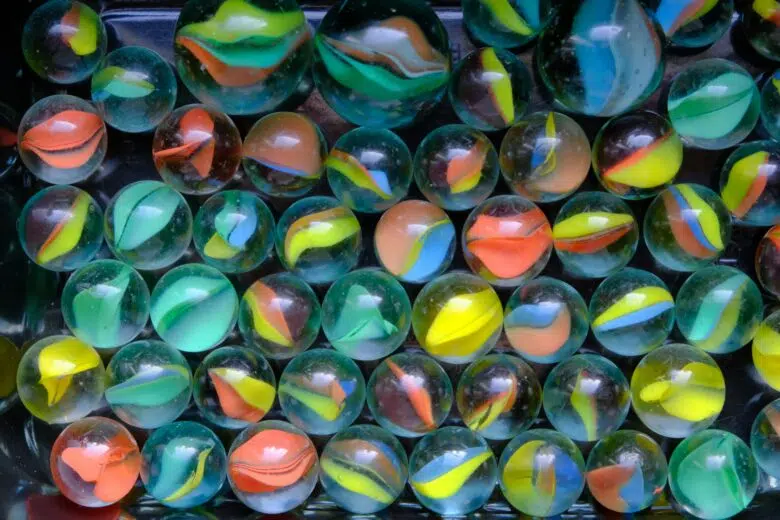
Panos’s marbles, now in Lorenzo’s hands
The next morning, I woke to a message from Greece: “I have sad news. Your neighbor passed away yesterday at work. A heart attack.”
Panos lived alone. Big guy, rough gravelly voice. Coughed almost as much as he smiled. In a children’s storybook, he could’ve been cast as the gentle ogre.
For the five years we were neighbors in Agia Marina, even without long conversations, my memories of him are all good ones — his easygoing way, his cooperative spirit. The warmth he had for my kids. Whenever they saw him, they’d shout, “Panoooos!” And he’d light up: “Γεια σου γεια!” (Hey there!)
We had promised to BBQ together at our place. “I’ll bring rum,” he said. We never did. That’s how it goes: when someone dies, memories sprout like mushrooms after rain — you never know where they’ll pop up, or whether they’ll be nourishing, toxic, bittersweet. Out come half-finished chats, questions unasked, hugs the body still remembers, thanks you hope they felt. All that, and more.
Raw curiosity
The last time I saw Panos was just weeks before we left for Cambridge. He asked me to drop by so he could show me his fire-prevention system — just in case there was a wildfire while he was away and I could activate it for him. That day, he gave Lorenzo a bag of glass marbles: “They belonged to my son,” he said, gently, handing over a treasure. His parting words: “Γεια σου! Τα λέμε!” (Bye! See you!).
The present is all we’ve really got. Until it’s gone.
The marbles are here with us now in Cambridge, where we landed just two weeks ago, starting this new chapter. I’d never planned to live in the U.S. or to take classes at Harvard or MIT — which I barely knew how to locate on a map.
But here I am, thanks to Irene’s fellowship, weighing up which courses to take, which professors to grab a coffee with. I want to squeeze every drop out of this dizzying experience. And still, life around me keeps whispering that it could all end in a blink. That unspoken hugs aren’t guaranteed. That today’s postponements may be forever.
Lorenzo’s raw curiosity about death won’t let me off the hook. Until he yells, “I’m hungry!” — and suddenly nothing matters except the immediate present, the right now.
Watching a child’s urgency to live in the instant, I catch myself repeating the cliché: the present is all we’ve really got. Until it’s gone.

Maybe it’s also an invitation to practice living slow, something I’ve read is now considered a luxury — maybe even a revolutionary act of resistance in a runaway world? And at the end of the day, what remains? What we actually inhabited — and what we didn’t. Shared BBQs and the ones that never happened. Hugs, table talk, smiles, sadness, and yes — glass marbles.
Live slow
Death sometimes brushes close just to remind us of what keeps slipping through our fingers: everything ends, anytime, anywhere. In Agia Marina or in Cambridge — it doesn’t matter. Life’s fragility and fleetingness stare us down, demanding we recalibrate our priorities.
Where do Lorenzo’s bike-ride and dinnertime questions come from? I suppose from the pull of the unknown, from fears of loss. For him, death is still a mystery — raw, not yet dulled by familiarity. And his curiosity keeps reminding me: even if we grow used to it, death always remains just a heartbeat away, still a mystery.
Death leaves behind a space, waiting to be filled differently, from a new constantly changing perspective. Otherwise it becomes emptiness.
Irene and I say we hope to carve out more room for slowness. “The answer isn’t to speed up, but to live slow,” I read scrawled on a wall, a prayer to savor life while we can. Maybe living is nothing more than collecting marbles, playing with them, enjoying them, and keeping them safe — before the mysterious silence arrives.

