
BILBAO — The film Bad Boys: Ride or Die (2024) is the fourth and latest sequel of the Bad Boys saga, initially known in Spain as Dos policías rebeldes. In this time when Hollywood is squeezing its franchises to the max, the story features actors Will Smith and Martin Lawrence playing their umpteenth action comedy set in Miami as two particularly reckless cops, despite being almost 60 years old — Lawrence finished filming a month before turning 59 — and their characters presumably dealing with issues typical of that age.
The only thing is that, very much in the style of recent American cinema, they live as if they were 20 or 30 years younger — Smith’s character gets married, “settles down,” and his co-star’s character takes on some ailments and has to diet and exercise more. Above all, they are two failed fathers; Mike (Smith) even more so than Marcus (Lawrence), who has a delinquent grown-up son, the result of one of his womanizing escapades, a son he never paid much attention to. The character’s redemption will come by taking on part of his paternal role, in a way that is both comical and epic.
All of this is already a fairly predictable cocktail of cinematic testosterone — although enjoyable if you know what you’re getting into when you go to the movie theater — but it reaches its hyperbolic climax with the final joke. Both heroes’ families are enjoying an idyllic barbecue when Reggie, aka “El Empanao” in the Spanish dubbing, the boyfriend of one of Marcus’ daughters, asks to be in charge of the meat. The protagonists are about to deny him the honor of using the barbecue, exclusive to mature men, when they remember that in a previous scene, the son-in-law took care of 15 enemies all by himself and with his bare hands.
When being macho is no longer bearable
The buddies look at each other, assuming that there is a new man in the house, who has earned the right not to be nicknamed, to be respected as the partner of one of their daughters, and to grill the meat. Reggie smiles — perhaps a threatening promise to star in the fifth episode of the saga. The credits roll.
In short: Being a macho man is unbearable even in movies for macho men. You’re going to get old, your mistakes will come back to haunt you, your daughters will have boyfriends you won’t like, and on top of that, they will be able to replace you as the breadwinner and protector of the family.
And this type of representation is not simply about Bad Boys, which could even be excused because, after all, it is a comedy. A comedy in which dozens of people are shot and cars are blown up, but which also acknowledges that its two protagonists are aging and that this should be reflected in the script. The crisis of andropause and the eternal fear of “not being enough” is basically the general tone of films made by men and about men in recent times, and not by directors or screenwriters who are particularly “deconstructed” or, if you will, “woke,” but by those who are quite far from those ideas.
In the United States, audience experts have already coined the term “Dad TV.”
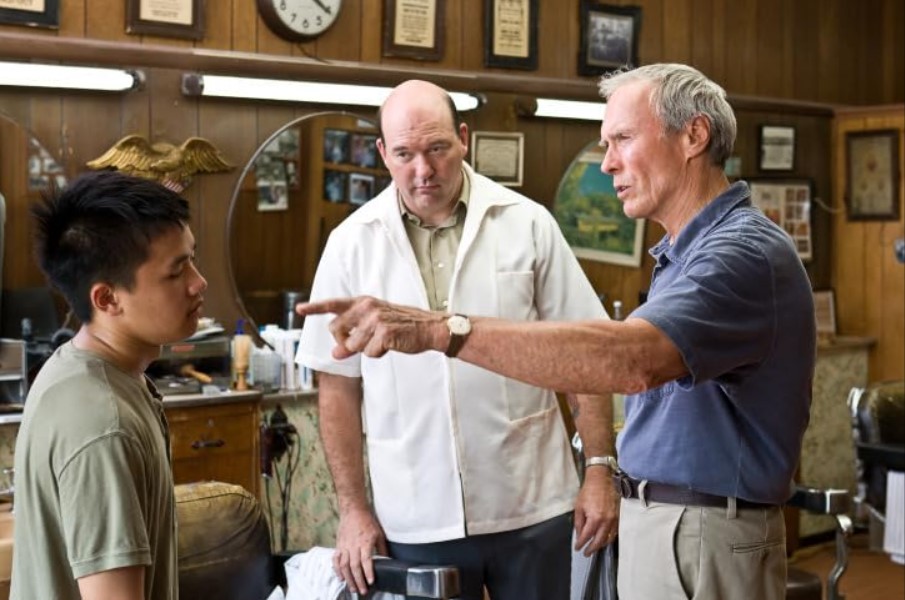
Despite the obvious prejudice generated by his conservative positions, Clint Eastwood has spent the last couple of decades dedicating his filmmaking as a director to dismantling the image of the tough, silent cowboy, or the merciless vigilante, that he had cultivated as an author. Released in 2021, the film that gives this text its title, Cry Macho, is basically about an old cowboy explaining to a boy that being “a man” has nothing to do with being “a macho,” in a much less subtle and more moralizing variation on the guilt of the war veteran he exhibited in Gran Torino (2008).
The silent cowboy is a recent obsession of conservative audiovisual media in the United States. The massive television hit Yellowstone (2018-2024), created by Taylor Sheridan, devoted its five seasons to reformulating its male characters in response to the obvious discomfort of its target audience with some of their rough edges. Foreman Rip Wheeler (Cole Hauser) moves from being the stoic lover of Beth Dutton (Kelly Reilly), the daughter of the ranch owner, whose personal and sexual freedom he respects without comment, to a traditional husband who, instead of fatally embodying the archetype of the vanishing cowboy, spends his time complaining loudly about it, lamenting that “one day all the meat will come from Brazil” (sic).

The ranch owner, John Dutton, is portrayed by Kevin Costner — who at some point in the 1990s became a masculinity hero less aggressive and traditional than other movie stars at the time. The irony is that he has lived long enough to play an old, somewhat misogynistic “hero” who is unhappy because one of his sons has married a woman of color and the other is a timid lawyer.
The new wave of “Dad TV”
In the United States, audience experts have already coined the term “Dad TV,” which has already spread across the pond and is now being used in this part of the world as well. This “TV for dads” consists of traditional series, far from the post-irony of The White Lotus or the narrative artifices of a Nordic thriller. Stories told in long seasons, with 13 or 23 episodes, with a linear plot or directly based on a “problem of the week,” in which a middle-aged man solves things, including with his fists if necessary.
The Spanish series Entrevías (2022-2024), called “Wrong Side of the Tracks” in English, which started out in prime time on Spanish TV channel Telecinco — and has become an international hit thanks to Netflix — is one of those that fits into the “Dad TV” category. José Coronado plays a hardware store owner close to retirement who was a Spanish soldier in the Bosnian war and ends up fighting crime among gang members, drug lords, and even some real estate speculators. Yet his greatest challenges end up being able to communicate with his new partner — played by an actress 22 years younger — his granddaughter, and even his timid son, who lets himself be bossed around by his wife.
In other words, these works of fiction dedicated to praising a traditional type of hero, using the comeback of tough, upright men who dress impeccably — the kind that no longer exists — as a plot device to attract audiences, seem to suggest that if the archetype is getting outdated, there must be a reason.
Paul Schrader, the screenwriter of Taxi Driver (1976) who has spent his entire career directing films about men of strong convictions who are forced to compromise for love, as in Hardcore (1979), has devoted the last decade to portraying the existential angst of men who regret how they used to express their masculinity and life in general.

The protagonists of First Reformed (2017), The Card Counter (2021) and Master Gardener (2022) are classic males played to the extreme in their stoicism, their silences, their desire to be validated by protecting others, and, occasionally, in their capability for violence. However, they are not exactly at ease in their own skin, and the desire to change is always present in them. Oh, Canada (2024), starring Richard Gere as a liberal (in the American sense) film director who considers his entire career and even his life to be a big lie, only reinforces this discourse on regret and self-loathing.
(In April 2025, Schrader was accused of sexual harassment and abuse by his former assistant, in a sinister addition to this constant scrutiny to which he has exposed his own way of being in the world).
Maybe not the most pleasant people in the world
Meanwhile, in Spain, with a film industry that prides itself on being feminist but never evaluates what we men are doing, it is noteworthy that the productions that align with this trend are popular comedies, often criticized for their humor that walks the fine line between folksy and crude. Santiago Segura in his now five-part series Padre no hay más que uno (“Father There Is Only One”) or Leo Harlem in the 2018 El mejor verano de mi vida (“The Best Summer Of My Life”) or 2024 La familia Benetón (“Uncle Trouble”) are men in crisis who end up reevaluating themselves when the next generation points out that perhaps, in the way they are going, they are not the most pleasant people in the world.
Who wants a real action hero with that kind of background?
Jack Bauer of 24 (2001-2014) played by Kiefer Sutherland or Bryan Mills of Taken (2008) as Liam Neeson — not to mention the muscle-bound heroes embodied a couple of decades earlier by Arnold Schwarzenegger and Sylvester Stallone, who now stars in the series Tulsa King, which also has the “Dad TV” label — would be ashamed of the bunch of wimps depicted, who are never quite sure of what they are doing, either in substance or in form, and allow their wives to tell them what to have for dinner if they don’t want another heart attack.
After all this, it is worth asking whether this constant midlife crisis — sometimes played by 60-year-old men and written by 80-year-olds — is really perceived as such by its target audience. Over the past year, Alan Ritchson, the star of Reacher, another milestone in “Dad TV,” has disappointed his American fans by criticizing the Trump administration and sharing his mental health issues, which were partly caused by sexual assault when he was younger, then working as a model. Who wants a real action hero with that kind of background? Probably more people than you think, but on the condition that he keeps it to himself, like a real man. One of those who knows how to barbecue.