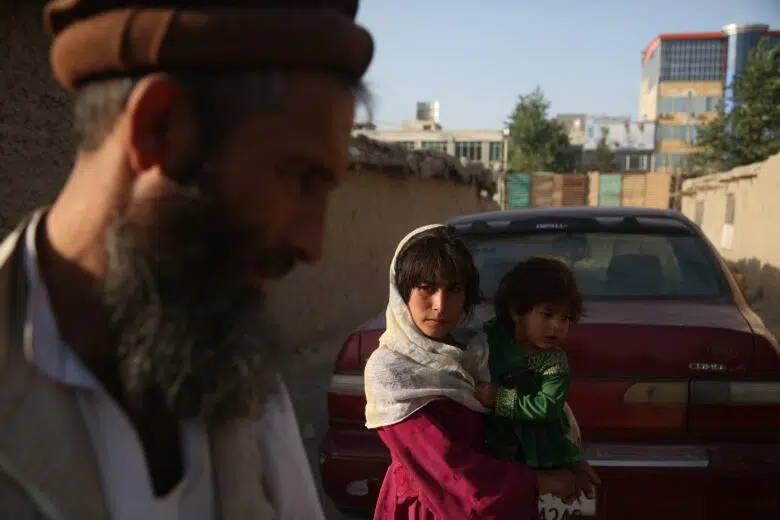
KABUL – In Afghanistan, every mother is expected to give birth to a son. That’s the deeply ingrained belief in a patriarchal society where after the Taliban came to power, women have lost many of their basic rights: They can no longer get an education, walk outside without a male relative, or even sing in public.
For the latest news & views from every corner of the world, Worldcrunch Today is the only truly international newsletter. Sign up here.
Families without sons are considered weak and vulnerable. A girl raised under strict Islamic
customs cannot protect or provide for her family. She is likely to be married off at a young
age, after which she is considered to “belong” to her husband.
So the birth of a girl is often met with grief and shame. In many cases, mothers leave the maternity ward in tears. In villages, they may be mocked by relatives and neighbors; their husbands might beat them, deny them food for days, or send them to sleep in the barn with the livestock.
By contrast, the birth of a son is celebrated with pride. Families host ceremonies with music, prayers, and feasts, and mothers are showered with gifts. For this reason, many women desperately hope to bear a son, not a daughter.
Life is especially hard for women who give birth to daughters time and again. Society often
ostracizes them. There’s even a derogatory term in Dari for such women: dokhtar-zai,
meaning “she who only brings daughters.” Men with only daughters are also ridiculed. In Afghanistan, they’re mocked as mada posht — literally, “he whose woman only brings daughters.”
Patriarchal traditions and rigid gender roles existed long before the Taliban came to power
— although not in such extreme form. The tradition known as bacha posh, Dari for
“dressed like a boy,” is rooted in this reality.
The idea is simple: if a family has no sons, they may choose to raise a daughter as a boy.
She is given a male name, her hair is cut short, and she wears boys’ clothing. This child is
allowed to play outside with boys, attend school, take part in sports, and leave the house
alone — freedoms typically denied to Afghan girls. She can even accompany her mother or
sisters in public as a “male guardian,” without whom women are not permitted to move
freely.
Underground girls
In some ways, being raised as a bacha posh can feel like a privilege. The girl’s status in the
family becomes “male”; she’s not expected to cook or clean, and she grows up with
relative freedom, while her peers are restricted by strict codes of propriety and constant
limitations.
“In Afghanistan, women are bechora — helpless,” says a 44-year-old Afghan woman. “Men
must control them. They are beneath men. You can’t get a job, even if you want one. All
you’re left with is housework.” In contrast, life as a bacha posh offers a far wider range of
experiences — at least until adolescence.
When you have no sons, it’s seen as a great misfortune, and everyone pities you.
A woman known in the media as Masuda recalls that being raised as a bacha posh, she felt
how differently boys were treated. Her grandfather favored her over her sisters and gave her money. “I asked him, ‘Why don’t you give money to my sisters?’ And he said, ‘Because
they’re girls.’”
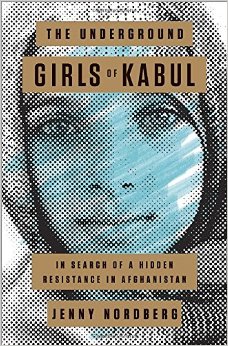
In 2014, journalist Jenny Nordberg published the book The Underground Girls of Kabul,
based on several years of reporting in Afghanistan. She documented the lives of women
who had been raised as boys and interviewed their families.
One of the women featured in the book is Azita Rafaat, who at the time was a member of
the Afghan parliament — a position no longer available to women under Taliban rule, which
bars them from political life entirely.
based on several years of reporting in Afghanistan. She documented the lives of women
who had been raised as boys and interviewed their families.
From Manhoush to Mehran
Azita told Nordberg that her youngest “son” was, in fact, a girl. “We dress her like a boy,”
she explained. “People gossip about our family. When you have no sons, it’s seen as a great
misfortune, and everyone pities you.”
She said her youngest daughter, Manoush, wasn’t always a bacha posh. Back when the
family lived in a village, she and her husband raised all four of their daughters the same
way. But when Azita moved to Kabul to pursue a political career, it became clear that the
absence of sons would be a serious problem.
Whenever colleagues or acquaintances found out that Azita had four daughters, they offered condolences and doubted her chances of success if she couldn’t even “give her husband a son.”
Having a pretend son in Afghanistan turned out to be better than
having no son at all.
When Azita and her husband asked their youngest daughter, Manoush, “Do you want to
look like a boy, dress like a boy, and do all the fun things boys do — like ride a bike, play
football and cricket? Do you want to be like your father?” — she agreed. From that moment
on, they started calling her Mehran.
Azita said that after this, people around her began treating her and her family with more
respect. In her words, “Having a pretend son in Afghanistan turned out to be better than
having no son at all.”
Superstitions
In her book, Nordberg describes how the bacha posh tradition is often accompanied by superstition. Many women believe that having a “boy” in the house can help them eventually give birth to a real son.
Nordberg recounts one such encounter: A woman had given birth to six daughters in a row.
Friends and neighbors advised her to raise one of the girls as a boy, believing that the
presence of a bacha posh would help the mother conceive a son in the future.
So she did. The little girl lived as a bacha posh until the age of three — and then died. Not
long after, the mother became pregnant again and this time gave birth to a boy. She told the
journalist she was glad her daughter had died.
Returning to womanhood
Typically, girls live as boys until the age of 10 or 12, after which they are returned to their
traditional gender roles — stripped of their freedoms and privileges, and gradually prepared
for marriage and motherhood.
One such case appears in Nordberg’s book: “An Afghan diplomat recalled a childhood
friend from his neighborhood football team back in the 1990s, during Taliban rule. One day,
the boy simply vanished. A few teammates went to his house to find out what happened. His father stepped out and told them their friend would not be coming back — he had become a girl again. The 12-year-old boys standing in the street were left speechless.”
Many women who went through this experience say it wasn’t hard to adjust to being
referred to as female again. What was difficult was losing their freedom — the abrupt return
to harsh limitations and the often brutal treatment of women.
Some bacha posh never returned to a female identity at all.
Some never returned to a female identity at all. Nordberg shares the story of one such
woman: a British aid worker once visited a province under Taliban control where, as per
Islamic custom, men and women lived in separate parts of the house. But in one house, she
noticed that someone on the women’s side was being referred to as “Uncle.”

It turned out that Uncle was a woman — dressed in men’s clothes and wearing a turban.
She had been the seventh daughter in a family with no sons. A local mullah, pitying the
parents, had declared the newborn a boy. As she grew up, she was never married off and
remained in her male role.
In the village, Uncle was treated with great respect — and according to the aid worker, she
clearly enjoyed the elevated position she held, one far more privileged than that of the other
women.
Life after bacha posh
It’s difficult to say exactly how many bacha posh live in Afghanistan; there are no official
statistics. But experts estimate that these girls can be found in every district of every city. A
2019 study found that in Kabul, women from one in every 20 families reported having a
bacha posh among their relatives.
Many women who were raised this way in childhood say they see nothing strange or
harmful in the tradition. Some even say it helped them become more confident — after all,
during a formative period in their lives, they were treated with respect and regarded by men
as equals.
One example is Rafaat, the protagonist of Nordberg’s book, whose daughter was
raised as a bacha posh. The former Afghan MP herself had spent several years of her own childhood living as a boy. Her father needed help in his shop, and her brother was still too young.
It does nothing to address the systemic issues around women’s
rights.
Rafaat believes this experience helped her become more energetic and confident— for nearly five years, she had the freedom to speak openly with men. “We know what it’s like to be men,” she said. “But they know nothing about us.”
Yet a lot depends on the family’s social status. In middle-class households, being “the
boy” can carry prestige and offer increased freedom. But in poorer families, bacha posh
children are often expected to do hard labor, and girls are typically raised as boys simply to add another pair of working hands.
And while many Afghan girls are glad to become bacha posh as a temporary escape from
the harsh restrictions imposed on them, human rights advocates argue that the tradition only reinforces gender inequality. If a woman must pretend to be a man to be respected and granted basic freedom, it does nothing to address the systemic issues around women’s
rights.
Meanwhile, those problems continue to worsen. One in three Afghan girls is married before
the age of 18. Among girls under 15, only 19% can read and write. Of the 3.7 million
children in Afghanistan who were not attending school in 2018, 60% were girls. Since the Taliban’s return to power, the situation has worsened dramatically: 80% of girls now have no access to education, and a woman caught leaving her home without a male guardian or speaking to an unrelated man risks being publicly flogged.