
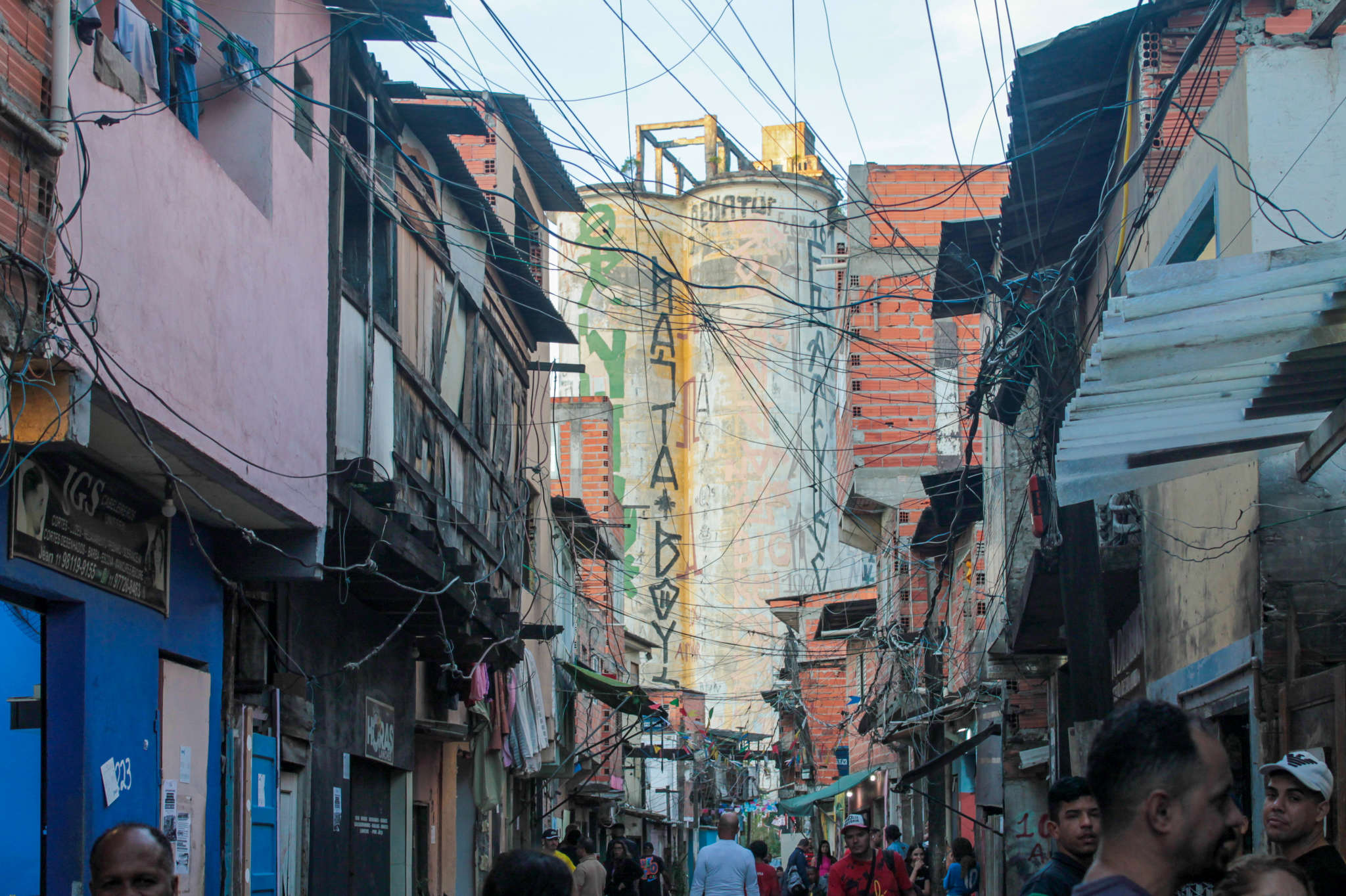
SÃO PAULO — The state government in this country’s richest and most populous city wants to move its headquarters. It plans to construct more than a dozen buildings and radically transform the city’s historic center to centralize 22,000 city workers, who are currently spread across about 60 buildings.
In June, Governor Tarcísio de Freitas announced an architectural competition to design the buildings as well as monuments that he said would revitalize the city.
But for the government to move, 51-year-old cook Raquel de Barros — along with her mother, husband and two teenage children — must move first.
De Barros’ home is a three-story shack adjacent to the column of an abandoned industrial mill silo that gave the neighborhood its name: the Moinho slum.
About 900 families live in the slum, which emerged in 1980 on federal land. The only access to the neighborhood is a dark entrance beneath a busy overpass. Though it’s an informal neighborhood, residents benefit from schools, health services and jobs, all of which are nearby but outside the neighborhood. Many who live in the Moinho slum don’t want to leave.
De Barros is among those who agreed to move to an apartment she received from the state government’s Housing and Urban Development division. The government has offered alternative housing for people in the Moinho neighborhood.
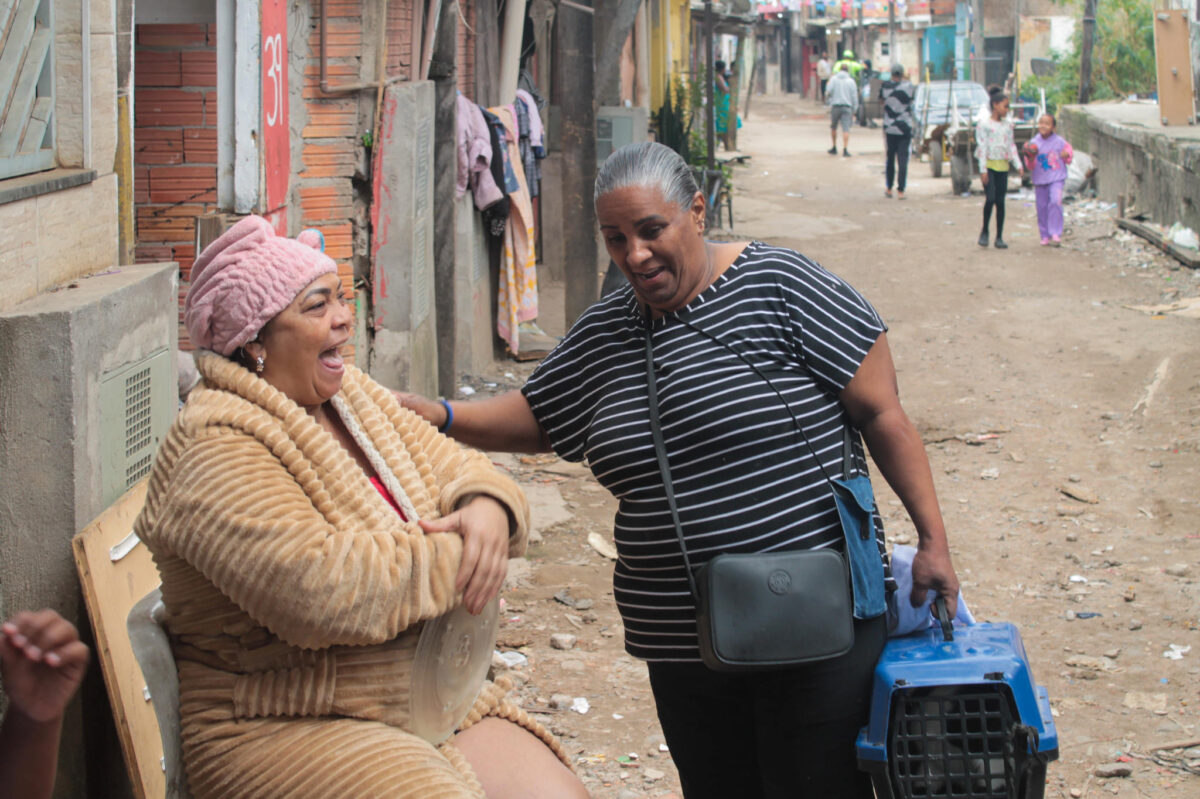
She’ll finally live her dream of owning her own home, but she’ll have to ride the subway for 30 minutes to get to work — a journey that used to be a five-minute walk. She and her family packed up all they owned one cold morning in June as neighbors brought out chairs to watch.
Forced evictions draw national attention
The day was in stark contrast to the scene a month and a half earlier, when the military police arrived without warning to try to force residents to leave. Residents say the police demolished shacks, and many people lost their belongings. The situation caught the attention of President Luiz Inácio Lula da Silva, who ordered a suspension of the transfer of land and said that the residents’ human rights had been violated. This was just months before general elections, scheduled for October.
By June, residents had received a new offer from the government: subsidies of up to 250,000 Brazilian reais (US$45,000) to buy new properties — the bulk of that money coming from the federal government and the rest from the state. The government also offered monthly rental assistance of 1,200 reais per month (US$217) during the transition period.
People in the neighborhood say they don’t trust the government.
In honor of the Moinho slum, the government will establish Parque do Moinho, a space equivalent to five football fields. At the community’s request, a memorial will be installed in the future park.

A quarter of the families registered with the CDHU have already moved, according to that agency’s numbers. But that data is contested; people in the neighborhood say they don’t trust the government. The homes they’re being told to move to are places that are stuck on the real estate market without being sold, one CDHU staff worker told Global Press Journal, on condition of anonymity to protect his job.
Residents who spoke with Global Press Journal on condition of anonymity say there are people, including whole families, who are trying to occupy the places already demolished in order to benefit from the government’s offer.
When de Barros and her family arrived at their new two-bedroom home, her 15-year-old daughter complained.
“Mom, nothing will fit,” she said.
But de Barros is happy.
“Now,” she says, “I have what is mine.”