
-Analysis-
PARIS — Why so much hatred? To understand Donald Trump’s obsessions you have to read the transcript of his recent interview interview with the online media outlet Politico. The interview is painful and incoherent, the journalist can barely ask any questions, and the American president repeats the same phrases over and over again: ranting against a “weak” and “ decaying” Europe; against Ukraine, which has no chance because Russia is “bigger”; against Joe Biden, against migrants, against the mayor of London…
This wouldn’t be so bad if this disjointed diatribe hadn’t come the day after the publication of the National Security Strategy, a highly official document that expressed the same distaste for today’s Europe in much more coherent terms.
So we must ask ourselves: where does this repulsion come from, and what are its strategic consequences for the future of Europe? Part of the answer lies in Trump’s fixations in the United States, which he is recycling for use on the other side of the Atlantic: for example, migrants released from Congolese prisons to invade Europe, when the other day they were supposed to be invading the U.S.. No rational argument can be made to counter this often repeated fantasy.
Ideological rift
There is also the question of “weakness,” which is not so absurd when we remember that all U.S. administrations have pushed Europeans to “share the burden,” i.e., to spend more on their defense. Trump can boast of being the first president to have persuaded European NATO members to agree to spend 5% of their GDP on defense, even if this is achieved through clever accounting.
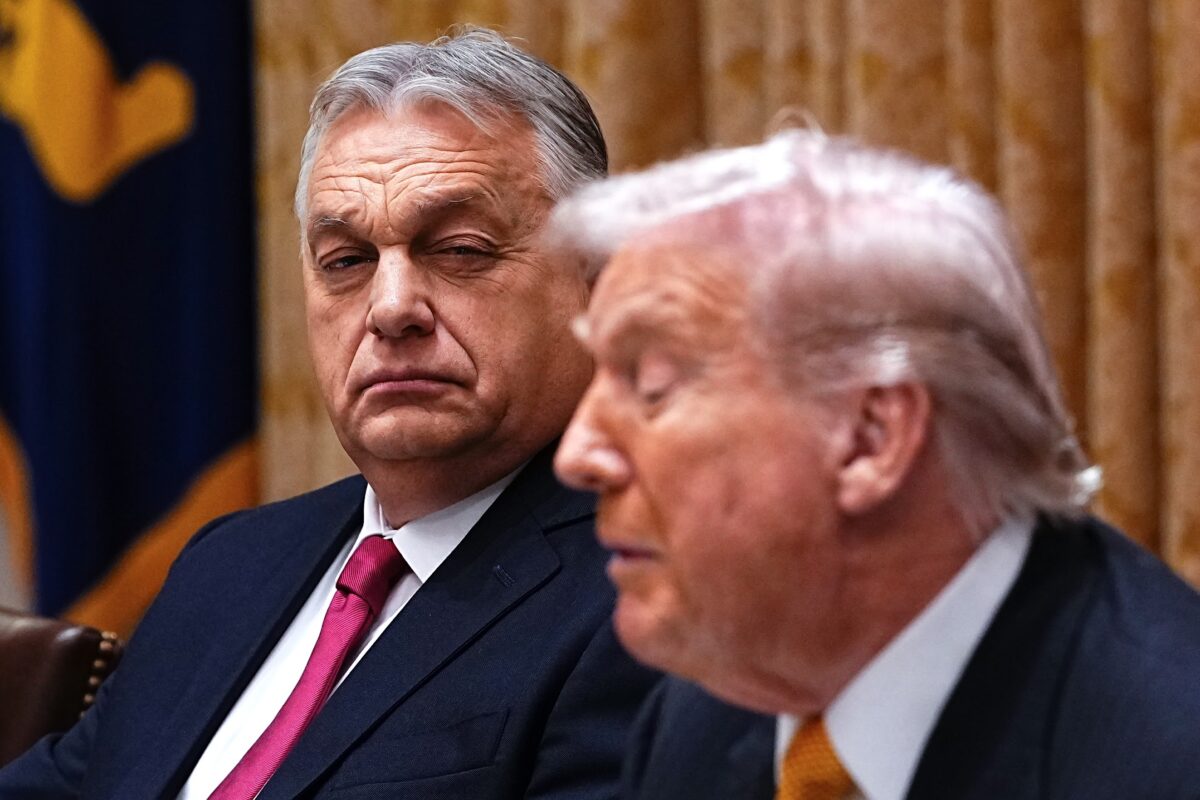
But there is also a major ideological component to Trump’s attacks. The only European leader he cites as a model is Viktor Orban, the Hungarian prime minister, the most “illiberal” of the EU leaders, a friend of Vladimir Putin, and an ardent opponent of sending aid to Ukraine. This is no coincidence and foreshadows future electoral interference.
Trump has no qualms about cherry picking his future allies. In the interview with Politico, he boasted about having helped Javier Millei’s party win in Argentina. And he is lending his support to Orban, who will face a difficult election in April.
Patriotic parties
In fact, all upcoming elections not only in Hungary but also, no doubt, in France, will also be referendums on Trump’s vision of Europe. The National Security Strategy already described the rise of so-called “patriotic” parties, in other words the far right, as positive.
Rather than abandoning Europe, the aim seems to be to remodel it into a continent that will no longer be an autonomous entity, but a subjugated region under the dual influence of the U.S. and Russia. This was expressed in more blunt terms by Elon Musk when he called for the dismantling of the European Union.
The war in Ukraine is part of this process. Once again, Trump is putting a knife to Volodymyr Zelensky’s throat, demanding that he accept the Russian-inspired U.S. plan before Christmas. This is the ultimate test of the relationship between this American president, whose convictions are rooted in the far right, and a Europe challenged to prove that it is not so “weak” after all.