
-Analysis-
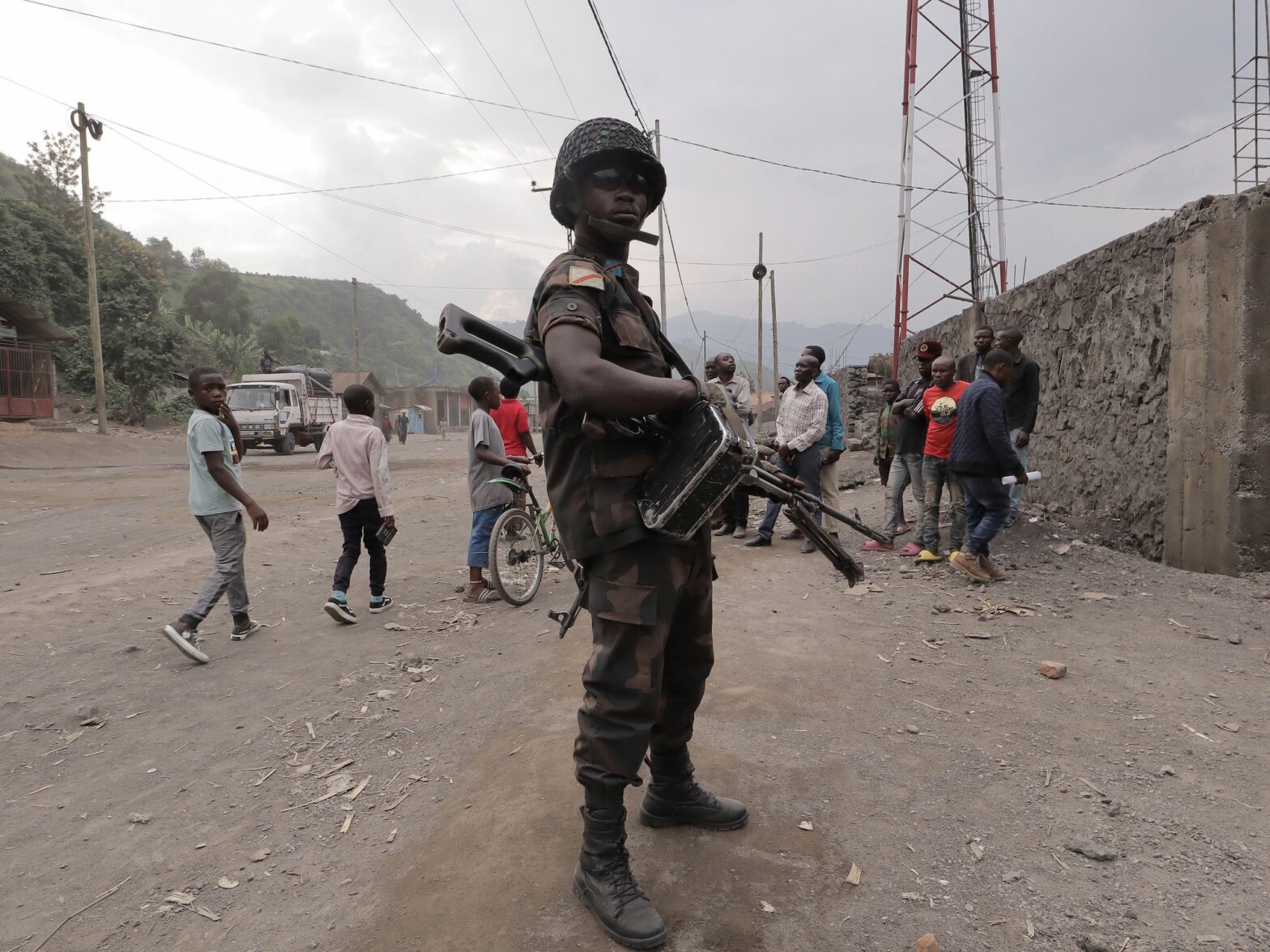
PARIS — This war is taking place in the east of the Democratic Republic of Congo, on the borders of Rwanda and Uganda. It has resulted in the exile of millions of civilians, thousands of victims, with rape as a weapon of war. It involves multiple armed groups, several national armies, and even Romanian mercenaries, formerly serving in the French Foreign Legion. And all this is taking place in a region rich in minerals like coltan, an essential component of the smartphones we have in our pockets.
This tragic mix does not reflect the entire reality: two countries, the Democratic Republic of Congo and Rwanda, are on the verge of direct confrontation. This regional crisis is, in many ways, a direct fallout of the genocide of the Tutsis in Rwanda in 1994, 30 years ago. The Hutu genocidaires had fled to neighboring DRC, and their presence, including with an armed group, is a source of tension between the two countries.
Today, the conflict has reached another level: Rwanda is openly accused of being behind an armed group, the M23, which threatens Goma, the large regional capital; and Rwanda is suspected of plundering its neighbor’s natural resources.
Official denials
For a long time, Rwanda was able to hide behind official denials. And no one dared to question it directly, apart from the powerless government in Kinshasa. Now, reports from UN experts, and – this is new – France and the United States, specifically name Rwanda.
But 30 years of seesaw conflict, causing millions of victims, cannot be settled so simply.
In a press release yesterday, the French Ministry of Foreign Affairs explicitly condemned “the ongoing Rwanda-backed M23 offensive, as well as the presence of Rwandan forces on Congolese soil.” The situation is tricky, because France has only just reconciled with President Paul Kagame’s Rwanda, after a major effort to remember France’s role during the genocide.
But by procrastinating too long, Paris risked losing on all fronts. On Monday, demonstrators in Goma burned French and American flags to protest against what they consider Western passivity.
A critical military situation
There, the military situation is critical, because Goma is directly threatened by the M23 offensive. The Congolese government is supported by troops from other countries, including hundreds of South African soldiers who have just arrived and who already recorded two deaths.
A few days ago, President Felix Tshisekedi of the DRC and President Kagame of Rwanda met on the sidelines of the African Union Summit in Addis Ababa, under the aegis of the Angolan mediator. But this face-to-face quickly ended.
But 30 years of seesaw conflict, causing millions of victims, cannot be settled so simply. At a time when other wars are monopolizing the world’s attention, Africa is trying to handle this one itself, with obvious limitations. In the meantime, millions of civilians are suffering the consequences, in general indifferent.