
–Analysis–
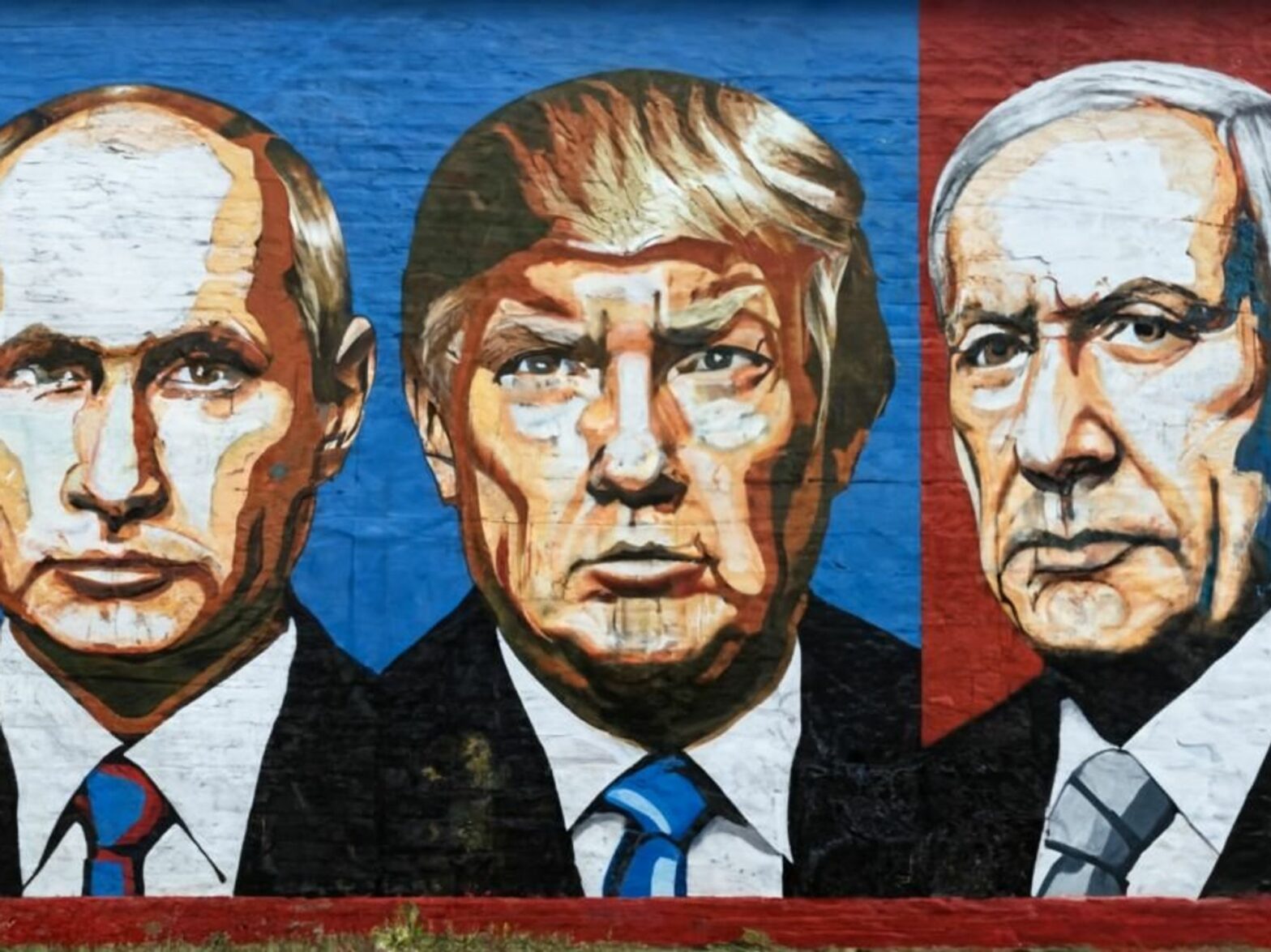
PARIS — Trump, Putin, Netanyahu. To explain the chaotic state the world finds itself in today, would it be enough to focus on this infernal trio? The differences between these three men are certainly considerable. So much so, in fact, that stringing their names together in the same sentence seems artificial.
Trump is not (not yet?) back in power. Putin is an all-powerful despot whom nothing and nobody seems able to stop. And Netanyahu is a prime minister on borrowed time, surviving only in and through war. And yet, they have one thing in common: their absolute narcissism.
All three put their personal interests ahead of those of their countries. Their credo can be summed up in two words: “Me first,” if not “me alone”.
It’s hardly surprising that their selfishness has made the world an increasingly dangerous place. Notions of the common good and responsible governance are simply foreign to them. And their negative influence is felt far beyond their own countries.
Russia, the main threat
The United States — still the world’s leading military, economic, if not political, power — used to represent a principle of order (sometimes confused, if not contradictory or even incoherent). At a time of Donald Trump’s possible return, it constitutes a major uncertainty, a warning more than a model, for democratic regimes: “You are not safe from the most extreme populist drifts.”
Putin has returned to his Stalinist heritage, and the worst of Tsarism
With Putin’s return to his Stalinist heritage, and the worst of Tsarism, Russia is no longer just a principle of disorder. It is once again the main threat. China may be more powerful, but Russia is crazier, and — for us Europeans — so much closer.
The assassination of Alexei Navalny — whatever the exact cause of his death — is an absolute demonstration of this. In the age of artificial intelligence, Putin eliminates his opponents in the same way as Roman emperors or Italian princely families like the Borgias. And all this with the quiet serenity and triumphant cynicism of a man who (like Donald Trump) is driven by a spirit of revenge and the conviction that time is on his side.
Is Putin today in the same frame of mind as his mentor Stalin, when the latter, at the end of 1942 (in the wake of Nazi Germany’s failure at Stalingrad) felt that victory was approaching?
Isolated, divided Israel
Netanyahu’s case is a little different. Israel, with its population of less than 10 million, is obviously not in the same league as the United States or Russia. But the Jewish state is nonetheless the region’s leading military and technological power. And a country whose very essence, as much as its performance, is the focus of conflicting passions that extend far beyond itself.
Benyamin Netanyahu has achieved the double feat of exacerbating the identity-based passions dividing Israelis, and isolating his country on the international stage. And he has done so like no other Israeli leader before him.
They’re as much symptoms as causes of the evil that characterizes their respective countries
What also brings Trump, Putin and Netanyahu together is the fact that they are as much symptoms as causes of the evil that characterizes their respective countries. They are, in effect, both revelators and accelerators of a crisis that would otherwise exist, but probably not with the same intensity.
Individuals undoing history
Trump did not create the U.S. malaise, any more than Putin created the Russian malaise or Netanyahu the Israeli identity crisis. But all three illustrate the inescapable role played by men in history. Without emphasizing their responsibility, we understand little or nothing.
In France, from the 1920s onwards, the Annales school, led by the likes of Lucien Febvre, Marc Bloch and Fernand Braudel, sought to focus on the long trends in history. It was necessary to go beyond the “froth of things” and not simply study events and characters.
These historians, great as they were, would not have helped us understand the world we live in today. A world where “men undo history and do not know the history they are undoing,” as Karl Marx put it. In geopolitics, politics and economics — just as is the case in corporate life and, indeed, in all areas of life — it’s people who make the difference, for better, and — more often than not, as we’re seeing today — for worse.
Could it be that the exceptional circumstances in which we find ourselves are, in part at least, the product of exceptionally dangerous and irresponsible leaders?
‘Small’ and ‘large’ princes of evil
Admittedly, limiting ourselves to Trump, Putin and Netanyahu is restrictive, and probably does them too much honor. These “flamboyant” negative figures are not alone.
Alongside them, there are “little princes of evil” whose contributions are far from negligible — from the most cartoonish, such as Kim Jong-un in North Korea, to the most comparatively reasonable, such as Viktor Orban in Hungary.
There are also “great princes” with more complex records, such as the ultra-centralist Xi Jinping in China, or the religious nationalist Narendra Modi in India.
Bad political leaders can survive
One is led to wonder whether the world would be less dangerous and more stable without Putin, Trump and Netanyahu. The answer is not obvious, especially perhaps in the case of Russia. Who could succeed Putin? He has created such a vacuum around himself.
Leaders make the difference
In the United States, one might think that any Republican or Democratic candidate would be less dangerous for the future of America and the whole world than Donald Trump. And — if we exclude the possibility of a far-right leader coming to power in Jerusalem — any other political figure would be less dangerous for the future of Israel and its neighbors than Netanyahu.
It’s the same in geopolitics as it is in business. Leaders make the difference. With one major dissimilarity: in the business world, bad leaders hardly survive their failures. Not so, alas, in the world of geopolitics.