–OpEd–
CARACAS — The decline of men in power is directly related to their time spent in office. We know it well: the longer they remain at the top, the worse and more twisted the material expressions of corruption become.
One only needs to read a biography of Joseph Stalin, Mao Zedong, Fidel Castro, or Teodoro Obiang Nguema, written by rigorous historians, to observe the astonishing similarities among the final decline of dictators, regardless of country or era.
For the latest news & views from every corner of the world, Worldcrunch Today is the only truly international newsletter. Sign up here.
The decline I speak of manifests in a repertoire of behaviors. Based on variations of these behaviors, great novelists like Miguel Ángel Asturias in El señor Presidente, Mario Vargas Llosa in his masterful La fiesta de El Chivo, or Gabriel García Márquez in El otoño del patriarca, have constructed characters perverted during the exercise of power that, in addition to being extraordinary works of fiction, provide us with tools to understand the Putins, Ortegas, or Maduros of our time.
Paranoia: A dictatorial affliction
The first phenomenon to note, inevitably, is the fear that begins to penetrate the psyche of dictators. The greater the number of years in power, a deepening feeling of illegitimacy grows inside the dictator. And with that, a state of constant fear of imaginary or real enemies also sets in.
Paranoia is an affliction of the dictatorial species
Paranoia is a kind of affliction of the dictatorial species. That’s why in their gloomy thoughts, in their nightmares, reside every sort of possible conspiracy, betrayal and backstabbing, disloyalties, and infidelities alike.
This path toward paranoia is inseparable from another phenomenon: isolation. The dictator, even if conspiracies don’t exist, distances himself from the public. He steers clear of gatherings and open spaces. Everywhere he perceives the presence of enemies, hitmen, or agents spying on him.
Therefore, as a product of his increasingly severe seclusion, he becomes alienated from reality, from the pulse of everyday life. He depends entirely on what his courtiers whisper to him, or offer him as the next chapter in an endless sequence of gossip. And here too, the same formula applies: the more time in power, the more hours on average are dedicated to such whispers and gossip.
Circle of mistrust
But that ring surrounding the dictator — made up of individuals he trusts and, at the same time, distrusts — desperately needs to justify its existence, to ensure that it will not be removed, dismissed, replaced, or simply taken out of the game.
Thus, a morbid, pathological cycle is established: the members of the ring focus incessantly on three practices.The first consists of fighting amongst themselves to win the position of preference before the dictator. The second, they invent threats and compromises, to isolate the dictator even more in a sphere of distrust. And the third, they fill him with praise and flattery.
Throughout the days, weeks, months and years, family, friends and members of the first, and even second, ring speak to him of his talents and successes; of his recurring good judgments; they tell him stories of his popularity; they reiterate his enormous worth; and they repeat that there is no other human on earth but him capable of facing the country’s problems.
A desperate plea for power
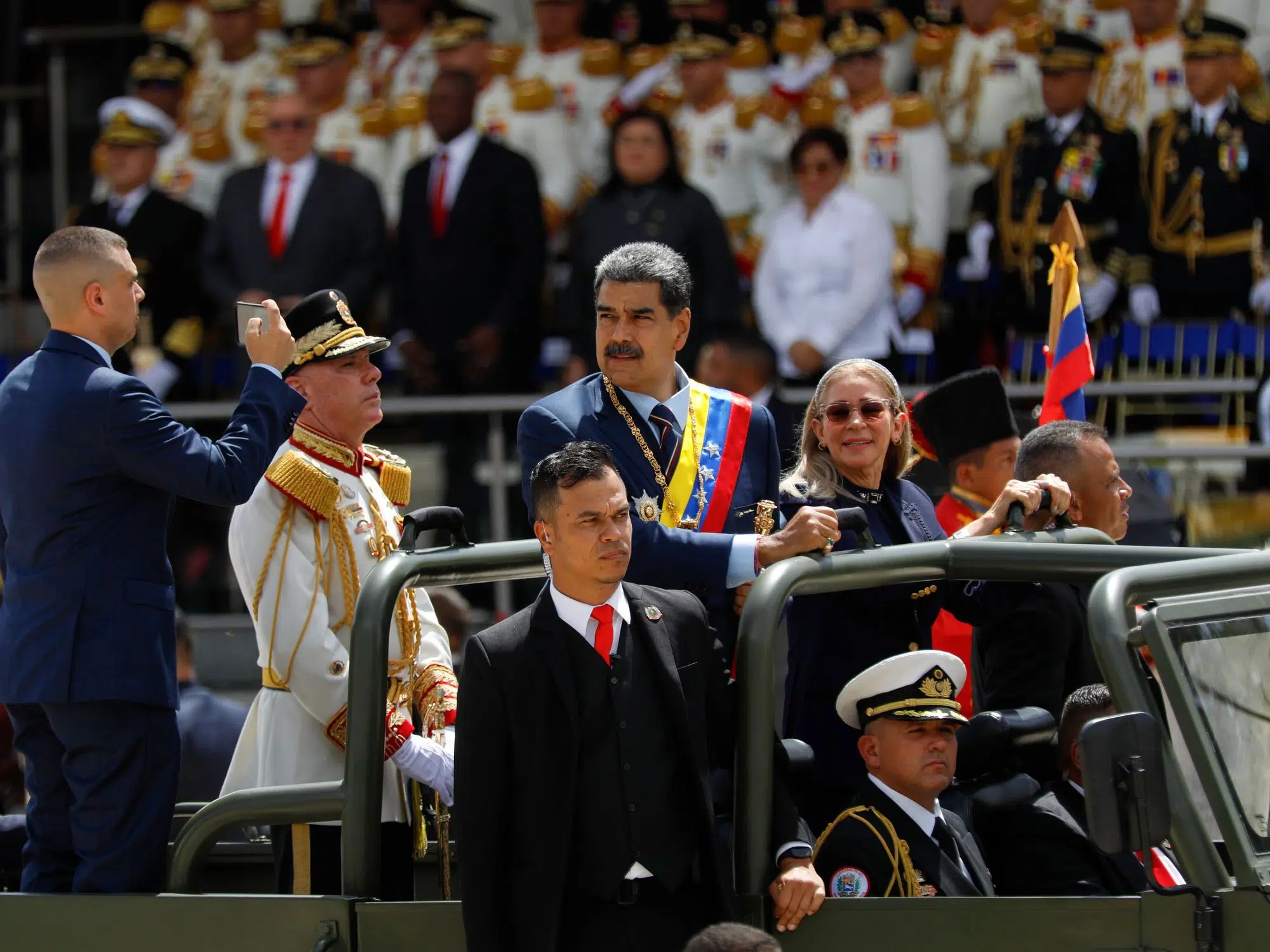
Now, the terrible thing about this pathetic comedy is that the dictator believes the lies of the yes-men. He assumes himself to be a superior being, destined to govern indefinitely. Even though it happens, as with Maduro, that he is the central figure responsible for the economic, social, and moral debacle of the country.
Maduro’s camp has begun to repeat that he is the only one who can save the country.
Although he is the undisputed and vociferous leader of a corrupt and incompetent government — head of the chain of command that persecutes opponents, kidnaps them, tortures them, and subjects them to the most extreme humiliations. Despite it being absolutely evident that he is the primary promoter of intolerance and exclusion (isn’t he responsible for the detention and persecution of hundreds of entrepreneurs and citizens who are kidnapped, imprisoned, fined, or have their businesses closed for providing services to the campaign of Edmundo González Urrutia and María Corina Machado?).
Despite all the indisputable evidence, it happens that the powers surrounding Maduro — his followers and lieutenants — have begun to repeat that he is the only one who can save the country from sanctions, restore lost peace (which he has systematically demolished) and get the economy functioning (the economy whose destruction he not only continued from Hugo Chávez’s work, but has deepened even further).
At this point, we must ask ourselves: is the argument that Maduro is the only possible savior of Venezuela pure desperation in the face of imminent defeat or is it a clear expression of the process of the degradation of power? It is both: desperation and degradation, degradation and desperation, the emotional, organizational, and political state of the powerful elite, when there are only 14 days left until an election day nobody is sure that we should trust.

