-OpEd-
Iran’s electoral circus turned out to be as absurd as expected, doing nothing to boost its frayed legitimacy as hoped. The majority of votes did not go to the winner, Masoud Pezeshkian, but stayed with the millions of Iranians who rejected the regime and its tactics — calling to vote, giving voters “Jekyll and Hyde” candidates, fiddling with voter turnout, and so on — and simply did not vote.
For the latest news & views from every corner of the world, Worldcrunch Today is the only truly international newsletter. Sign up here.
Of course, Supreme Leader Ali Khamenei had a specific objective for the election. The first step was — possibly — organizing a nasty accident for his devotee, the late President Ebrahim Raisi.
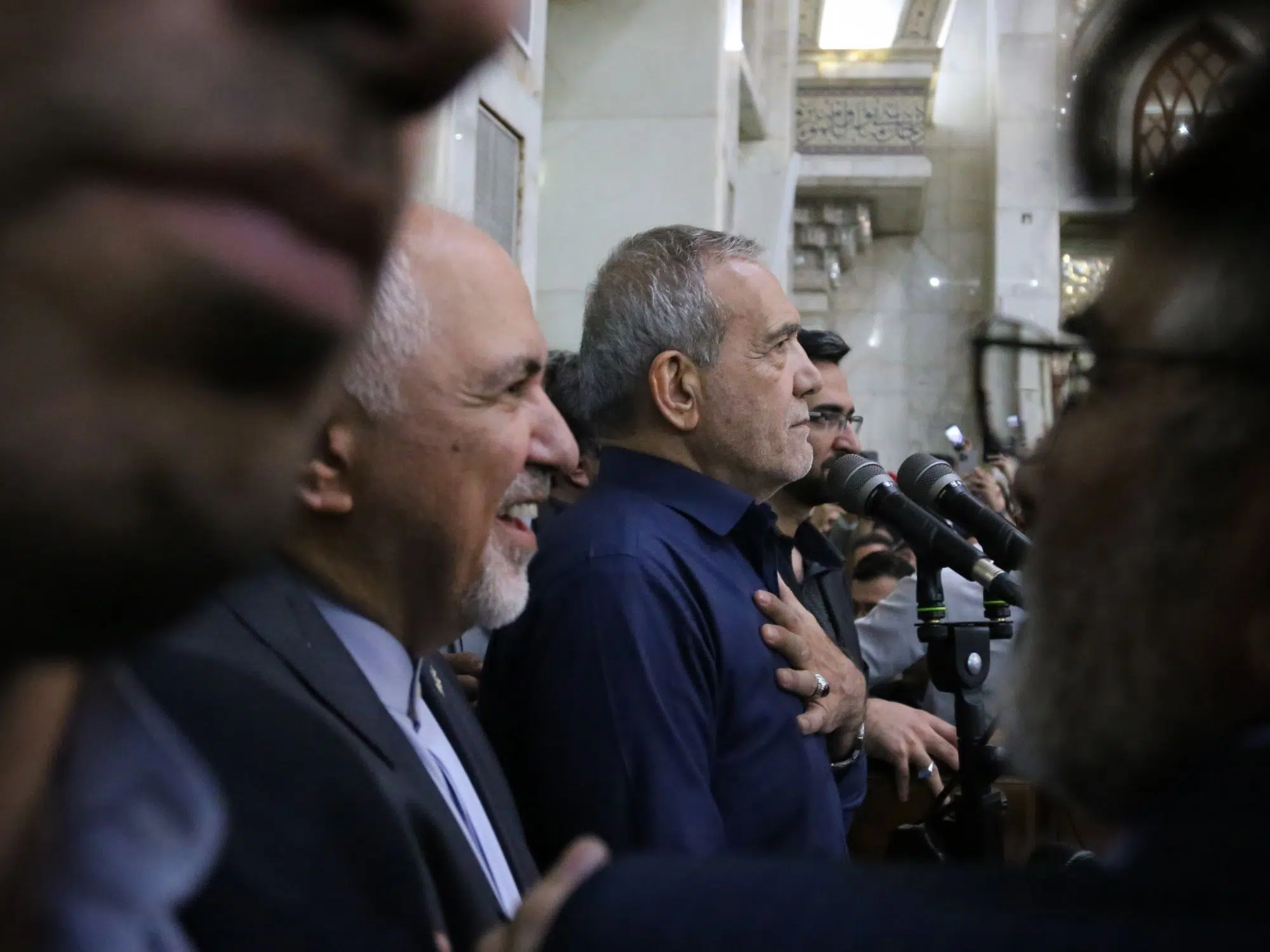
The aim was to return to government the “punching bag” faction that acts as padding against outside pressures, which the West calls “reformists.” It seems, Khamenei wanted former Foreign Minister and veteran diplomat Mohammed Javad Zarif back in the saddle, as the only man able to talk to foreign powers and implement his policy of “heroic flexibility.”
Two fears
The regime fears two things at present. First, is the increasingly serious prospect that its nemesis Donald Trump will return to the White House in November. And second is a rightward electoral shift in Europe that means a reduced willingness to engage with Tehran.
European states may soon want conservative governments in the Middle East that can assure stability and put a lid on massive, westward migration. So the regime has pulled Zarif out of semi-retirement and is dusting off its reformist credentials to show the West it is willing to talk. In the best case scenario, it won’t have to but will simply avoid hostile pressures.
Whenever the regime feels it must soften its stance abroad, it becomes harsher inside Iran.
As for president-elect Pezeshkian, the ‘Dr. Jekyll’ candidate, I would wager his domestic policies will hardly differ from those of Raisi. We may even expect more corruption, incompetence, rights violations and acts of savagery by regime elements who, quite simply, have nothing to fear from a weak president.
It will be a swift lesson of rectification for the few Iranians who were taken in by yet another electoral puppet show. To be sure, whenever the regime feels it must soften its stance abroad, it becomes harsher inside Iran lest Iranians take its diplomatic flexibility as a sign of internal weakness.
There is nothing new about Tehran spending the country’s oil money to finance trips and presentations by Zarif or other, insidious lobbyists like the Washington-based NIAC, who can put the regime’s ideological goals in the “rational” language of Westerners. But will it work this time, with a more conservative EU — not to mention a possible second Trump administration?

Times have changed
What Khamenei and his advisers may not understand is that left and right have different takes on foreign policy in the West.
If Zarif and his posse were able to sway the West toward Tehran in the past, it wasn’t so much for their diplomatic abilities as for Western states’ willingness to see the Middle East in a state of “manageable” chaos. If Tehran could extend its sway into Iraq, Syria or Lebanon it wasn’t so much for its own power as for several years of Western appeasement, if not absence, in the Middle East.
The West duly received a slap in the face when Iran began aiding Russia in Ukraine, and Hamas launched its astounding Oct. 7 attack on Israel.
Zarif and company appear to be Khamenei’s last card — or perhaps his Trump card.
Some Western politicians have come to realize that there is no getting along with the ayatollahs. European states now have evidence, or at least clear traces, of the regime’s shenanigans. But since the failed revolt of 2022, they have also engaged more frequently with exiled opponents including Reza Pahlavi, the son of the last shah of Iran. For the first time in more than 40 years, they’ve been willing to hear the other side’s lobbying.
Zarif and company appear to be Khamenei’s last card — or perhaps his Trump card. But his play won’t work, and we can soon expect to see the signs of the Islamic Republic’s final, if belated, failure.