-OpEd-
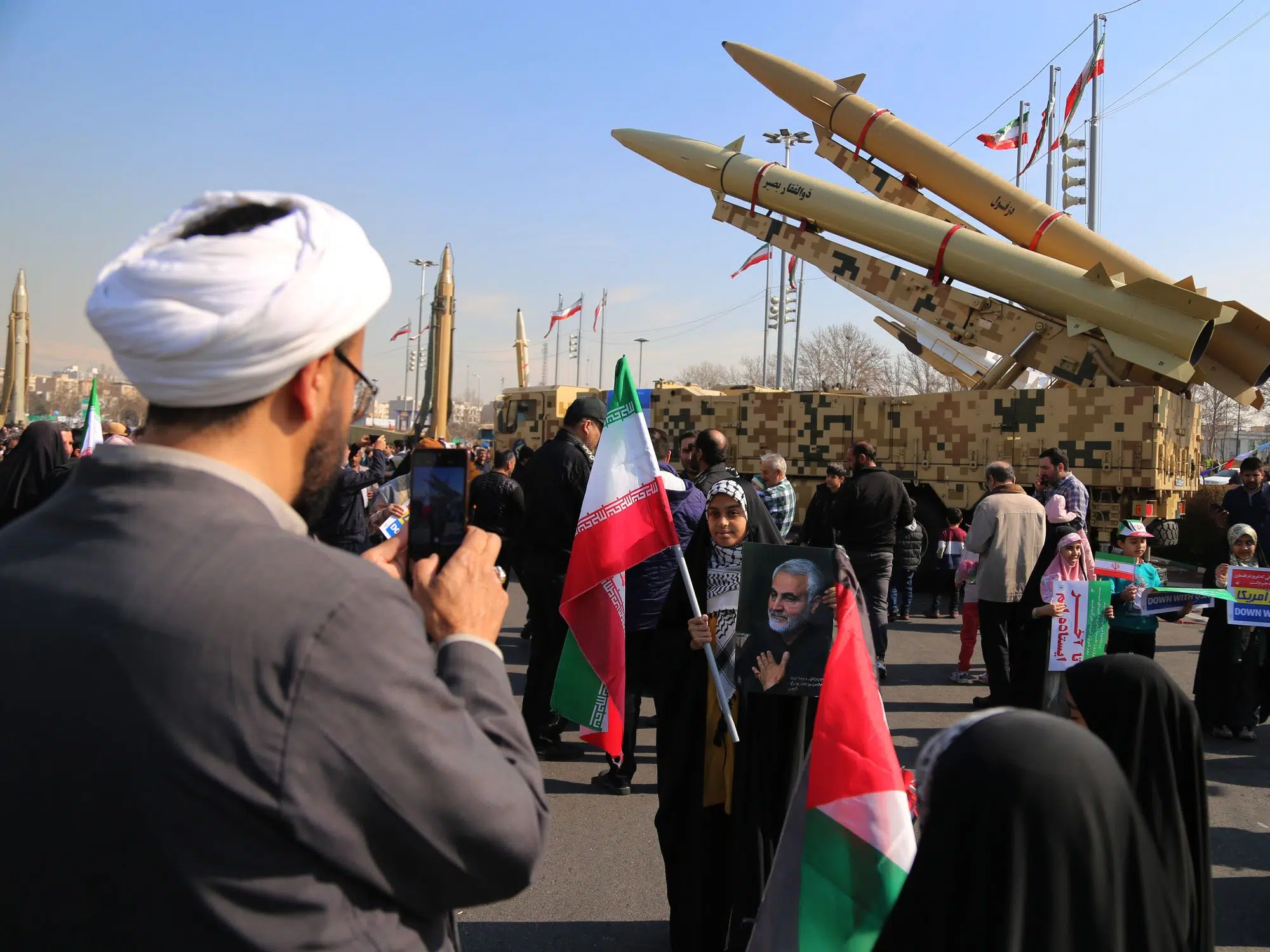
Forty-five years after the 1979 revolution that replaced Iran’s Westernizing monarchy with an Islamic Republic, the country’s revolutionary regime is facing public anger at home, near-total loss of legitimacy and regional turmoil — partly of its own making.
For weeks now Iranians have been wondering whether their country will slip into war after the October attack on Israel by Hamas, the militia Iran’s regime has funded and aided.
Iranians know things are looking bad every time the price of the U.S. dollar creeps up — as it has steadily over decades — fueling in turn the country’s relentless inflation. They are hard pressed to meet basic, day-to-day needs, even if a better-off minority still has time and presence of mind to follow the news. That is no longer the case with most Iranians, and you wonder, how long can people endure a threadbare existence in a country fast becoming a mix of scorching deserts and shantytowns?
For the latest news & views from every corner of the world, Worldcrunch Today is the only truly international newsletter. Sign up here.
Desperation has prompted some Iranians to see armed action as the only way to topple an unyielding, ruinous regime. Many just want “these people” to go, come what may! Other Iranians, with more patience and optimism, hope workers, students and ordinary folk will mobilize in unison this time, through strikes and protests, to bring the regime down. Others are convinced there is nothing people in Iran can do and are pinning their hopes on initiatives by the exiled opposition, which they imagine will persuade Western states to, finally, shift in favor of Iran’s democratization. Yet another group is simply waiting for the regime’s paramount leader, Ali Khamenei, to die, hoping that will somehow provoke the regime’s disintegration.
Whatever their differences, all these groups agree on one element: the Islamic Republic is rotten in its values and politics, and cares nothing for the people it governs.
Divine gift
The regime’s leading personalities praise the revolution as a “divine gift” or claim cheekily — as one former official, Hussein Taeb, did on the revolution’s Feb. 11 anniversary — that ordinary Americans “struggle with food and healthcare, high prices and pollution.”
The Islamic Republic has kept calm and carried on with its shenanigans.
The regime now sees itself as a power broker in the world and heading for dizzy heights, even as it depends on vile brutality to keep power. Months after the Hamas attack, Iran’s envoy at the UN, Saeed Iravani, admitted in an NBC interview broadcast on Feb. 6 that Iran was indeed arming, training and supporting Hamas and other Palestinian groups.
Thus in spite of the “messages” and warnings Western states send the regime, either directly or through intermediaries, the Islamic Republic has kept calm and carried on with its shenanigans. That means spending billions more dollars of Iranian public monies on a secretive nuclear program, on developing missiles, paying for its secret police and militias, and fomenting mayhem across the Middle East and beyond.
Sanctions have squeezed the country but the regime somehow manages to earn enough to pursue its own, dastardly activities. Decades of living on the margins of the international legal and financial order have after all forced it to develop a network of dealers, middlemen, moneymen, front companies and backroom peddlers often tied to the Revolutionary Guards, who will find, buy, sell, bring in and take out whatever it is that needs to move — from oil and petrochemicals, to arms, technology, cash and assets.

New Biden doctrine?
The regime no longer hides its contempt for sanctions, as officials brazenly boast of their ability to “jump the sanctions barrier,” as they call it. Some will say of course that the regime has managed to evade them thanks in part to the present U.S. administration’s refusal to clamp down on Iran. The Biden administration’s logic follows the dogged hope of getting a deal on the Iranian nuclear program and “putting a lid” on Middle East violence with the help of the mullahs. It is like asking an arsonist to help put out the fire…
U.S. allies have decided to toe this line, with intermittent mumblings in countries like the UK of listing the Guards as terrorists, and little else to follow.
Has the Hamas attack made the U.S. see the error of its approach with Tehran?
People speculate on where the region is heading, but some believe the Hamas attack has made the administration see the error of its approach with Tehran and helped forge a ‘new’ Biden doctrine. They believe, optimistically, that the U.S. administration may implement this new strategy with a sense of urgency before the November presidential elections. The New York Times columnist Thomas Friedman sees the new line broadly as working to create the Palestinian state, standing up to Iran, and getting a pact between Israel and Saudi Arabia.
But what does “standing up to Iran” look like in this case? Sending the regime private messages, declaring the United States does not want war and making selective strikes on targets after three U.S. soldiers were killed in a strike — but only after warning the regime days in advance? Sources claim the regime has taken note of U.S. exasperation, even if its conduct has not changed notably. Others insist a regional war must be avoided as it can only serve Russia’s interests.

Or no ‘Iran plan’ at all?
Other analysts believe the administration has no “Iran plan” at all, as the Iranian regime’s continued provocations suggest. Iran’s ambassador in Kabul, Hasan Kazemi-Qomi, recently boasted Iran could recruit “more than one army” of Afghan desperados to fight for the Gazans.
It sounds far-fetched until we recall the multinational nature of Iran’s regional militias. Most Iranian opponents of the regime agree in any case that there can be no Middle East peace while the regime and its Revolutionary guards are in place and functional.
Yet a good many Iranians have also concluded that the West believes this troublesome regime is still of greater use to it than any alternative, even a secular or democratic regime. Is that ultimately the premise of the Biden administration and the EU? If so, as Iranians continue to grapple with the misery of their ruined lives, let the West tackle the regime’s hit-and-run terrorism without complaining.
You wonder again, how long can you appease criminals without ending up with egg on your face?

