
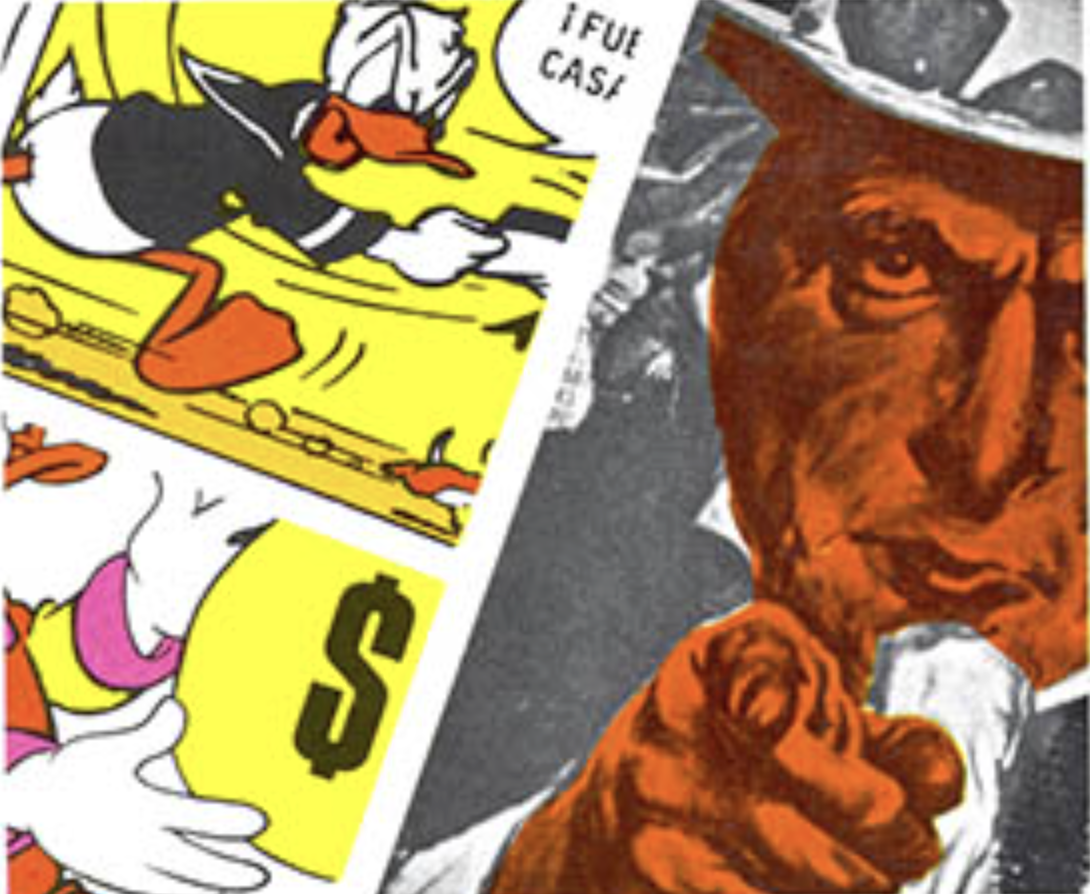
BUENOS AIRES — How To Read Donald Duck (“Para leer al Pato Donald: Comunicación de masas y colonialismo”) is a book from the 1970s written by Argentine-Chilean novelist Ariel Dorfman and Armand Mattelart, a Belgian sociologist and leading figure in communication studies, who recently died at the age of 89.
First published in Chile during the administration of leftist President Salvador Allende, the work by Mattelart and Dorfman critically analyzed Walt Disney comics, arguing that they functioned as capitalist and imperialist propaganda for the United States.
They maintained that the power of Disney comics lay in their apparent neutrality and innocence, that humor and fun served as vehicles for exporting a worldview in which peripheral or underdeveloped countries fulfilled the function of providing raw materials and treasures that characters — such as Scrooge McDuck — exploited and took to the United States.
Hearts and minds
Through stories and children’s tales, a way of seeing the world was transmitted and a “battle for the hearts and minds” of children and adults was waged.
In the cartoons, the ducks traveled to other countries and territories, called “Bananaland,” “South Patagonia,” “Tropicoland,” “Aztecland,” “Neglected Highlands“, “Inca-Blinca,” or “Unstablestán,” caricatured versions of the Third World in which the inhabitants appear naive, childish and superstitious. Donald and his nephews arrive from the civilized “center” to teach them, trade with them, or extract treasures.
In this reading, the comics symbolically reproduced the relationships of subordination and dependence between the United States and Latin America. The authors also mentioned the gender and power stereotypes present in the often purely decorative female characters, and the authoritarian and hierarchical relationships in which the uncles give orders and the nephews obey.
In short, the book interpreted Disney comics as an “instruction manual” for developing countries on how they should treat their big northern neighbor.
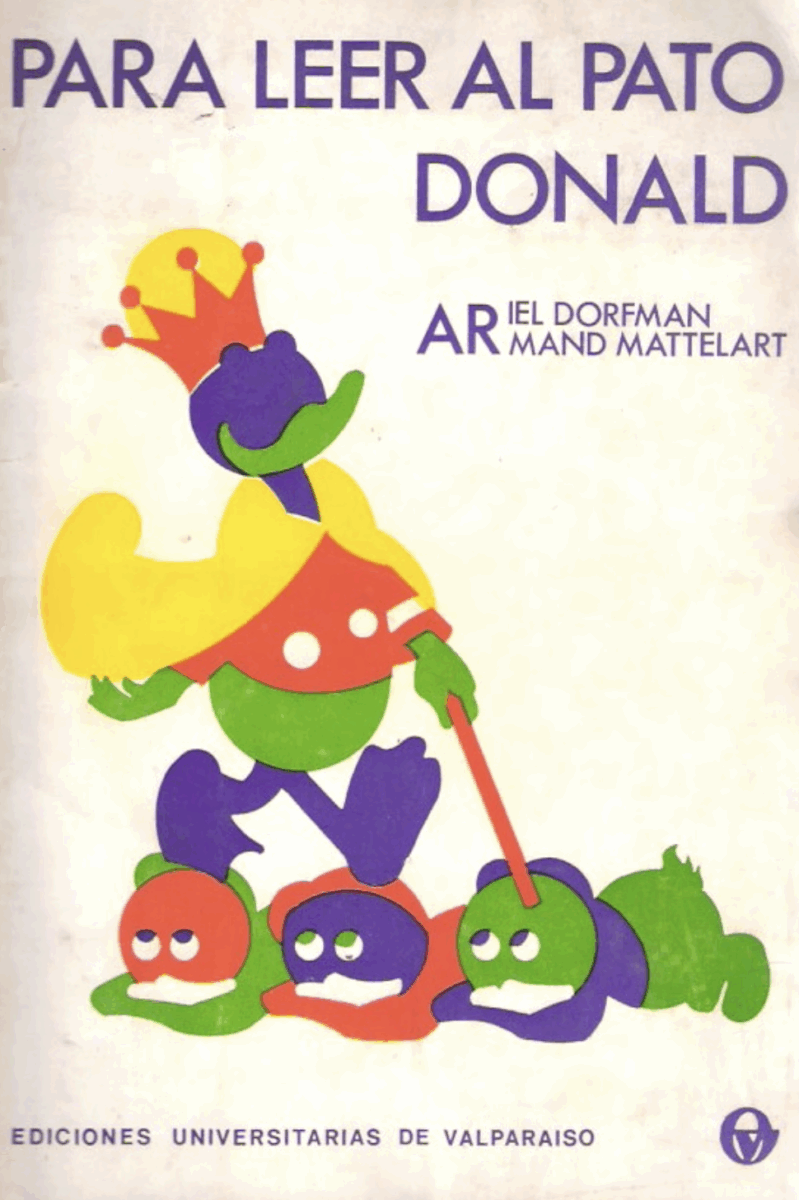
Cover of a 1970s copy of How to Read Donald Duck — Source: Ediciones Universitarias de Valparaiso
Modern relevance
The book sparked controversy and became an international bestseller, and an iconic text in communication and cultural studies, generating a major debate on the role of mass media.
It survived censorship and book burnings during the dictatorships of the 1970s and was reprinted numerous times. Needless to say, the idea of an alternative social project that underlay it at the time was wiped off the map, defeated, disfigured, or overcome by the storm it helped unleash.
The focus is no longer so much on deciphering hidden messages, but rather on analyzing a public performance.
However, images of Uncle Sam embodied in the figure of Donald Trump, and of Latin American leaders captivated by their aversion or fascination with the “American empire,” bring to mind that reading by Dorfman and Mattelart.
In a more polarized political context and a much more fragmented and aggressive media ecosystem, perhaps the focus is no longer so much on deciphering hidden messages, but rather on analyzing a public performance in which the logic seems to be reversed: from fiction that draws on reality to create stories, characters, and narratives, to a hybrid (virtual/real) reality that at times appears to us as a caricature of itself.
The dreamer Walt Disney can’t have imagined that his creatures and fantasy kingdoms would end up embodying such real characters and stories.