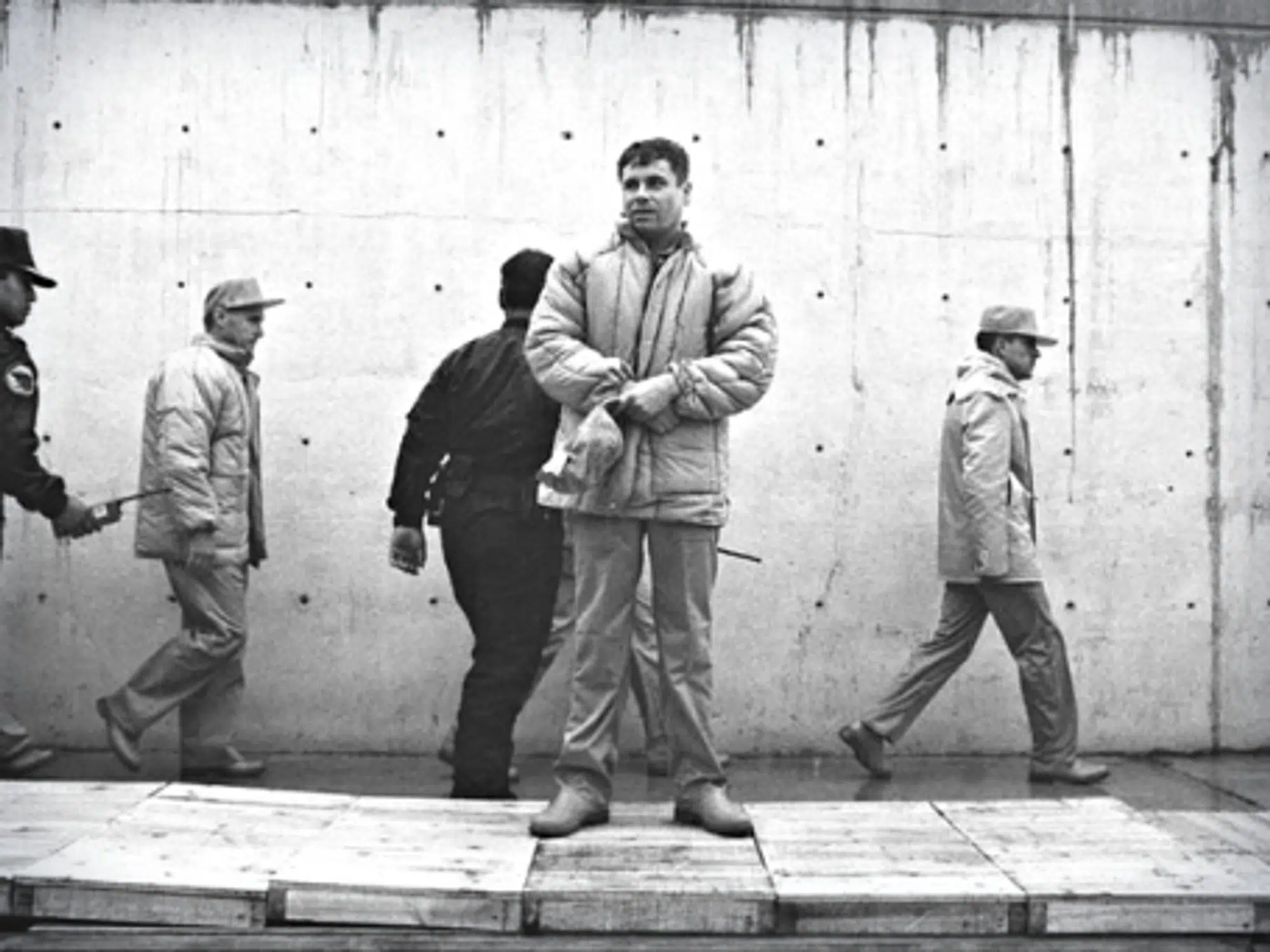
BOGOTÁ — It was last Saturday, July 11, when a certain fellow by the name of Joaquín Archivaldo Guzmán Loera, aka El Chapo (“Shorty“) fled — or better said, walked out of — Mexico’s most modern and supposedly “tightest-security” prison.
Guzmán, one of the world’s leading drug traffickers and head of the feared Sinaloa cartel, had been confined for the second time in the Federal Center for Social Readaptation No. 1 (CEFERESO), dubbed the “Altiplano.” His flight through an underground tunnel was fit for fiction. In contrast with certain other attempts by drug gangs to rescue their chiefs, there was no daring assault here, neither helicopters nor gunfights: His collaborators built him a well-lit, well-ventilated tunnel leading from beneath his prison shower facilities.

The little house near the Altiplano prison — Photo: Narco Guerra MX via Instagram
Pricing inequality
How much did it cost? Experts would say the tunnel alone cost about one million Mexican pesos (a little over $63,000), to which we must add the bribes paid to a large number of officials and agents, as media are speculating. I would even say, not that many — 40 or at most 50 officials needed to be paid off.
Put yourself in the place of one of those policemen, who receives a monthly wage equivalent to about $893 and is offered tens of thousands just to see or hear nothing. Meaning the entire operation would probably cost no more than $250 million, which is peanuts to the Sinaloa cartel. A policemen from Mexico City told me, “I’d accept if they offered me the money. It’s not just money. It’d cover the education, health and welfare of my children and grandchildren. Why should I not accept it? To protect a state that doesn’t give a f**k about me?”
And there is the crux of the story: We are talking about deeply corrupted societies whose corruption is in part — an extensive part — rooted in gaping economic inequalities. When just a few have everything and others have nothing, there is no way of avoiding corruption or such outlandish scenarios. Not surprisingly, lower inequality and lower corruption go hand in hand, as many countries show. There lies the challenge for all Latin American countries. Mexico is but one outstanding example, our Colombia is another.