-Analysis-
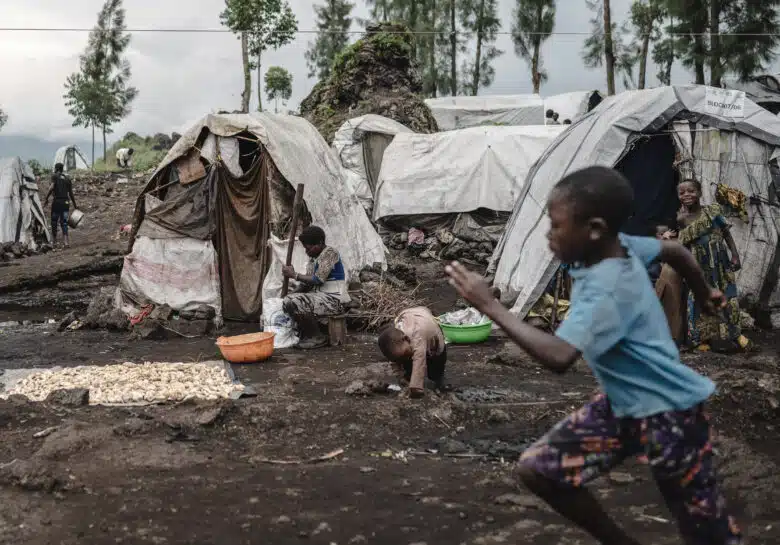
PARIS — The list of signatories is impressive: 75 Nobel Prize winners of a wide range of nationalities and disciplines, from chemistry and literature to medicine and peace. What brings them together? A conflict that receives very little publicity but that is causing immense suffering for millions of civilians in the eastern part of the Democratic Republic of Congo (DRC).
For the latest news & views from every corner of the world, Worldcrunch Today is the only truly international newsletter. Sign up here.
These 75 Nobel Prize winners signed a letter, published Wednesday in French daily Le Monde, calling on the international community “which must act to put an end to the suffering of the Congolese people.” The appeal was launched at the initiative of Doctor Denis Mukwege, himself a Nobel Peace Prize winner in 2018 for his work in the eastern DRC with women victims of rape, now a weapon of war.
“We must put an end to the Congolese tragedy,” they wrote: “three decades of armed conflict, repeated wars, humanitarian catastrophes and systematic violations of human rights and international law.” The appeal estimates that 6 million people — yes, 6 million — have died in three decades, the deadliest conflict since World War II.
And yet, as the signatories point out, all this is happening “in a persistent global silence.”
A tortured strategic region
This is a region of immense strategic mineral wealth, located in a country with a tortured history: from the brutality of the Belgian colonial era to the present day, including the assassination of its first leader, Patrice Lumumba, the dictatorship of Mobutu when the country was called Zaire, and a predatory and largely failed state for most of its recent history.
In the eastern part of the country, which borders Uganda, Rwanda and Burundi, ethnic and national rivalries, a stranglehold on the subsoil’s resources and a disregard for human life are intertwined. In recent months, a rebel movement, the M23, armed and supported by Paul Kagamé’s Rwanda, has resumed its offensive and captured large swathes of the region, including Goma, a city of 2 million inhabitants, increasing the number of displaced people and refugees.

An unheard call in a two-speed world
Unfortunately, the Nobel Prize winners’ appeal has no chance of being heard, as it is addressed to an “international community” that no longer exists. And even when the United Nations had a little more clout, they mounted their biggest operation in the DRC, which ended in failure. Africa itself has attempted mediation but is also divided on the subject and has failed to act effectively.
Congo’s minerals are in our cell phones.
In their letter, the Nobel Prize winners deplore the lack of international reaction to Rwanda’s presence on Congolese territory, which it compares to Russia’s involvement in Ukraine. The text speaks of “double standards,” an idiom that until now has been used mainly in connection with the Israeli-Palestinian conflict.
There is indeed a hierarchy of conflicts in the world, both in media coverage and in the reactions of the major and smaller powers. Global disruption is exacerbating this situation, at the expense of millions of civilians.
And yet, the Nobel Prize winners’ message reminds us that the Congo’s minerals are in our smartphones. It concludes with the words: “We all have a piece of the Congo in our pockets. So we all have a responsibility.”