
-Analysis-
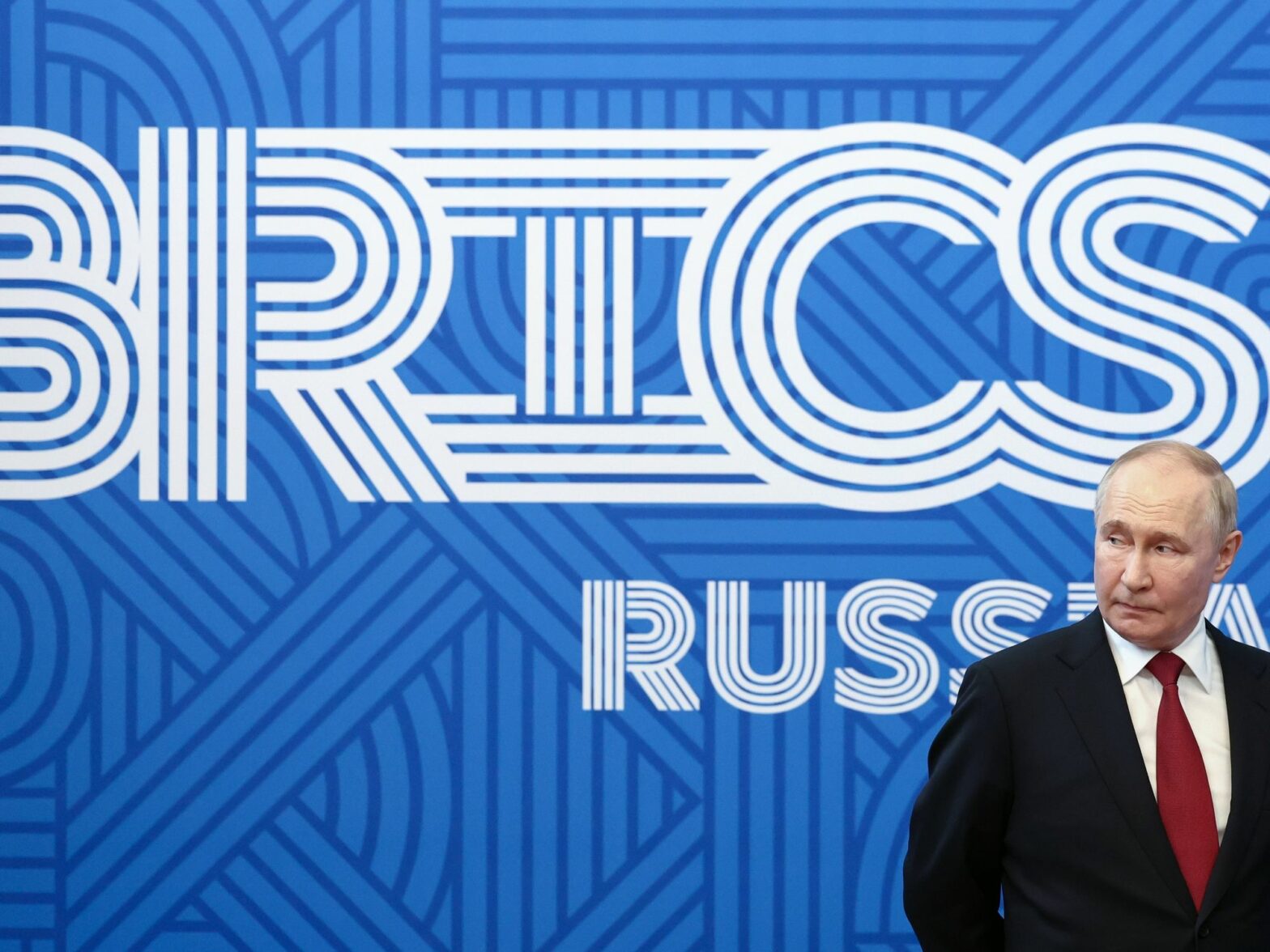
PARIS — How would you like to join Russian President Vladimir Putin’s club? While some might hesitate, the BRICS summit opening Tuesday in the Russian city of Kaza, on the banks of the Volga River, shows that many countries are not hesitating, even despite Moscow’s invasion of Ukraine.
BRICS is the club founded two decades ago by Brazil, Russia, India and China, the so-called “emerging” countries, which are soon to be joined by South Africa. At their Johannesburg Summit last year, they admitted new members, including Iran, the United Arab Emirates, Egypt and Ethiopia. Saudi Arabia has been invited but is hesitating. Argentina, led by Javier Milei, has refused outright. The list of BRICS candidates is long, including NATO member Turkey.
The BRICS already claim almost half of the planet’s population, compared with just 10% for the Western G7, and 35% of global GDP, more than the G7. That does not make them a global counter-power — yet.
But it does make them count at a time when the world order is being redefined.
Two prisms, one message
There are two ways of looking at this summit. The first is to look at it through the prism of Ukraine. Putin is proving that he is not a pariah, that heads of state, and not just his Chinese counterpart Xi Jinping, are unhesitatingly standing by his side.
That is an undeniable success for Putin, especially at a time when Ukrainian President Volodymyr Zelensky is trying to mobilize support for his “victory plan”. After two and a half years of war, Ukraine and the West have not succeeded in reversing the balance of power.
Ambiguities have not prevented the BRICS from growing
But there is another prism through which to analyze the Kazan Summit. That is the emergence of calls from the Global South for a new world order — different from the one the West, especially the United States, defined in 1945.
Despite all the BRICS’ ambiguities, that message should not be underestimated.
A whole new world?
Part of this ambiguity is that the BRICS are not a coherent bloc. We can discuss the hostility between India and China, the decisive weight of the Chinese economy, the presence of Iran, or the bloc’s difficulty in pushing for the de-dollarization of the global economy.
But these ambiguities have not prevented the BRICS from growing, attracting a host of candidates and conveying an alternative symbolism.
What unites the BRICS is their hostility to a world order that still gives too much pride of place to the West. But not everyone in the club wants to replace it with a Chinese order, or to have Putin as their protector or moral guardian.
But the impossibility to reform the world order, as well as the strong perception of the Western “double standards” in the conflict in the Middle East, are creating a window of opportunity for the BRICS, starting with China and its quest for leadership of the Global South.
That is why the Western powers should not ignore the message from Kazan, or risk waking up to a world that has escaped them.