
-OpEd-
BILBAO — Talking about sexuality is important to fight against sexual violence. As is talking about feminism, sharing and bringing the subject to a collective level; so that learning and change are not only individual but also collective and political. It is also important to embrace the theory: to understand and integrate it from an emotional perspective — which takes more time than a rational perspective — so that the change is embodied in our daily lives, in practice.
Normalized, silenced, subtle, and sometimes imperceptible forms of gender-based violence continue to surprise us when they become conscious, and when we identify ourselves in these situations.
“Really, this is happening to me, this has happened to me, it can’t be, as feminist as I am!” If, in addition, we talk about sexual violence, we encounter even more taboos, resistance and difficulties in detecting, expressing and accompanying them.
Sexual violence as a form of control and subjugation of women is based on a gender-based power structure, causing suffering and multiple health consequences. Sexual violence includes forced marriages, forced sterilization, female genital mutilation, sexual violence during armed conflicts, human trafficking for the purpose of sexual exploitation and prostitution, and femicide.
It is present in the public sphere, at work, in the street, at parties and in places where people enjoy themselves. It is also present in cyberspace. And, obviously, in our intimate relationships. It can be perpetrated by acquaintances, strangers, family members and co-workers. From the harassment of a leering look, to abuse, aggression, rape. More or less severe, but all of them sexual aggressions regardless of the actual violence used to commit them.
Breaking with the model
The 2019 macro-survey by the Spanish Ministry of Equality shows that 13.7% of all women aged 16 years or older living in Spain have already suffered sexual violence in their lifetime by their partner, past partners or people with whom they have not been in a relationship. And it also reminds us that for the 99.6% of women who have suffered sexual violence, it was at the hands of a man.
These examples give an idea of how patriarchy “forces” us to live and approach sexuality: by defending ourselves against the violence produced by its sexual model. An androcentric, cisheteronormative, transphobic, homophobic, ableist and phallocentric sexual model, which “genitalizes” sexual practice by reducing it to heteronormative intercourse. A violent, limiting and limited sexual model that defines, scripts and decides how sexuality should be lived, how relationships should be; how sexual pleasure should be and where to find it.
In short, a patriarchal model that generates inequalities in sexuality, as in other spheres of life. We have to develop a feminist sexual education that breaks with this model and broadens the concept of sexuality, allowing us to recognize and address the complexity of sexual violence.
Field of injunction
The patriarchal sexual model makes sexuality a tricky terrain, something that is still difficult to naturally talk about. Something that is not taken seriously, of an easy joke, of the exaggeration, of the expectation, of the mandate, the question of what will they say if I say this or the opposite?
Heterosexual women’s experiences, thoughts and emotions in relation to sexuality are conditioned by the very characteristics of this sexuality model. They are relegated to a place where the right to pleasure does not belong to them, where the capacity to express desire is annulled, where they are considered objects of desire. With a submissive role, dependent and in need of “the other” to feel anything, making sexuality something to be lived from lack and, sometimes, from ignorance. Where pleasure is not a priority.
Women’s bodies are also subject to cultural, religious, social, political and economic mandates, as well as to impossible aesthetic canons, to which we tend to compare ourselves, thus making it difficult for us to accept and enjoy our own bodies, putting us in power-based relationships with others.
Taking the decision back into our hands
In the face of these old and well-known patriarchal mandates, we still ought to consider the progress achieved in terms of sexual and reproductive rights with regard to our mothers and grandmothers — at least in my case. For example, being able to decide whether to be in a relationship or not, how and with whom to do it, having access to family planning, deciding not to procreate or when to do it, voluntarily interrupting an unwanted pregnancy…
We should also value the path we have already walked toward the recognition of our bodies, desires and pleasures: We now know the internal structure of the clitoris, the female prostate or our ejaculatory capacity that may not embarrass us any more, we already know it is not just urination. Clitoral stimulating devices have become fashionable and made it easier to acknowledge female masturbation, even without penetration, claiming “sexual freedom” through personal satisfaction independently of another person.
The impact of patriarchy on sexuality is not limited to sexual violence.
Taking into account the sexual model, the patriarchal context, the dictates and progress already made, we observe that, as Paola Domonti mentions in her book La brecha orgásmica (The Orgasmic Divide), heterosexual women’s sexuality is under the coexistence of these ancient and modern, different and contradictory codes. On the one hand, they expand our freedom, but, on the other hand, they generate uncertainty and suffering for not being able to fulfill all of them: we have to masturbate, have many orgasms, ejaculate in abundance, feel pleasure with the vibrator, be highly sexually active, try everything, be single, have a partner…
And if it is not so, if I do not get it or I do not feel like it, it means that something is wrong with me. We are then back to blaming, shaming and questioning ourselves instead of questioning the sexual model, sexual practices and the patriarchal system — failing to see how the impact of patriarchy on sexuality is not limited to sexual violence, but systematically and subtly determines women’s access to pleasure.
An ongoing shift
We are in the midst of a paradigm shift toward another sexuality where there is no sexist violence, a model in which we can ideologically know — or have an intuition of — where we want to be. But at an emotional level we still don’t know how to achieve it: We are told that “we must be sexually free” but it still comes with consequences. It is a confusing field where the progress that can be made is slow and complicated.
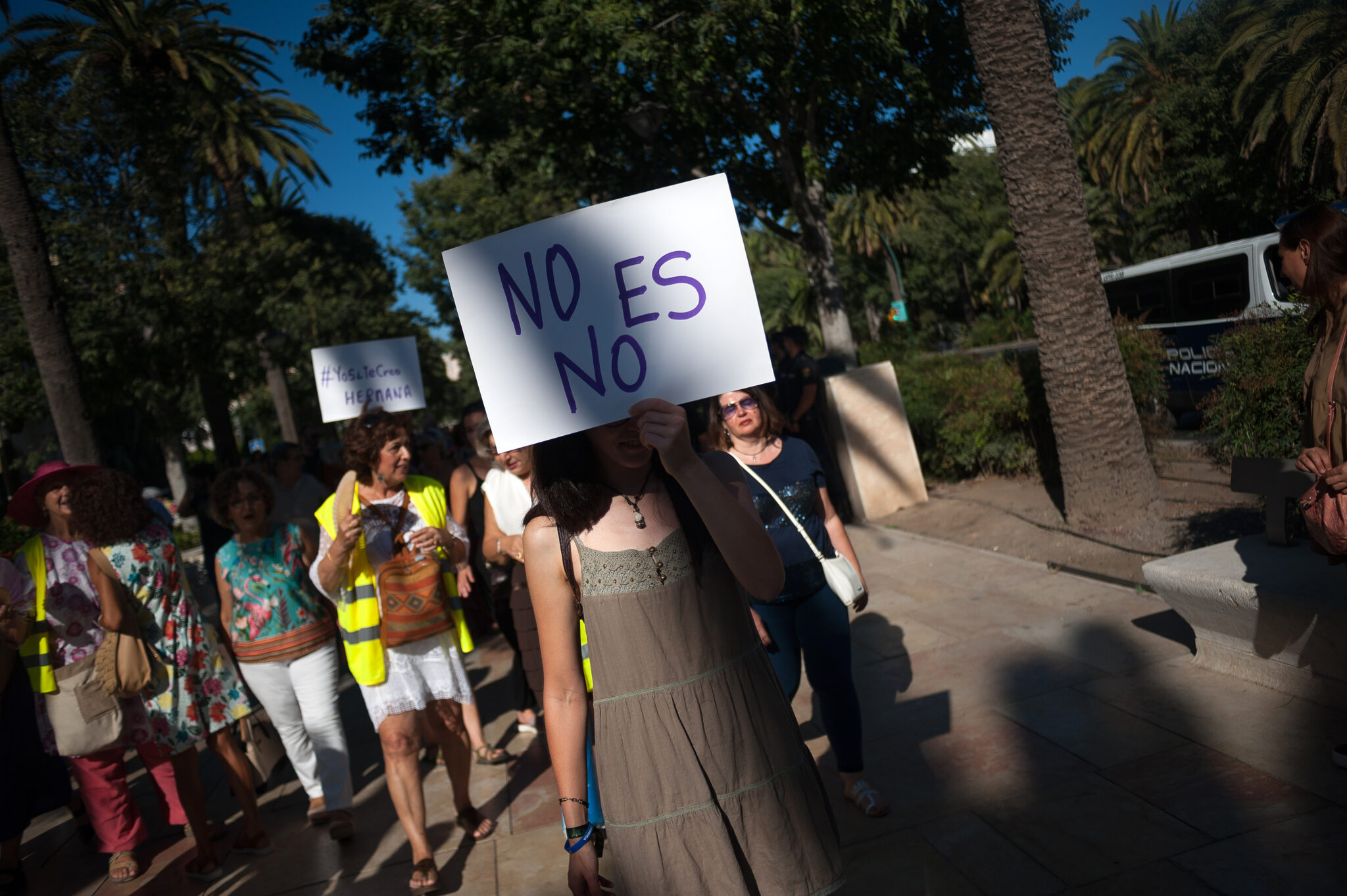
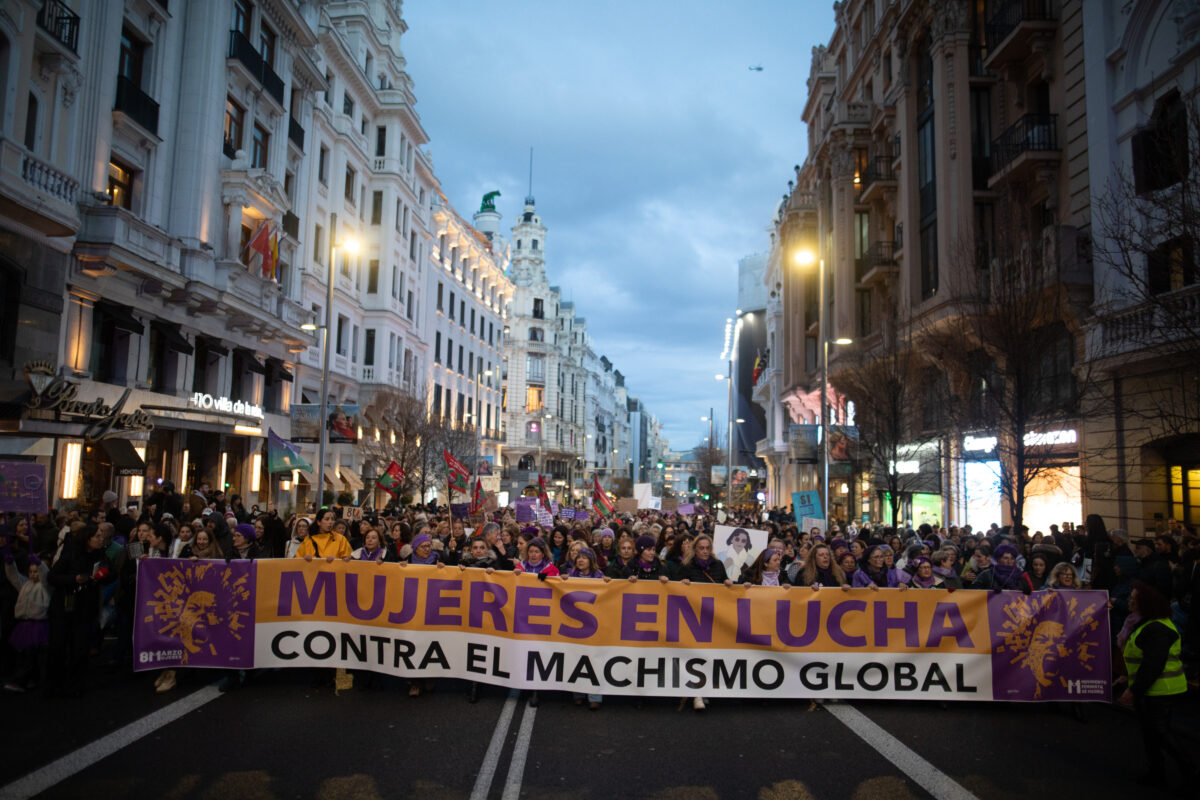
Yet in recent years sexuality has returned to the feminist debates, focusing on issues related to sex workers and transgender people, and also in their vindications, especially in response to sexual violence against heterosexual women. Some recent examples are the mobilization against the sentence of La Manada rape case in Spain, the struggle for the decriminalization of abortion in Argentina, the Chilean viral performance “El violador eres tú” (“The rapist is you”) or the #MeToo movement in the United States.
These movements, which are chronologically close, had a wide diffusion through social networks, generating a domino effect in various countries, cities and contexts, also achieving significant impact in the streets. These mobilizations helped to make sexual violence visible, collectively and publicly denounced, considering it as one of the most invisible and widespread gender-based violence, which affects women all along their life cycle.
Not only do we need a life free of violence but also a life full of joy, pleasure and care.
We urgently need a feminist sexual education that breaks with this sexual model loaded with injunctions and abuse, one that broadens the focus of sexuality, giving it a positive and affirmative direction starting with sexual pleasure, beyond the struggle and combat, vindicating pleasure in itself, without thinking that this is not serious enough in the face of other struggles.
This, so as to build a model of sexuality and erotics that allows us to nurture and develop the right to pleasure, because not only do we need a life free of violence but also a life full of joy, pleasure and care.
These are issues that Betty Dodson already addressed in her book Sex for One: The Joy of Selfloving; the right to pleasure as a fundamental need for any person’s full development, and sexual liberation as a way to achieve sexual independence and emancipation.
New conjugations
The change of attitude toward sexist violence also implies learning to “eroticize good treatment,” a concept provided by the psychologist and sexologist Fina Sanz, which makes us reflect on the content of good treatment and the Spanish verb “buentratar” (“treating well”), words that we cannot conjugate because they do not exist in our dictionary. And, as we already know, what is not named does not exist.
A key issue for sex education to prevent sexist violence and build healthier, freer and more egalitarian societies is that it should be comprehensive and inclusive of the diversity of identities, bodies, desires and sexual forms. A sexual education that dismantles hegemonic masculinity, that permeates bodies and relationships, integrating “good treatment,” care and emotional responsibility so that all people can live their sexuality in a healthy, pleasurable and violence-free way.
We also need public policies to ensure that this sexual perspective is integrated in every organization, in the mass media, in institutions and in the professional view of those who intervene directly in cases of sexual violence: police forces, courts, health personnel and support services for the victims. We need it so that these situations are detected, cared for, accompanied and adequately remedied.
Note from the author: In this article, I write from my personal and professional experience as a social worker in social and community intervention with women at risk, suffering social exclusion and victims of sexist violence; and also as a sexologist of the project Mundo Ivaginario, where I carry out sexual education and support individual and group programs for the reappropriation of our body and the rediscovery of our pleasures.