
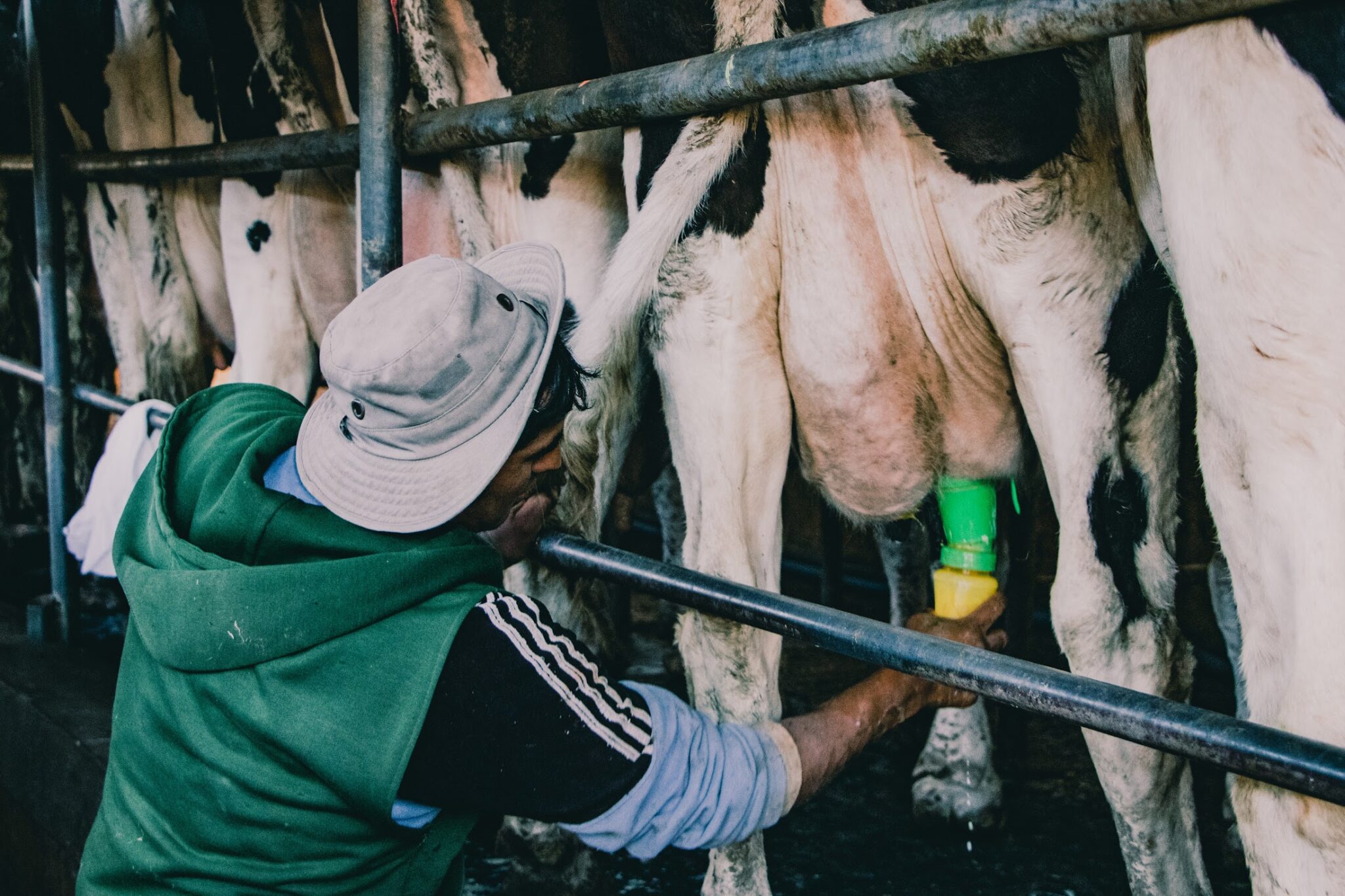
BUENOS AIRES — Gustavo Morini runs a dairy farm in the Brandsen district south of the Argentine capital. The 350-hectare (1.35 square mile) farm is performing well, but it demands constant attention and personal physical effort from him and his staff. Looking to the future, he decided to invest in a robotic milking shed — an upgrade that will not only improve comfort for the cows but, more importantly, offers his workers a better quality of life.
“If you want to stay in the dairy industry, you’ve got to modernize. Automation transforms life on the farm: no more 3 a.m. starts, and the people doing the milking can finally take holidays whenever they like,” Gustavo explains.
The story of this farm began with Morini’s maternal grandfather, who came from Bilbao in the Basque Country in 1927. He arrived in La Plata at the age of 18, eager to make a living. He worked a variety of jobs, but one day he started buying milk from local dairy farms to sell in the city.
“Through hard work, he grew the business and eventually managed to acquire two dairy plants,” recalls Morini, 55, who now runs what is called the: Don Juan Farm.
Over time, the grandfather did well and dreamed of keeping his own cows. In 1978, he sold the factories and retained the dairy farms he had acquired, always keeping the business firmly in the hands of the family.
The Morini family carried on their grandfather’s legacy, continuing in the dairy business, albeit with the land divided through inheritance. Gustavo now manages his 350 hectares, separated from other family farms by wire fences.
“I started when I was 20, and now I have 180 milking cows, with help from my children. It’s a dairy farm that produces an average of 26 liters per cow per day, relying on a mix of grazing and supplemental feed,” he explains.

Bot-ready udders
The herd is managed on a rotational grazing system, with plots used according to their seasonal production. Pasture nutrition is supplemented with 3 kilograms of balanced feed during the morning milking, along with 10 kilograms of corn silage and 6 kilograms of alfalfa silage in a feeding trough. In the afternoon, the same supplementation with balanced feed and silage is repeated.
The Morini family places great emphasis on the genetic quality of their dairy cows. Since 1978, they have used artificial insemination in collaboration with the Select Debernardi company, choosing animals that are high-yielding, have strong legs for walking through muddy alleys and lots, remain fertile throughout the year, and are of moderate size.
But recently, they have also started choosing cows with udders suited to robotic milking, focusing on teats that are evenly sized and well-positioned.
Robots on the farm
The idea of introducing robots came from one of Gustavo’s sons, who saw the system in operation at a dairy farm farther south in Balcarce. The family decided to adopt the technology and began planning the construction of the shed to house the robots, making advance payments for the milking equipment.
“By installing robots, I’m thinking about those who come after me.”
Beyond boosting production, Morini sees this technology as a way to ensure the farm’s long-term viability, reducing the enormous effort involved in milking twice a day, 365 days a year.
“By installing robots, I’m thinking about those who come after me — so that in 20 years, they’ll inherit a farm that’s easier to manage and requires less effort,” Morini explains.
He says he sees robot technology as nothing more and nothing less than a modern business tool. “The challenge for my farm was to modernize or risk closing within a few years, because it’s impossible to find people willing to live the life of two milkings a day.”

Milk payments
For the owner of a 350-hectare farm, which operates as a small-to-medium-sized business and whose income relies entirely on milk sales, implementing automation did not come without financial and economic challenges. Gustavo arranged a loan from Banco BICE, repayable in liters of milk, structured with support from the Vacalin plant, the milking equipment supplier, and the farm itself.
The loan was approved in December 2024, and the funds were transferred to the supplier to secure the four robotic milking units planned for installation. Additional funds were raised by selling heifers at the Brandsen exhibition and directly on the farm.
Construction of the shed is already underway, with a builder preparing the embankment for the concrete base and subsequent structure. The farm alleys are also being modified to provide cows with the most direct route to the shed. Collars and other components necessary for the system are in the process of being purchased.
Morini sees automation as a long-term project, aiming for completion by the end of 2026, with the hope that this investment will secure the continuity of the farm after he retires.