MUNICH — Every other Tuesday, nurses and care home managers log in for a video call, hoping for some help. The nursing home has invested 28,000 euros, and now it’s time for them to do some homework: What exactly is artificial intelligence? What is a large language model? How long does the battery last? How do I connect it to the cloud?
For the latest news & views from every corner of the world, Worldcrunch Today is the only truly international newsletter. Sign up here.
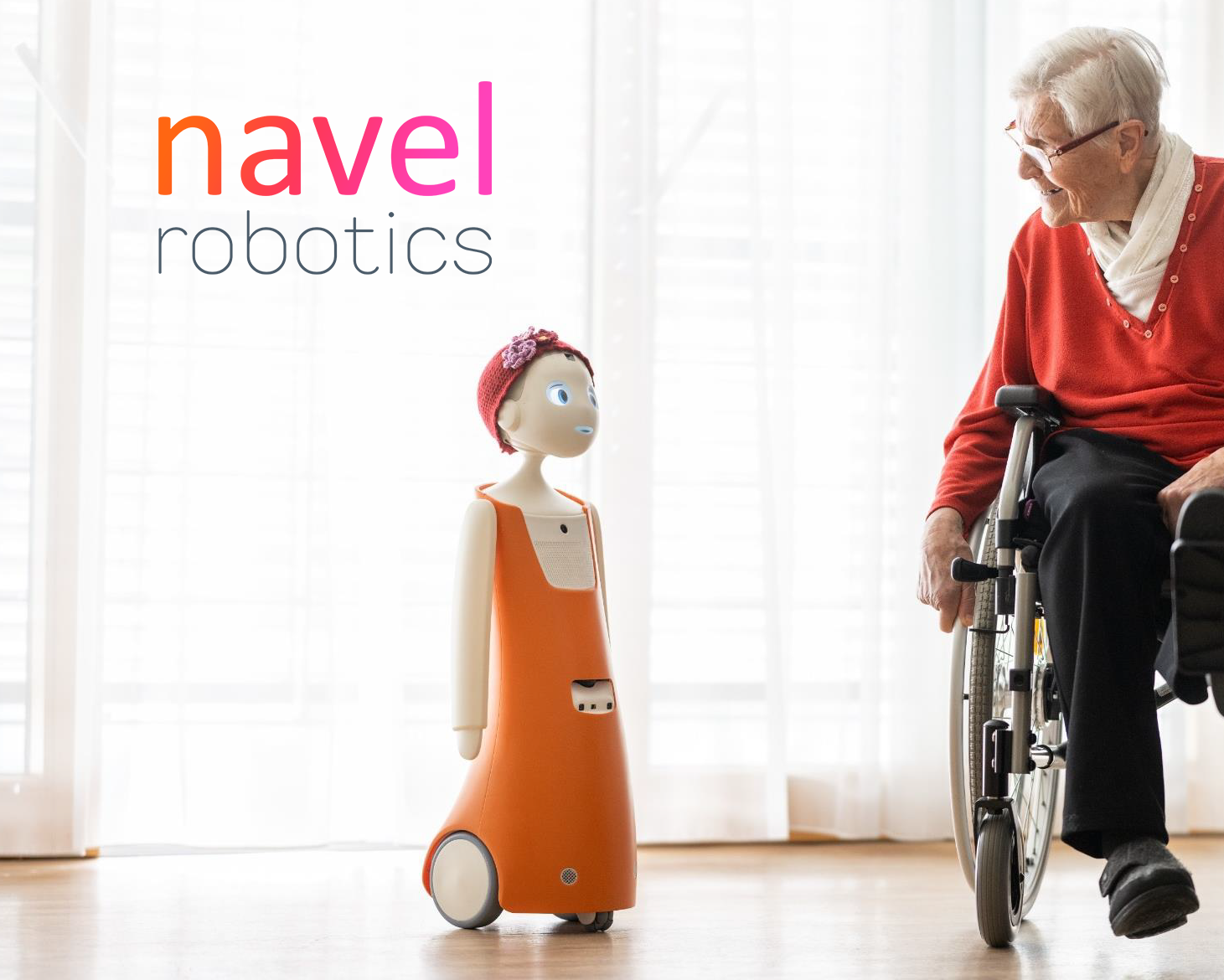
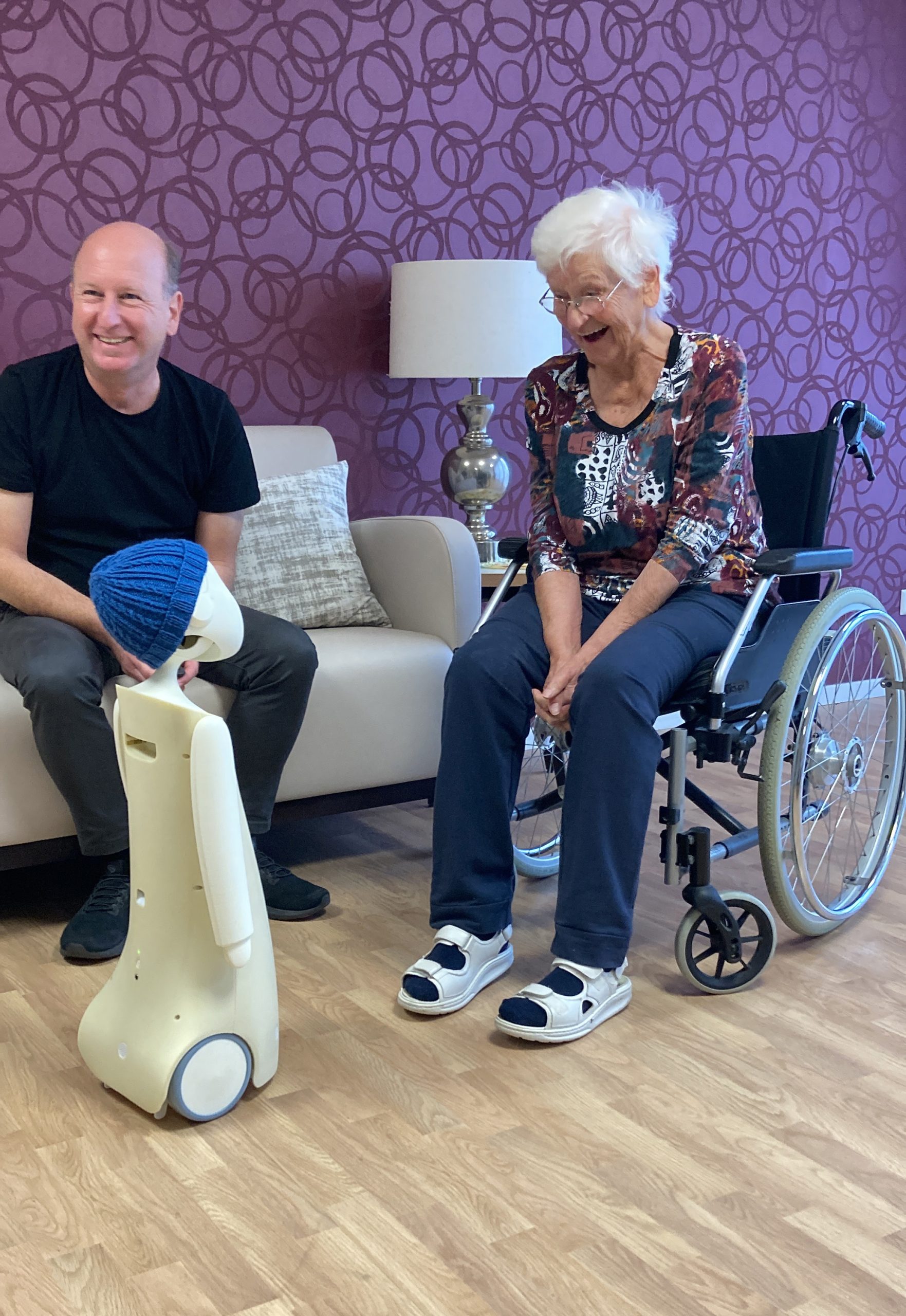
All of it to understand this little creature now living among them: Navel, 72 centimeters tall, with two arms, two wheels, a childlike voice and a knitted hat perched on his head.
Some had to overcome their initial fear. After all, letting vulnerable people talk to a robot sounds like an idea straight out of a sci-fi nightmare.
But the numbers are hard to ignore. Germany is home to 5.6 million people in need of care, twice as many as a decade ago. The Federal Statistical Office predicts another 2 million will be added by 2055. According to the German Nursing Council, by 2034 there will be a shortfall of half a million skilled care workers. Even now, there are 115,000 open and unfilled positions. How is this sustainable?
“The people living here hardly get any one-on-one care,” says Michael Klipker. “And this is why the robot could help patients.”
He’s sitting at his desk at Diakonie Lilienthal, a care facility in Lower Saxony for people with disabilities. A 57-year-old trained mechanical engineer and special needs nurse, Klipker has worked at the facility for three decades, now serving as executive assistant. A dozen smartphones lie across his desk. He recently read a study showing that nurses save 23 to 25 minutes per shift by dictating their reports rather than typing them. So now he’s setting up the devices.
About a year ago, Klipker and his colleagues brought in Navel, a “social robot.” In fact, there are two: one lives in a group home, the other on a supervised ward. Their role is to engage with residents when no one else is available.
It’s long been known that people with dementia, for example, decline more quickly when no one speaks to them regularly.
Facial recognition
The robots come from a pilot production that costs either a one-time fee of 28,000 euros or a monthly lease of 970 euros. They’re programmed and assembled in a small office run by Munich-based startup Navel Robotics. The official launch is set for next year. Every two weeks, a virtual consultation is held where the Munich team connects with the 34 facilities already using the robots. How is it going so far? What does Navel still need to learn?
As people age and their memories fade and hearing worsens, Navel is meant to grow smarter with each software update. The goal is to create a robot that genuinely eases the caregivers’ burden, even if only by relieving the guilt of not being able to be everywhere at once.
When will Navel finally be able to approach people on his own? That’s the moment we’re all waiting for.
This Tuesday’s call is about Navel’s facial recognition, which sometimes fails. The robot stands confused in front of people he’s met before. The Navel Robotics employee suggests better lighting, as Navel struggles when facing backlighting. One participant complains that since the last update, Navel’s head wobbles strangely, like one of those dashboard dachshunds. A nurse says he now mispronounces the schedule programmed into him. “He says: bingo is tomorrow at ten colon zero zero.”
Around-the-clock, 365 days a year
At last, a nurse makes a request. Politely, but firmly. When will Navel finally be able to approach people on his own? “That’s the moment we’re all waiting for,” she says. Klipker nods. The residents at Diakonie Lilienthal were either born with disabilities or acquired them later in life. Some have Down syndrome, others have had strokes. One woman loses her memory every hour. Here, care means something deeper: round-the-clock support, 365 days a year.
Social work is incredibly demanding… Navel never loses patience.
Navel’s charging station is in the common room. There, at a large wooden table among worn board games and mugs of colored pencils, Klaus is piecing together a puzzle of the New York skyline. Three thousand pieces are spread before him. Navel stands beside him, blinking.
“Navel, we’d like to know what you know about puzzles,” says Fabian Petersen, the supervisor.
“Puzzles are very interesting games. You can put many pieces together. It’s fun to see the pictures take shape. Do you have a favorite puzzle, Klaus?”
“I don’t,” says Klaus, “unfortunately, I don’t.”
Navel replies, “I see you have a puzzle with you. What is this piece, Klaus? Tell me more about it!”
Klaus says, “Hard to fit, tough pieces, Fabian. They are all difficult pieces!”
Navel keeps asking questions. Have you connected many pieces yet? What can you see in the picture? Do you have any tricks for the harder parts? But Klaus doesn’t stick with it. He just wants Fabian’s attention. Eventually, the supervisor turns Navel off.
Caring for Navel
The conversations are still far from natural, and how could they be? But the staff see signs of improvement. Navel now has a memory and will remember Klaus tomorrow, the man who likes puzzles. And probably that he was stressed while working on it today.
An algorithm analyzes facial expressions to gauge emotions. Navel creates a profile for each person he interacts with (hobbies, wishes, worries) which he draws on the next time they meet. Caregivers can also upload relevant details to a website: what’s for dinner, who’s visiting, when bingo starts.
He really does look like he’s listening. Especially when he makes eye contact or tilts his head and glances down. He can tell jokes and ask trivia questions. Residents in Lilienthal now sometimes ask for him.
But for the caregivers, he’s also one more thing they have to manage. He needs to be carried around and integrated into conversations. Often, they have to sit next to him like interpreters. Klipker says, “Let’s be honest. Right now, Navel is still a very expensive entertainment device.”
Claude Toussaint has a different term for Navel. He calls it a Minimum Viable Product, the first usable version. Toussaint, 55, dressed in black and gray, greets visitors in a minimalist office at the Munich Technology Center. Lots of glass, lots of plants, a café downstairs. A Styrofoam prototype of Navel hangs on the wall.
We can’t solve that ethical dilemma by ourselves.
Before founding Navel Robotics in 2019, Toussaint was managing director of a user experience agency focused on designing technology people actually enjoy using. He says he has long dreamed of devices that speak our language. But making Navel possible required breakthroughs in high-performance chips and AI systems trained on vast datasets. Navel now runs on GPT-4o mini, a smaller, more efficient version of the language model behind ChatGPT.
The original idea was a home robot. With loneliness on the rise and an aging population, there seemed to be a market. But Toussaint quickly realized few private buyers would pay for such an expensive device. That’s when he turned to nursing homes. After selling his first company, securing federal grants, and bringing in private investors, he raised 2.6 million euros in seed funding. Today, Navel Robotics has 12 employees. The next funding round starts this summer.

Non-human eyes are better
They spent the most time on the eyes. Two round screens with curved lenses designed to avoid the Mona Lisa effect: always being looked at, but never truly seen. Inspired by Disney, Pixar, and Charlie Brown from Peanuts, Navel was never meant to look human. That would make people uneasy, and they’d be less forgiving when he makes mistakes. Like when he claims he loves riding motorcycles. Or promises to schedule a hair appointment he can’t actually book. All of that has happened before.
Toussaint isn’t fazed by the toy comparison. “Navel represents 30 man-years of work,” he says. “We’ve accomplished a lot. But maybe only 15% of what I want it to do has been implemented so far.” One example is the ability to approach people independently, a common topic in consultations. “Moving around involves a whole chain of decisions.” Whom do I approach? How do I speak to them? And how do I know when to stop talking? “Behind things that seem intuitive lies a complex system,” says Toussaint. That’s why these roles are on hold for now.
Another problem is that Navel can’t be interrupted. He either speaks or listens. If both happen at once, he ends up replying to himself. Sometimes, he’s overly attentive. A nurse recalls recently whispering as she passed by that she was heading home. Navel immediately cut short the conversation with the resident to talk about her leaving.
Privacy concerns
Isn’t there something more appropriate to automate, like administrative tasks, to free up time for human interaction? “Social work is incredibly demanding,” Toussaint replies, “especially with people who may ask the same question a hundred times a day.”
It’s a mistake to assume humans are automatically better at it. Navel never loses patience. “People talk about robots having social superpowers.”
But with great power comes the risk of damage when used carelessly. That raises questions about the limits of good intentions.
Navel Robotics uses OpenAI’s language model through Microsoft’s cloud. The company has promised to store Navel’s data on European servers and not use it for training AI, Toussaint says.
Still, more and more caregivers want to know what their patients are telling the robot. “They say: our residents open up more to Navel than to us.” Right now, caregivers can only see which residents Navel collects data on, not the content. That’s what the GDPR requires. But what if Navel detects signs of depression or slurred speech, which might suggest Parkinson’s or a stroke?
“We can’t solve that ethical dilemma by ourselves,” says Toussaint. It’s up to care home operators and lawmakers to decide.
Then there’s emotion recognition. In workplaces, which includes care homes, it’s banned under the EU’s AI Act. Toussaint has spoken to Members of the European Parliament involved in drafting the law. “They found our case really compelling,” he says. He was told Navel would be added to a list of exceptions.
What only humans should do
That evening in Lilienthal, Navel lies inside a padded aluminum case that Klipker bought because they travel so often together. The next day, they’ll be at the Protestant Church Congress. “I remember talking to the managing director of a church organization,” Klipker recalls. “He told me that five or six years ago, their bylaws stated that technology must never replace people. Today, he said, he wouldn’t say that anymore.”
And yet, there’s exceptions to when Navel should be used. He gives an example. “A robot shouldn’t be present when someone is dying. That’s for people to handle. But if Navel can support the rest of the household during that time of grieving, then everyone benefits.”
Klipker says he’d bring Navel back to Lilienthal again and again. Because not shutting out technological progress is also a form of inclusion. And it’s had a surprising side effect. “We’re getting a lot more applications from nurses than we used to.”