Maritime Trade Slows Down Under Trump Tariffs
This post was created by Chopin Law firm
Global shipping lanes are experiencing an unprecedented slowdown as President Donald Trump’s new round of tariffs begin to reshape international trade patterns. Four months into his second term, the maritime industry is feeling the effects of protectionist policies that have sent ripples through supply chains worldwide and altered the volume and direction of cargo flows across oceans.
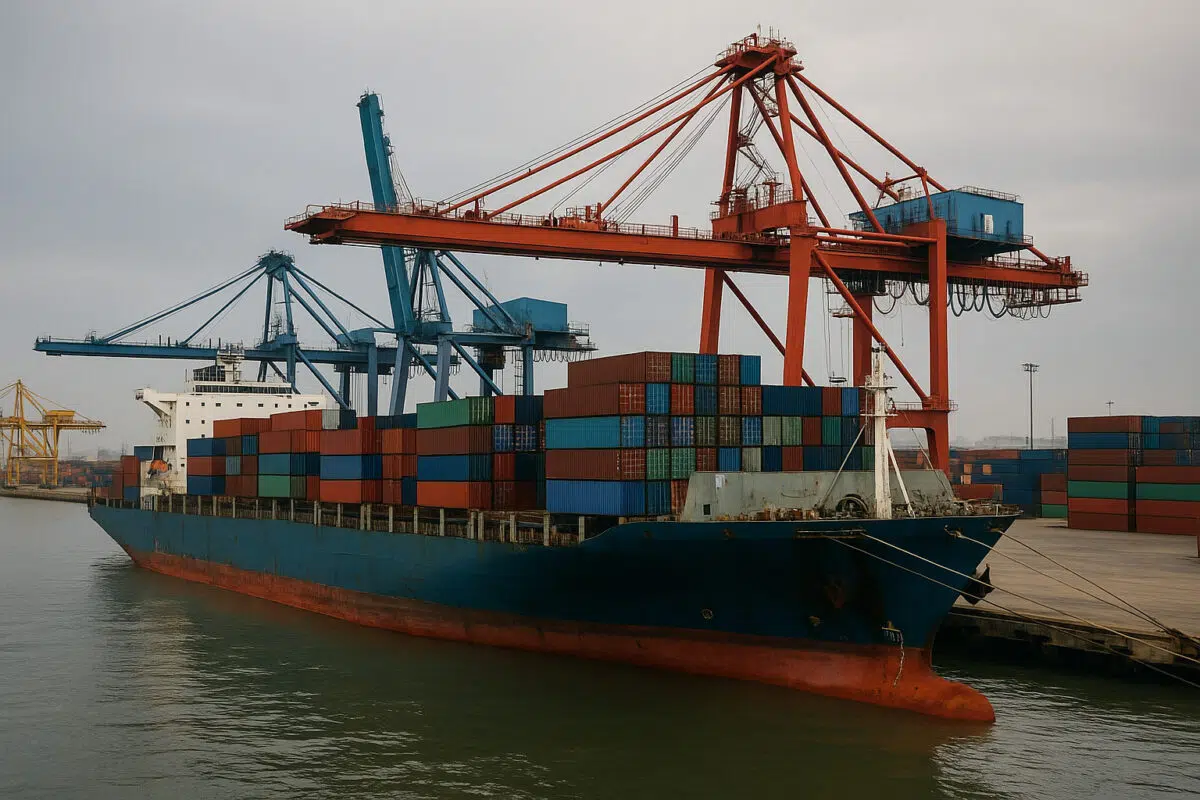
At the Port of Los Angeles, North America’s busiest container port, traffic has declined by 17% compared to this time last year. Similar scenes are playing out at ports across the United States, with Seattle, New York, and Savannah all reporting double-digit decreases in container throughput. The decline comes as importers and exporters struggle to adapt to the new tariff regime implemented since February.
Some shipping lines have begun consolidating routes or skipping certain port calls altogether because there simply isn’t enough cargo to justify the stops.
The administration’s expanded tariffs now cover approximately $500 billion worth of Chinese imports, with rates ranging from 25% to 60% on certain categories of goods. Additionally, new tariffs have been imposed on products from Vietnam, Mexico, and parts of the European Union, countries that Trump has repeatedly accused of unfair trading practices and currency manipulation.
Industry analysts note that the slowdown isn’t limited to U.S. ports. The ripple effects are being felt across global shipping routes, with major transshipment hubs in Singapore, Dubai, and Rotterdam reporting decreased volumes as the reconfiguration of global trade patterns continues noted by maritime injury lawyers.
The Baltic Dry Index, which measures the cost of shipping raw materials by sea and serves as a leading economic indicator, has fallen 32% since January, reflecting reduced demand for shipping services. Maersk Line, the world’s largest container shipping company, announced last month that it would idle 15 vessels and reduce sailing frequencies on transpacific routes in response to falling demand.
What we’re witnessing is not just a short-term market correction but potentially a fundamental restructuring of global supply chains, professor of international trade economics at Georgetown University. Companies are increasingly looking to nearshore or reshore production to avoid tariff exposure, and that means fewer goods traveling long distances by sea.
For coastal communities that depend on maritime trade, the impact has been immediate and concerning. In port cities like Oakland, California, and Tacoma, Washington, local officials report rising unemployment among dockworkers, truck drivers, and warehouse staff. The International Longshore and Warehouse Union estimates that work hours for its members have decreased by approximately 22% since March.
The administration has defended the tariffs as necessary to protect American manufacturing and force trading partners to negotiate fair deals. In a recent statement, Commerce Secretary William Stevens argued that short-term pain in the logistics sector is a necessary adjustment as we rebalance our trade relationships and rebuild domestic manufacturing capacity.
However, critics point out that the costs are being borne by American consumers and businesses. The Federal Reserve Bank of New York estimates that the average American household will pay an additional $1,700 annually due to higher prices resulting from tariffs. Retailers and manufacturers dependent on imported components have reported profit margins shrinking as they struggle to absorb increased costs or pass them on to consumers.
The maritime slowdown is particularly visible in specialized shipping segments. The automobile carrier fleet, which transports vehicles between manufacturing centers and consumer markets, has seen utilization rates fall to 76%, down from 91% last year. This comes as European automakers face new 25% tariffs on vehicles exported to the United States, and American manufacturers struggle with higher costs for imported components.
Some shipping companies are attempting to adapt by redeploying vessels to emerging trade routes. There has been notable growth in shipping between South America and Asia, as well as increased intra-Asian trade volumes, as countries seek to reduce dependence on U.S. markets.
We’re investing heavily in routes connecting Vietnam, Indonesia, and India directly to European markets, says Henrik Larsen, strategy director at Neptune Shipping Group. There’s a clear shift happening as traders look for alternatives to U.S.-centric supply chains.
The situation has created unusual scenarios in the normally predictable world of container shipping. Spot freight rates for transpacific eastbound routes have fallen to levels not seen since the pandemic recovery, while rates for alternative routes are rising. Some vessels are sailing with capacity utilization as low as 65%, a level that shipping executives describe as economically unsustainable.
Environmental groups have noted that the trade disruption has had one positive consequence: reduced emissions from the global shipping fleet. With fewer voyages and slower steaming speeds to conserve fuel during this period of reduced profitability, carbon emissions from maritime trade have decreased by an estimated 9% compared to 2024 projections.
The tariffs have also accelerated trends that were already reshaping maritime trade. Digitalization and automation of port operations have advanced rapidly as terminal operators seek to reduce labor costs in the face of lower revenues. Similarly, shipping lines are accelerating fleet renewal programs, retiring older, less efficient vessels earlier than planned to reduce operating costs.
For the thousands of seafarers who work aboard these vessels, the trade slowdown has meant longer waiting times at anchorage and increased uncertainty about employment stability. The International Maritime Organization reports that crew change difficulties have increased as shipping companies seek to minimize port calls and associated costs.
Financial markets have taken notice of the maritime industry’s challenges. The Dow Jones Transportation Average, which includes major shipping companies, has underperformed the broader market by 14% since the beginning of the year. Investors are increasingly concerned about the longer-term implications of what some analysts are calling a deglobalization trend.
As the industry navigates these choppy waters, maritime experts are divided on the long-term outlook. Some believe the current disruption represents a temporary adjustment period before trade flows normalize along new patterns. Others see it as the beginning of a more fundamental shift toward regionalized trade and shorter supply chains.
The era of hyper-globalization may be behind us, suggests Admiral James Peterson, former U.S. Maritime Administrator. But maritime trade has always evolved with geopolitical realities. The ships will keep sailing—they’ll just be carrying different cargoes between different ports.
What remains clear is that the maritime industry, long accustomed to steady growth in global trade volumes, is entering a period of significant transformation. As companies and countries adjust to the new tariff landscape, the patterns of trade that have defined the global economy for decades are being redrawn—one shipping container at a time.
This content was produced independently from the Worldcrunch editorial team.