
-Analysis-
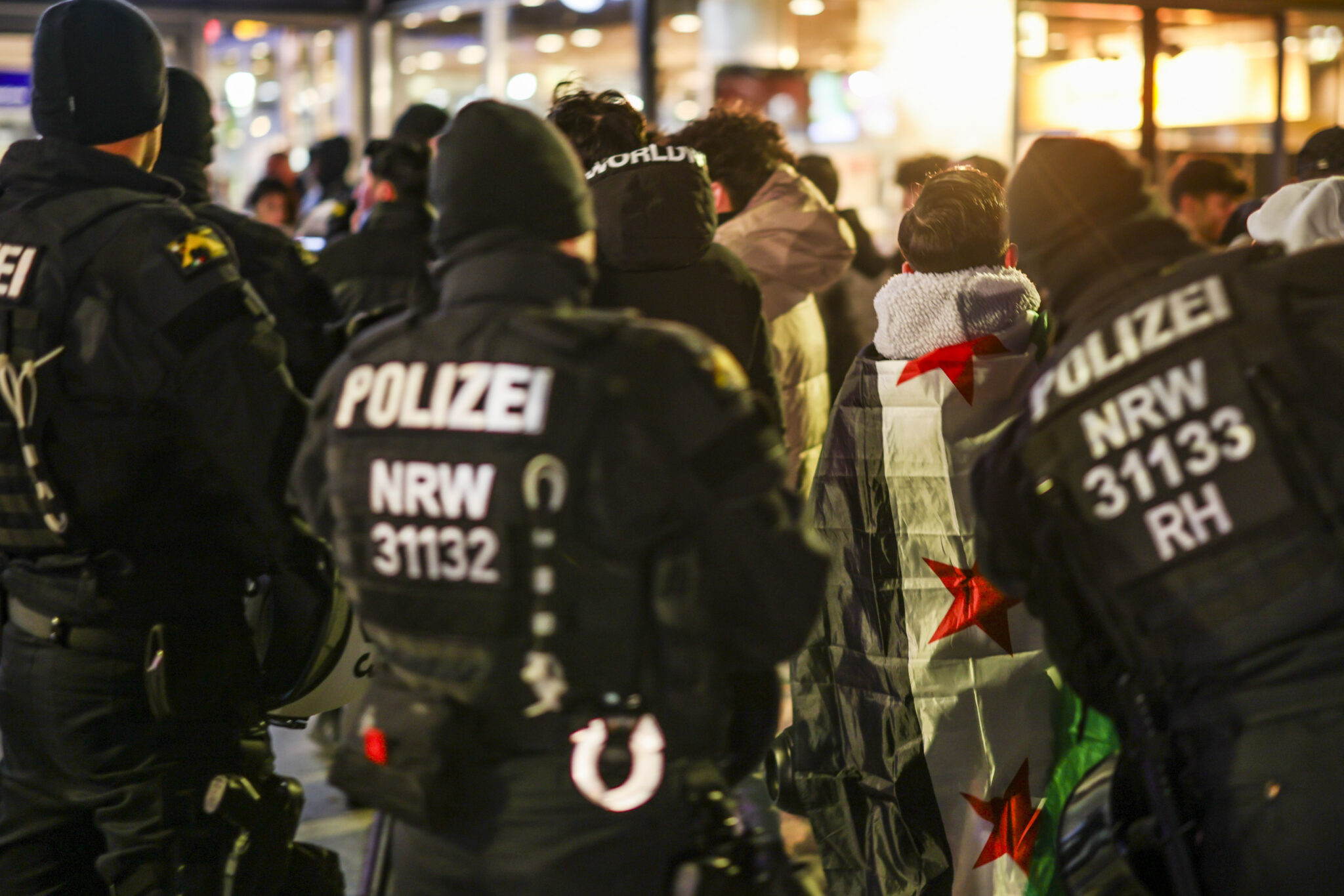
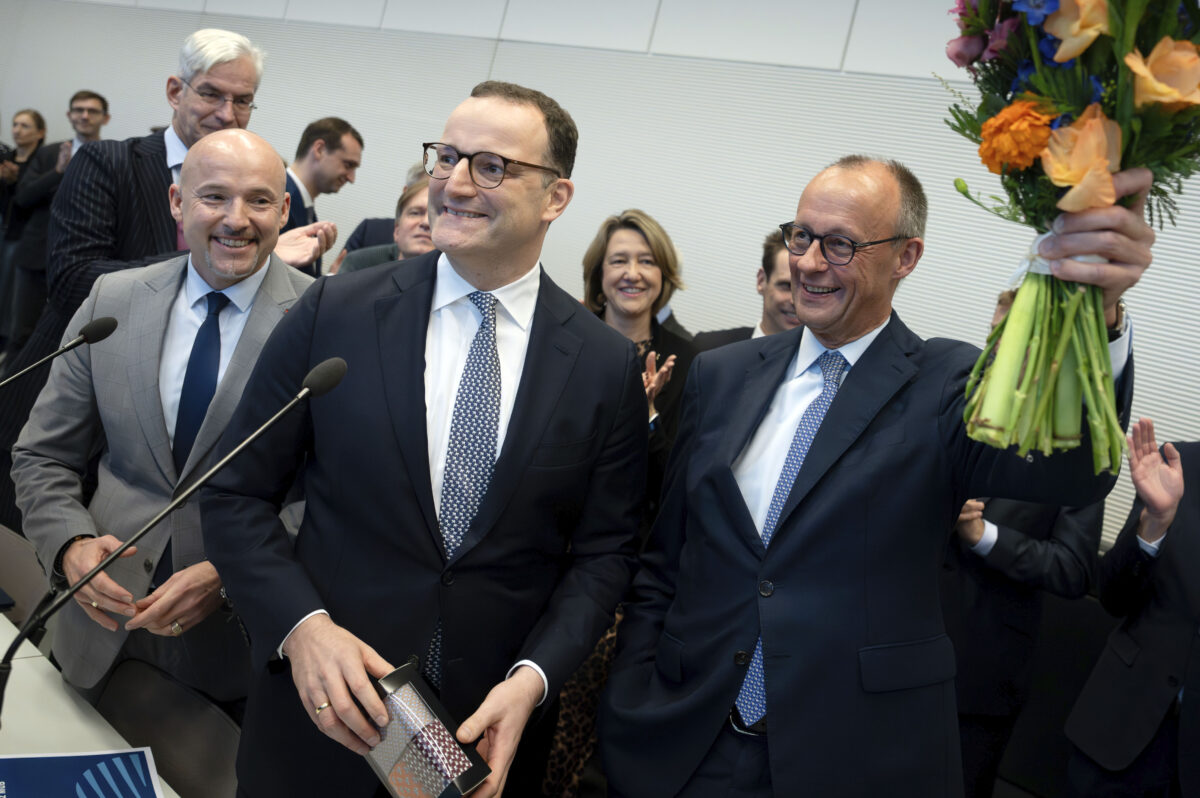
BERLIN — We wince when Jens Spahn, prominent parliament member of the center-right ruling Christian Democratic Union (CDU) party, reminds Syrian refugees of their “patriotic duty” to return to their shattered homeland. If anything, such a demand should come from the Syrians themselves, who live in places such as Damascus, Aleppo, Homs or Raqqa where, as Foreign Minister Johann Wadephul notes, “one can hardly live with any dignity.”
A wealthy German should avoid moralizing if his real aim is simply to get rid of uninvited guests, especially when, as with the CDU under pressure from the far-right AfD, the real motives are domestic politics.
And yet, Spahn’s appeal touches on a legitimate point, though not in the way he likely intends. For it raises far greater responsibilities for Germany than the conservative parliamentary leader may realize or care to admit.
“Imagine Germany in ruins after World War II if our grandfathers and grandmothers hadn’t rebuilt our country. What would it look like today?” Spahn asked. He went on: “I consider it a patriotic duty to rebuild one’s homeland, to help there. And that also applies to the Syrian refugees here in the country. Of course, they should help out at home.”
Patriotism or survival?
Of course, Germany’s “grandfathers and grandmothers” had little choice but to rebuild the country that had been destroyed, not least through their own actions. They did so not out of patriotism but from a sheer will to survive, which does not diminish their achievement. Especially since the defeated, occupied and devastated rump of Germany, which Wadephul says Damascus reminds him of, had taken in 12 to 14 million refugees from the former eastern territories.
These initially unwelcome arrivals, who did not come out of patriotism either, but because the new rulers of their homeland had expelled them, soon proved themselves to be the driving force behind the economic miracle with their skills, diligence, and determination to rebuild.
But many people who had been expelled by the Nazis, among them members of the scientific and cultural elite of the Weimar Republic, also returned. German playwright Bertolt Brecht, who had been driven out as a communist, wrote: “My hometown, how can I find it? / Following the bomber swarms / I come home.”
A tiny number
Of course, Brecht only left exile in the United States after being accused of “un-American activities.” But he did return, as did the Social Democratic politicians Willy Brandt and Herbert Wehner, and university professors Max Horkheimer and Theodor Adorno, founders of the Frankfurt School.
Many lesser-known figures also sought work here, including my Jewish father, who wrote of what he called his ultimately unsuccessful efforts to “kindle new hope in these suffering, cynical, wretched people.”
Whether these people are actually needed for reconstruction in Syria is, in many cases, highly doubtful.
Not everyone is so idealistic or out of touch with reality, but at least some 4,000 Syrians have returned to their homeland since the end of the civil war, perhaps for similar reasons. Of course, compared to the 950,000 Syrians living in Germany, that is a tiny number.
Matter of politics
The number of Syrians required to leave Germany is also tiny, just 920. Even the 9,000 who are only tolerated here and could, in theory, be deported at any time are hardly significant. That still leaves around 940,000 people living here legally, whether right-wing demagogues like it or not. Of these, about 240,000 work, pay taxes, and contribute to social security. A significant share of the remaining 700,000 or so are likely their family members.
So Jens Spahn has a problem with his idea of patriotic duty. And it makes little sense to try to appeal to it to justify the repatriation of Syrians subject to deportation, including criminals, or those who entered illegally, as negotiated or still to be negotiated by Interior Minister Alexander Dobrindt with the current Syrian regime.
This is simply about enforcing the law and fulfilling a campaign promise. Whether these people are actually needed for reconstruction in Syria is, in many cases, highly doubtful.

Solutions on both sides
To put it bluntly, and perhaps a bit unfairly, the people most urgently needed in Syria are probably those who have already managed to find work here, integrate, start families and build new lives. And they are precisely the ones least likely to return to their old homeland, which remains devastated and politically unstable.
They are also needed here. The German Hospital Federation, for instance, has said that Syrian doctors are indispensable for keeping German hospitals running.
And it is not only doctors and nurses. According to a study by the German Economic Institute, 80,000 Syrians work in industries facing severe labor shortages, such as automotive mechatronics, electrical installation, plumbing, heating and air conditioning, or metal construction. As early as 2019, Syrians made up the largest group among non-German apprentices.
A simple way to return
Yes, those workers are also needed, especially in Syria. But anyone invoking patriotic duty to rebuild a homeland must address the issue both here and there. Here, by explaining how to fill the gaps left by skilled Syrian workers. There, by offering returnees some degree of material and political security.
The federal-state repatriation program REAG/GARP 2.0 is far too stingy. It provides a startup grant of €1,000 per person, up to a maximum of €4,000 per family, plus travel expenses. Considering what a trained professional can earn in Germany in two months, patriotism aside, very few will take the risk of starting over in Damascus, Aleppo, Homs, or Raqqa. The federal and state governments would have to offer much larger sums to create genuine incentives.
Deportations of illegal immigrants do not require patriotic rhetoric.
Families should also be guaranteed a simple way to return to Germany, a safety net in case of emergencies, if their attempts to rebuild fail because of political or material circumstances. Finally, Germany, the European Union and NATO must assume greater responsibility in Syria itself, a country still riven by religious and ethnic conflicts fueled by regional powers like Turkey and Iran.
The “grandfathers and grandmothers” Spahn invoked could rebuild West Germany only because the Allied occupiers had first forcibly introduced democracy and then protected it from the communists. Even in East Germany, from which, patriotism or not, millions fled to the West, people were at least safe from criminal gangs, armed militias, and religious or politically motivated massacres.
To reiterate, deportations of illegal immigrants do not require patriotic rhetoric. But those who appeal to the patriotism of Syrians living here legally must offer far more than political speeches.