BOGOTÁ — “There is a genocide going on in front of our very eyes — a live-streamed genocide. No one in the future will be able to say we did not know…” So declared Greta Thunberg, speaking on October 9, after being deported from Israel for attempting to deliver humanitarian aid to Gaza.
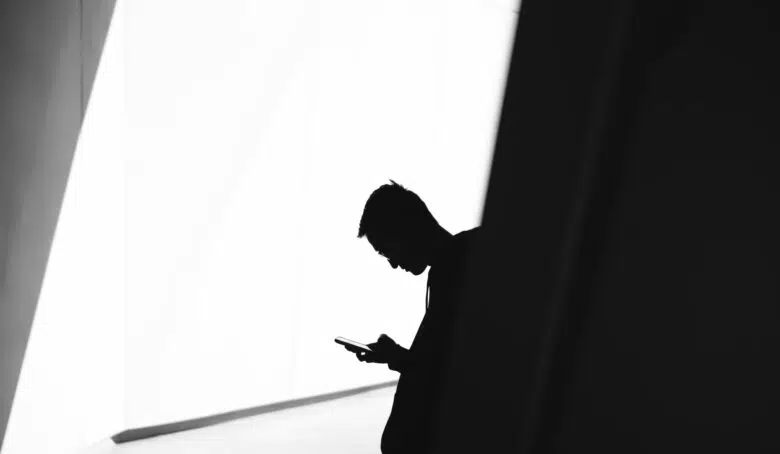
The Swedish-born activist stated the obvious: All you have to do is pick up your phone to see the flood of images — not only from Gaza, but from countless scenes of violence suffered by millions of people around the world.
For the latest news & views from every corner of the world, Worldcrunch Today is the only truly international newsletter. Sign up here.
Much of what we see on Instagram, Facebook, and TikTok are generic photos and videos of people we don’t know, which we share to express support or outrage — or simply to feel part of the conversation of the moment. We see the image of Hedaya al-Muta, the Palestinian mother carrying her baby, a vivid portrait of famine in Gaza, and we are moved.
Perhaps we post it out of indignation, but above all because we don’t want to be (or appear) indifferent. We scroll further and come across a diet trend, a politician’s speech, or a viral dance routine. Then, an ICE immigration officer in the U.S. beating a man in front of his family. Next, a Latino influencer mocking Latinos who voted for Trump. In 90 seconds, we feel informed enough to write a comment — approving or criticizing — without fully processing any of it.
We are “active” when we post a heart emoji, an insult, a comment, or something that makes us feel part of intellectual discourse. What matters is “participating.” Our pseudo-activity occurs with an effervescent closeness that disappears with the scroll. Stories become images without narration that move us fleetingly, and the algorithm inserts us into an overwhelming loop that we believe to be harmless. But the truth is that it is inevitably leaving signs of vicarious trauma.
Witnessing pain
In psychology, trauma is an emotional wound that is created when we lack the tools to process a situation, triggering automatic responses to similar events as if the information were frozen in our minds. Therapist Ana Hurtado explains: “Two people may experience the same event, and one may develop trauma while the other may not; it depends on each person’s capacity to respond.”
In the context of vicarious trauma, that wound appears when someone experiences the suffering of others up-close and ends up feeling it as their own. This can happen to journalists, doctors, psychologists, caregivers, and people in other professions who are in constant contact with pain, but also to those who observe it from miles away, from safety.

More and more people, because they want to “stay informed,” feel overwhelmed by the stories they read and see every day, but at the same time, they can’t help it because of the anxiety of not wanting to miss anything.
Images transfix. Images anesthetize.
Behind the numbers and clicks, most digital media or news outlets focus on stories that seem more “important” or, above all, more “moving.” What counts is that they make an impact. Add to that the flood of violent scenes that circulate on social media — and that we end up absorbing through the privacy of our screens — and the outside world becomes a source of constant distress.
As Susan Sontag wrote half a century ago: “To suffer is one thing; another thing is living with the photographed images of suffering, which does not necessarily strengthen conscience and the ability to be compassionate. It can also corrupt them. Once one has seen such images, one has started down the road of seeing more – and more. Images transfix. Images anesthetize.”
Numbing effect
When vicarious trauma sets in, we become tourists of realities we can’t fully imagine. We partially detach from others’ pain, but still feel a lingering bitterness that doesn’t make us immune. The photos of Gaza or the U.S. bombings of Venezuelan boats at sea continue to affect us — but not enough to shake us from our lethargy. If they did, we would linger longer before moving on to the next image. Much of what we see is hard to process because there is so little time to reflect on what we feel — and even less willingness to talk about it.
Philosopher Byung-Chul Han puts it this way: “If everything is readily available and consumable, no deep, contemplative attention is generated. The gaze wanders, like that of a hunter. Any fixed point of reference on which we could focus is lost. Everything becomes flat and subject to short-term needs.”
How much do we need to see before we do more than just click?
Over time, we stop being surprised and believe that there is nothing we can do about what is happening outside; some even leave social media or turn off the television. Indifference is also a symptom of vicarious trauma. Others respond with anger, fear or contempt, but these emotions rarely encourage them to go beyond posting an opinion from their digital personas, which have become spokespeople for the lives of others.
Indistinct haze
What we consume or post each day may seem harmless, but with every emoji, comment, video, or image, we may be perpetuating a cycle of collective trauma that from the outside looks like a vast, indistinct haze.
While some images do manage to provoke mass outrage and even action in faraway places, we now seem unable to measure our capacity to process the flood of tragedy we witness daily. The endless stream of violent images risks becoming a kind of background noise, easy to ignore with the swipe of a finger.
The question remains: how much do we need to see before we do more than just click, before disconnecting our digital empathy?