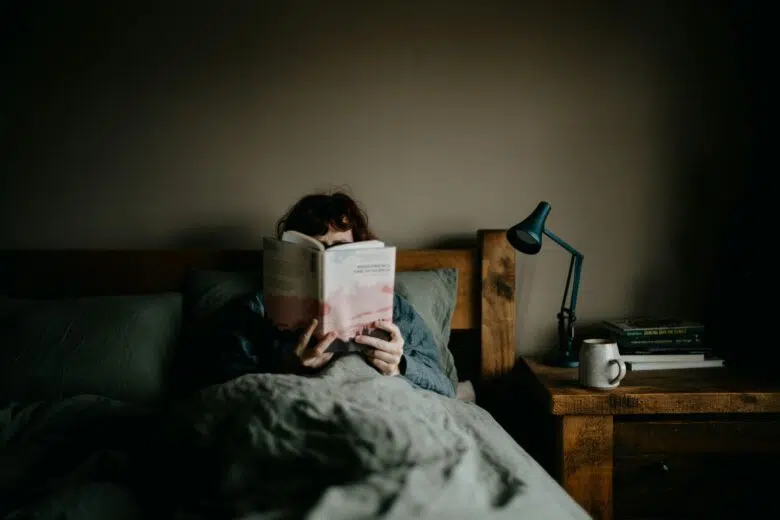
PARIS — The rough hospital sheets, the endless drip of an IV, the sharp smell of disinfectant, and a precarious pile of books: these are the images that come to Lucile Lambert’s mind when she thinks back to the year 2024. After a serious car accident, the 32-year-old engineer spent nine months in rehabilitation. She was prepared for the grueling physical therapy, the fatigue, and the pain. She knew she’d be taking painkillers, anticoagulants, even a few antidepressants. What she didn’t expect was this prescription.
For the latest news & views from every corner of the world, Worldcrunch Today is the only truly international newsletter. Sign up here.
On the sheet of paper handed to her by her doctor were… titles of novels. “I thought it was a joke,” she admits. “But he said very seriously, ‘Read these books as you would take a pill — regularly and with perseverance.’” Since then, Lucile has discovered that this treatment has a name: bibliotherapy. “It consists of using reading as a therapeutic tool to ease pain, aid recovery, and sometimes even prevent relapse,” explains Dr. Keren-Or Dahan, a general practitioner and hypnotherapist who wrote her thesis on the subject.
At first, Lucile was confused by the practice. “I was convinced that I wouldn’t be able to concentrate on reading, that my mind would wander too much,” she confides. But her doctor insisted: “Ten minutes a day, no more.” Little by little, she got into the swing of things, even ritualizing these moments and prolonging them. “I would make myself some herbal tea and a few chocolate cookies, or, when I got home, I would light a scented candle to mask the smell of medical treatments and illness,” she describes.
In her bubble, she first opened a novel by popular author Anna Gavalda, which she describes as “an easy start, but one that surprisingly left me with the impression of a caress, of an outstretched hand.” She then moved on to a collection of short stories by Guy de Maupassant, Les Contes de la bécasse, whose dark humor restored her taste for the irony of everyday life. Over the weeks, the prescriptions were adjusted: a detective novel when her energy returned, an introspective essay when anxiety set in. Finally, she read Patients, by Grand Corps Malade, a poetic reflection of her own journey. “The book that had the greatest impact on me was Choses dont je me souviens(“Things I Remember”) by Natsume Soseki, a moving story about the joy of having escaped death,” says Lucile.
Invisible crutches
Prescribing novels rather than anti-anxiety medication? What was once considered eccentric is now becoming clinical reality. Bibliotherapy, long confined to personal development circles and media library conferences, is slowly making its way into doctors’ offices, hospitals, and nursing homes. In Lille, the Hospital Library, based at the CHRU, is increasing its activities and workshops: “story time” in pediatrics, “reading and talking” in geriatrics, and “fiction reading” to open up emotional dialogue in psychiatry.
In Grenoble, a number of practitioners are trying out the experiment — on their own. Because France is still lagging behind. In Aquitaine, Lucile’s doctor found this out the hard way. “My colleagues, who are generally older, dismiss this approach as New Age… They prefer to rely on Valium and other Lexomil. However, in April, the French Medicines Agency issued a warning that French practitioners were prescribing too many benzodiazepines. Nine million French people were prescribed them last year! Personally, I’m going to continue quietly on my own path,” he says regretfully.
Reading therapy allows patients to take an active role in their recovery.
His goal? To catch up with our Anglo-Saxon neighbors. Across the Channel, the Books on Prescription program has been in place since 2013, approved by the National Health Service. General practitioners directly prescribe a library membership and a list of books approved by psychiatrists. More than three million Britons have already benefited from it. “The fields of application are broad: anxiety, mild to moderate depression, post-traumatic stress, eating disorders, chronic pain, cancer… Books become invisible crutches,” observes Dr. Dahan. “Reading therapy first and foremost allows patients to take an active role in their recovery,” she explains. “Saying to yourself, ‘I’m helping myself,’ is already an essential first step.”

For Georges Hubert, 57, who is in remission from lung cancer, the effect was a turning point. “Chemotherapy, radiation therapy, medical appointments with oncologists, pulmonologists, and specialists of all kinds: I was caught up in the medical protocol,” he says. I felt like I only existed as a patient. Reading saved me from this apathy, from the inaction that was taking over.” On the advice of his family doctor, Georges made a list of books he hadn’t had time to read until then. “The idea was to ‘make the most’ of my sick leave for a personal project, namely reading Victor Hugo, Stendhal, Le Clézio, Malaval…,” he lists.
Inner sanctum
How can ink and paper heal? Words cannot replace medical care, but they can soothe, support, and get you moving again. Sarah Sauquet, a literature teacher and author, has observed the process in action several times, even or especially among young people. She sees it as a way of “responding to a need to escape,” of accompanying life choices, of silently repairing what has been wounded. “There are those rare, wonderful encounters when a book comes along at just the right moment. Bibliotherapy resonates with our most secret lives,” that inner sanctum where words fall like bandages, she modestly sums up.
Those 460 pages reminded her that the world is vast, complex, and abundant.
“Literature helps to heal wounds through the experiences of others; that’s the whole principle of self-identification,” says Brigitte Maligorne, a retired literature teacher. By projecting themselves onto heroes, readers re-enact their own wounds. “And, conversely, what many readers experience when they encounter books, even from a very young age, is the existence of other possibilities, of another place, the strength to break out of their assigned roles and confined spaces,” adds anthropologist Michèle Petit, author of Éloge de la lecture : la construction de soi (“In Praise of Reading: The Construction of the Self”).
Cathartic effect
This window onto another world is what “saved” Manon, in her own words. Suffering from burnout at the age of 41, she found herself on long-term sick leave, unable to leave her home. “I felt drained of all energy, reduced to an empty shell,” she says. It was when she stumbled upon Alain Damasio’s La Horde du Contrevent (The Horde of Counterwind) that something reopened within her. “At the time, I thought I had been carried away by the plot and this fantastical world. And then I reread it. I became attached to these characters who were fighting against the wind, step by step, together. I felt like they were taking me by the hand, teaching me to move forward despite the storm,” she recalls.
Little by little, reading became a breath of fresh air, a daily ritual. “When I talked to my therapist about it, she encouraged me to continue. She looked into bibliotherapy and recommended One Hundred Years of Solitude by Gabriel García Márquez. It helped me to take a step back,” she adds. Those 460 pages reminded her that the world is vast, complex, and abundant. And that the horizon of the moment, which seemed blocked to her, would not be that way for the rest of her life. Psychoanalysis sees bibliotherapy as a cathartic force. Aristotle already saw tragedy as a means of neutralizing or sublimating negative emotional charges. Freud later added the idea of literature as a reservoir of universal symbols, allowing readers to externalize their inner conflicts. And Lacan emphasized the power of metaphor: saying things differently to understand them better. “Reading is like entering a parallel world where you can project your pain, look at it from a distance, and transform it,” confirms Manon.
A certain strand of contemporary French literature encourages us to take care of ourselves and the world. For those looking for recommendations, Brigitte Maligorne suggests Le Cœur cousu (“The Threads of the Heart”) by Carole Martinez, Réparer les vivants (“Mend the Living”) by Maylis de Kerangal, D’autres vies que la mienne (“Lives Other Than My Own”) by Emmanuel Carrère, and L’Art de perdre (“The Art of Losing”) by Alice Zeniter. For every disaster, whether individual or collective, literature offers a narrative of healing that resonates with the concept of care. As for the doctors interviewed, they insist: “Every prescription is individualized!”
Certain characters kept me going. They showed me that you can recover from anything, despite everything.
Some favor personal development essays, others classic or contemporary literature. Poetry also has its place, with its power to bring immediate comfort. “For a story to do us good, it doesn’t necessarily have to be beautiful. We forget the novels or self-help books that assure us that by mimicking the pre-packaged precepts on their pages, we will solve everything in our lives right away. Far from promoting introspection, these products only encourage imitation,” bemoans Dr. Dahan.
Alone but together
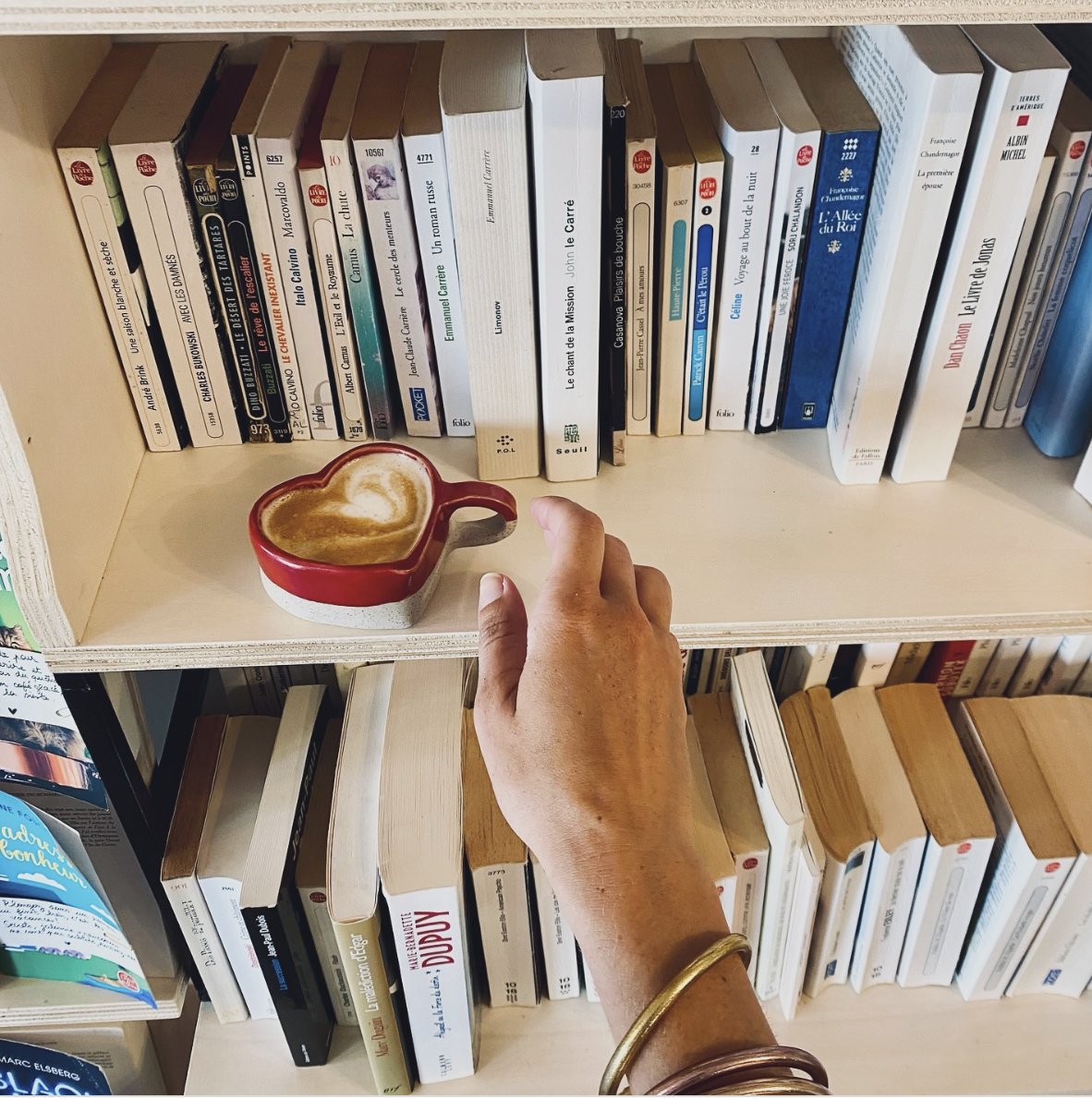
Another preconception that practitioners are working to deconstruct is the idea that reading contributes to withdrawal. “You only have to look at the number of book clubs and writing workshops springing up all over France, where patients find invigorating resources,” says the practitioner. At Café Lire in Bayonne, manager Mélanie Bordenave has recently started offering quiet times when everyone can come and read in silence. Alone in their corner, yet surrounded by others. “Reading and writing are ways of unleashing your ability to create the world. These rituals are far from insignificant,“ she says. For Pauline, a regular customer, this event, offered as a leisure activity by the café, has taken on a whole new dimension. ”My therapist told me about it when I said I was afraid of becoming more isolated by reading. I felt isolated and lost after discovering a debilitating illness late in life. Coming to Café Lire, even without talking to anyone, gave me a sense of belonging to something alive. I left feeling lighter, more capable of facing the medical consequences of my diagnosis,” she says.
“Bibliotherapy is not a magic wand, but a lever,” insists Régine Detambel, author of Les Livres prennent soin de nous (“Books Take Care of Us”). She hammers home the point that words can be a remedy for ailments. Lucile smiles: “I didn’t start walking again thanks to a novel. But certain characters kept me going. They showed me that you can recover from anything, despite everything.” What if that were the true power of books?