
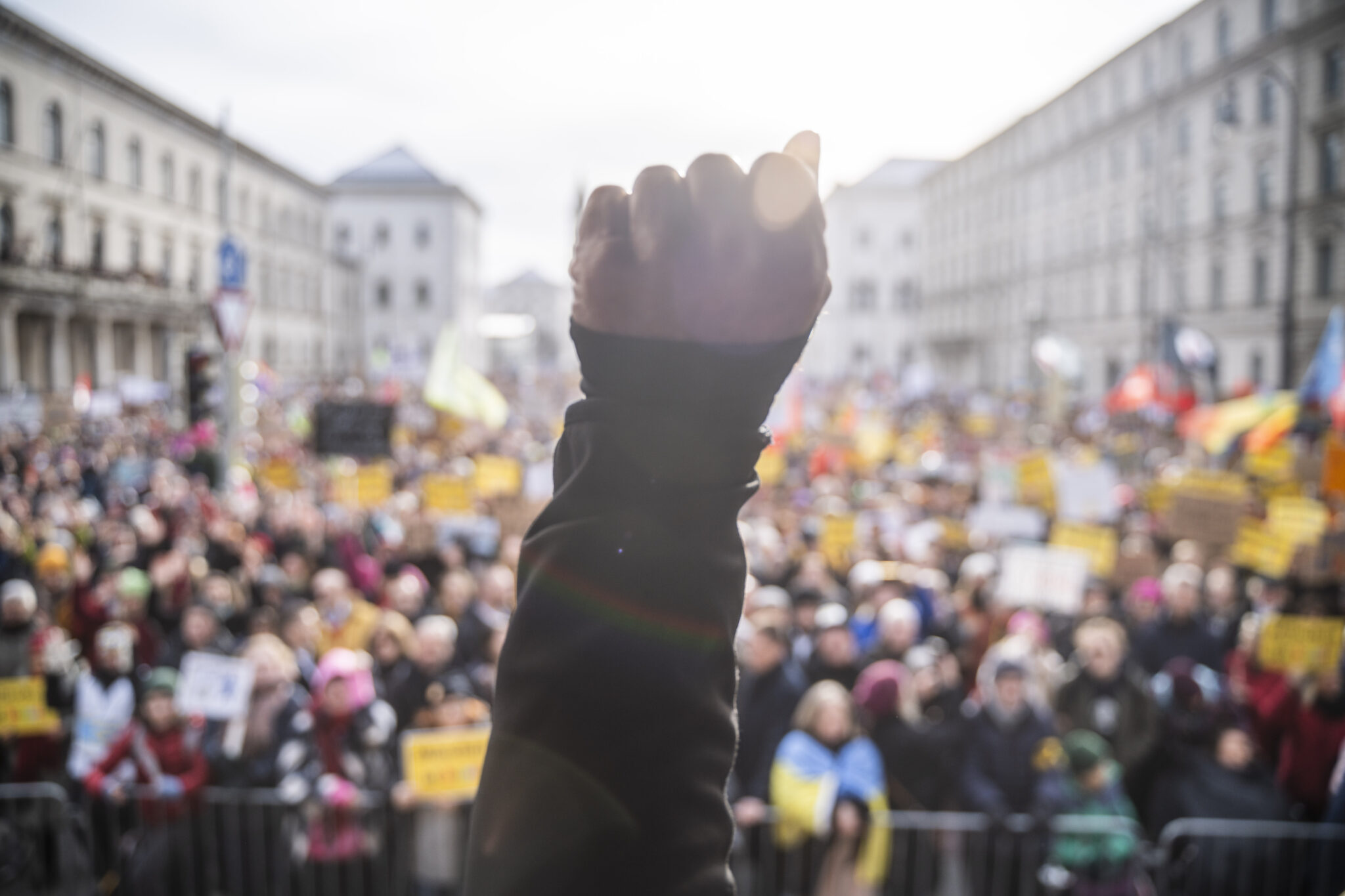
HAMBURG — It may still be too early to call it a political turning point, but outrage and street protests are no longer what it’s all about: right-wing and far-right movements are racking up alarming gains. No one could seriously call the right-wing governments and parties that have seized power in the Western world, or are on the verge of doing so, “conservative.” They have no interest in preserving anything; they operate with wrecking balls and chainsaws. Their weapon of choice, and their key to success, is hatred.
These right-wing parties are themselves protest movements, making them, in a sense, immune to protest. They rail against the existing “system” and the “elites,” just as the left once did in the last century, but with one crucial difference: Today, the elites are branded as leftist, and the system as one of left-wing paternalism and thought-policing.
Nothing fuels the fury of the New Right, from Brandenburg to Texas, more than wokeness, diversity, gender politics, feminist or anti-racist language. One could even argue: wokeness, along with the limits it puts on public speech, is the greatest gift the left could have handed to the right.
Supplying ammunition
“People aren’t allowed to say anything anymore”: however vaguely felt or half-flirted with it may be, is the raw material from which the right, from Germany’s far-right AfD (Alternative für Deutschland) to America’s Republicans, spins the endless refrain of its propaganda. And indeed, there are discourse guardians on the left who call it xenophobic to speak of clan crime, anti-Muslim to question the headscarf, sexist or at least “transphobic” to insist on the existence of two biological sexes. If the left were genuinely intent on keeping the right in check, it would cut back on the nonsense and ask itself seriously whether it wants to go on serving as the most reliable supplier of ammunition for right-wing propaganda.
But is the left really trying to hold the right back? Or is it seeking to benefit from its rise? The sudden surge in membership of Germany’s Left Party (Die Linke), for instance, came as a widely noted response to the AfD’s ascent. Particularly among younger people, there was a strong sense that other left-leaning parties, like the Greens and the SPD (Social Democratic Party), were failing to take a clear stand against the far-right threat.
The left reaps the benefit of strengthening its opponents through dogmatism.
The refugee issue plays a central role here. If the rise of the AfD is truly rooted in migration, then the SPD and the Greens are right, pragmatically speaking, to tighten asylum procedures and migrant flows, even if that means aligning with the center-right CDU (Christian Democratic Union).
At the same time, however, such a move betrays the oldest principles of leftist solidarity: above all the core conviction of the New Left that the West is responsible for refugees and the world’s misery in general, and must pay for it. From this angle, Germans are still living too well, and if a town has to close its swimming pool to fund refugee support, then morally, that is the very least it owes. This kind of marginalization of the local population, its supposed discrimination against refugees, is exactly the grievance the AfD exploits. And, in its propaganda, exactly the sort of thing it claims people are no longer allowed to say out loud.
Feeding off each other
In this way, the political extremes feed off each other. The mechanism is so familiar that it is almost surprising how much people lament polarization yet fail to see the underlying interplay between the poles. Almost surprising, but not quite: for the widespread, naïve notion of politics cannot imagine that heroic stances against racism and discrimination might actually play into the right’s hands.
Today’s post-Marxist left, in particular, has forgotten what dialectical thinking is. Without reflection, it presents itself as the cure for the right, without recognizing the mirror-image role of the right, which likewise presents itself as the cure for the left.
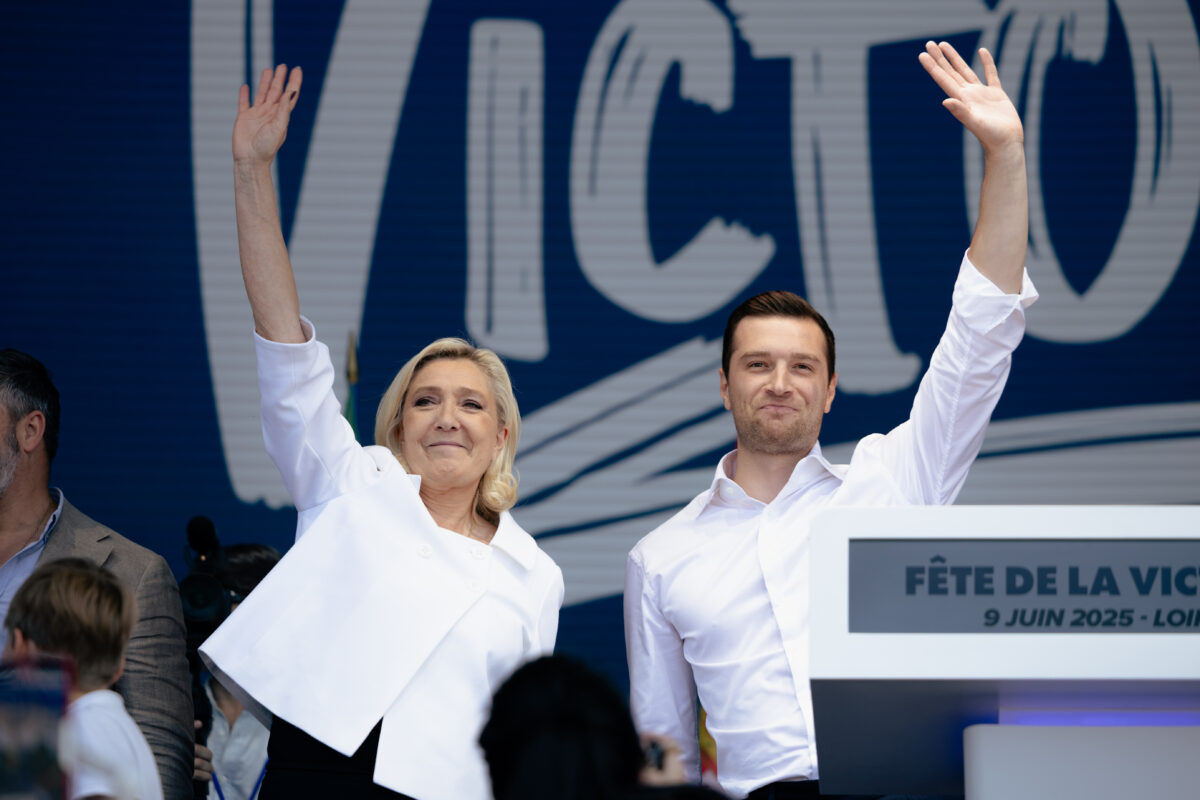
The left reaps the benefit of strengthening its opponents through dogmatism. U.S. universities now under siege by President Donald Trump show no sign of asking whether their excesses of identity politics and proliferation of gender studies chairs might not have helped pave the way for their tormentor. Italian left-wing parties have certainly shown no recognition that their own dogmatic fragmentation helped deliver Prime Minister Giorgia Meloni’s victory in the first place. All are so locked in the certainty of their moral superiority that they seem not to realize how chilling that moralism can feel, even to ordinary citizens with no agenda.
Germany’s conservative Minister of State for Culture, Wolfram Weimer, recently declared, at once accurately and naïvely, that the AfD and the Left Party are equally bad for the country. Accurate, insofar as he means the Germany that exists here and now, socially and politically.
But both the AfD and the Left Party (and parts of the Greens) envision a completely different Germany altogether. This accusation means nothing to them, they see themselves as beyond reproach, since in their eyes the existing system is already rotten, something they intend to reform (the Greens), liberate from capitalism and NATO (the Left), or tear down entirely (the AfD).
A common foe
To grasp the fundamentally anti-conservative impulse of both camps, one has to recognize that they are not only enemies of each other, but also share a common foe: the inert, change-resistant middle of society. It is this middle ground that, depending on who is criticizing, is blamed for blocking the energy transition or pension reform, rearmament or reconciliation with Russia, backing Israel or the Palestinians, welcoming refugees or enforcing the supposedly urgent “remigration.”
The center is no longer seen as neutral but as prey for the enemy. In their exaggerated suspicion, left-wing German parties in particular have long since begun to count large numbers of CDU and liberal FDP (Free Democratic Party) voters as essentially right-wing. The ritual lament that right-wing ideas have “already reached the center” or “become socially acceptable” is the usual refrain.
The AfD, for its part, which paints the entire country, apart from itself, as “left-green-filth,” works from the same playbook. The battle between left and right is not fought as a contest to win the center, but as a rhetorical war against it, on the assumption that it already secretly belongs to the other side.
You are the wicked people? Then come to us; we are the wicked politicians to match.
Still, the two camps do not behave entirely symmetrically. For all its intimidation tactics, the AfD’s message to wavering centrists is essentially: “Even if you do not vote for us today, you already agree with us in your heart.” The Left Party is quite the opposite. It assumes there are no decent people outside its own camp. Anyone who is not left-wing and pro-immigration is deemed right-wing; anyone who does not eat vegan and ride a cargo bike is a climate sinner; anyone who supports Israel is a colonial exploiter of the Global South; anyone who rejects gender parity is branded a misogynist. And so on.
In Germany and the U.S., and to a certain extent in France, the left has developed such an exclusive concept of humanity that it has left itself with no acceptable allies, and no new voters either. The political damage is immense. In this way, even before a right-wing government takes power, the idea of a right-wing majority has already been conceded. Worse still: where right-wing governments are already in power, the implication must be that they represent, legitimately, the evil masses of the people.
Long gone, and perhaps altogether forgotten, is the era when left-wing parties saw themselves as champions of ordinary people and fought against the immorality of the bourgeoisie. Today, left-wing parties (including Germany’s Greens) draw their base from the middle class and look down with disdain at the supposed immorality of those who resist migration policy. For right-wing politicians, for Hungary’s Viktor Orbán and Meloni, for Trump and France’s Marine Le Pen, and even more so for AfD leader Alice Weidel, this is an enormous gift. They can address the common man as a natural ally: You are the wicked people? Then come to us; we are the wicked politicians to match.
The real difference
In this light, it is also worth considering the violent sympathizers and activists on both sides. Even if they cannot be directly linked to the parties, the milieus overlap, and even parts of Germany’s constitutionally loyal Green Party often fall back on the reflex of first blaming the police after leftist riots. The situation in the radicalized AfD looks different: Here, it increasingly seems as if the violent underground is the one pushing the party forward.
However one frames it, the real difference is this: right-wing extremist violence is directed against migrants, homosexuals, Jews: in other words, against minorities. Left-wing extremist violence is aimed at the majority, through attacks on power lines, railways, parked cars, and, via “climate stickers,” even on road traffic. It targets mobility, infrastructure, the functioning of the state: in short, the everyday well-being of the middle class, with its comfort in climate sin and consumer habits.
Of course, left-wing politicians and party leaders cannot be held directly responsible for activists’ excesses, they have condemned them often enough, and in strong terms, but the emotional balance of their milieu still speaks for itself. The aim is not to win back voters from the AfD or to shore up the center against the lure of the right. On the contrary, the fantasy persists that a left-wing governing majority beyond the center is already possible if only the Greens, the Left Party, the Social Democrats, and the populists of the Wagenknecht splinter group unite.

But such a prospect would strike a large portion of the population as a threat. To see why, one has to step back from the question of whether the left’s demands for wokeness, climate-conscious consumption, and so forth are justified. They are certainly not wholly unjustified. Nor is it about whether these demands could even be enforced against citizens who feel them as intrusive. The point is not enforcement. The sense of threat already arises from the political ambition to dictate people’s personal language habits and everyday behavior.
Profit from polarization
The desire to ideologically convert and re-educate people is always frightening. Indeed, companies and other institutions have already recommended courses in which participants must learn to see through their white, male, or European “privilege”: in other words, to recognize their sinfulness and practice repentance.
One has to be able to afford all of this, which also reveals the hidden class interests of the milieu. These are the higher earners: an academic petty bourgeoisie that wants to assert its ideological discourse power in order to advance and expand. It not only opposes the unecological lifestyle of the lower classes, it treats them with alienation and contempt.
French sociologist Didier Eribon has written a harrowing book about his proletarian background, how it was abandoned by an elitist academic left and fell into the lap of the right-wing radical Front National (FN). Perhaps this represents the greatest, historic failure of the Western left: that it led the impoverished masses to right-wing pied pipers who, in truth, do not share their interests at all: quite the opposite. Trump flatters “white trash” by transforming its resentment into policy, but pursues the goal of making the rich even richer.
In the end, the fact that the established left has abandoned all Marxist insight, has exchanged dialectical materialism for identity-political semantics, will come back to haunt them in the fight against the right. Worse, it renders this fight unbelievable from the outset. Essentially, they are petty-bourgeois milieu parties that have simply dressed up as leftists. And unfortunately, the new right has seen through the scam, and their supporters have at least sensed it.
A little more Marxism would deprive the right of the opportunity to play on the piano of paternalistic fears
That doesn’t mean that the left was in any way involved in the creation of this hell-spawn, nor does it historically make sense. When the arson attacks and riots took place in Rostock and Solingen in the early 1990s, there was no trace of woke discourse, and the distance from the working class was not as pronounced or visible. But the left, despite its anti-fascist rhetoric, is not in the least suited to contain the right-wing extremist threat. It isn’t even willing to do so. It profits from polarization.
Essentially, this means: The fight against the right must simultaneously be waged as a fight against the left, to paradoxically phrase it. It would be better if the left recognized that it had lost its way and transformed itself from an ideological sect back into a party (or several parties) for the working population. A little more Marxism than post-structuralism, more Rosa Luxemburg than Judith Butler, would be a great gain, and would deprive the right of the opportunity to play on the piano of paternalistic fears and pretend to be the advocates of the common man.