
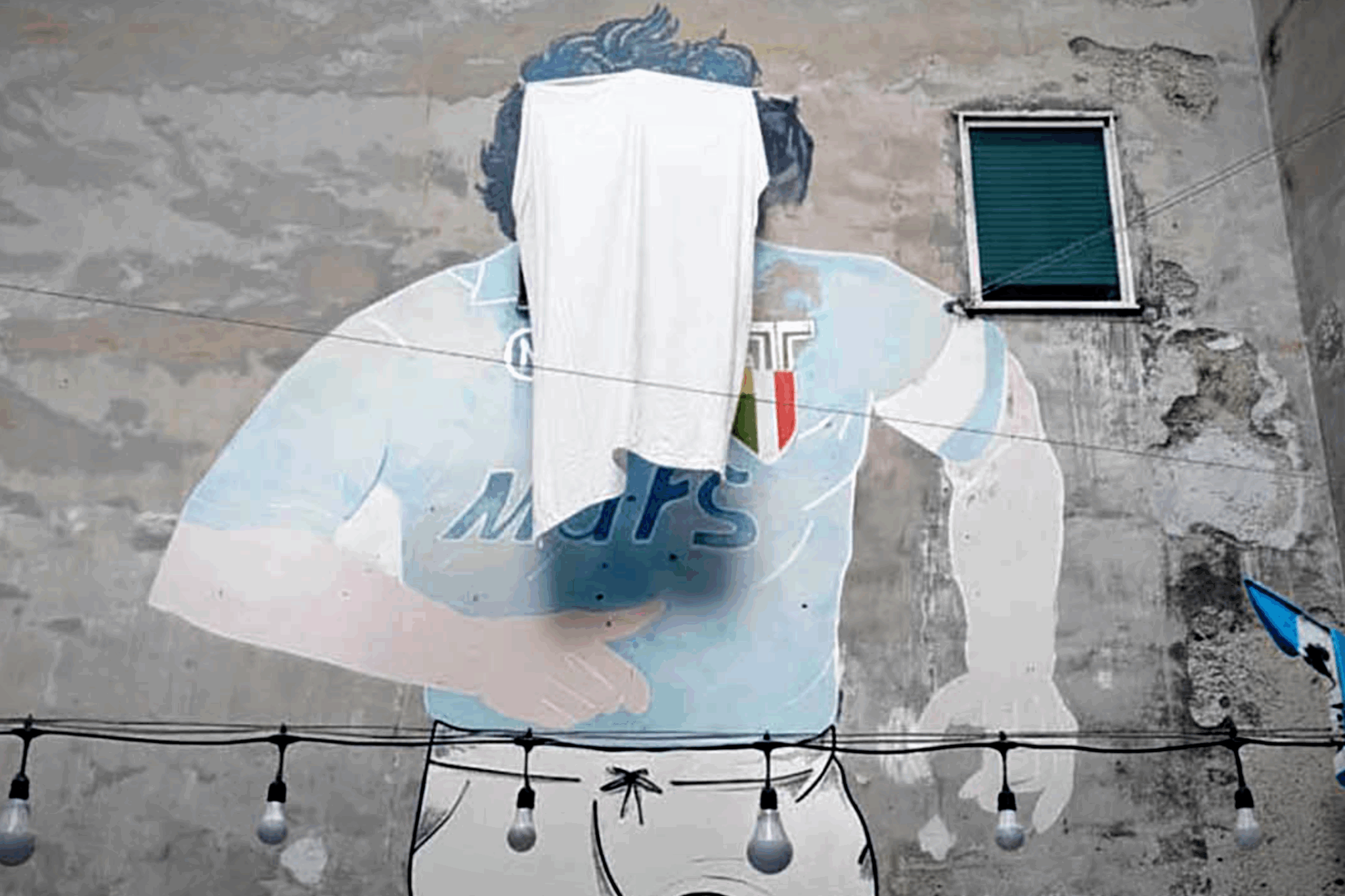
NAPLES — Diego Armando Maradona’s face was covered with a long white sheet. The entire square where it’s on display, and where visitors can buy memorabilia and statues dedicated to the former Napoli soccer champion, was under blue plastic sheets. Tourists from all over the world poured in to photograph Mauro Filardi’s mural of the late Argentine-born soccer legend, only to leave disappointed. In disbelief.
On Wednesday morning, the “Largo Maradona” square in Naples’ Spanish Quarter looked like a ghost of its former self. Antonio Esposito, known as Bostik, and considered “owner” of the square and a leader of the Napoli ultras hard-core fans in the 1990s, decided to close it in protest.
A few hours earlier, municipal police had carried out a sweep, handing out fines, seizing goods, flagging illegal licences, and chaining carts to public property. The Municipality called it a crackdown in the name of legality, prompted by reports of counterfeit goods and vendors illegally tapping into electricity lines. The result, though, was a surreal tableau, Maradona’s secular shrine silent and shrouded. An affront to the living memory of a neighborhood.
A symbolic place
Because that face of Diego, hidden under the canvas, even if only for a few hours, was born there more than 30 years ago, from a young hand and a community that believed in simple dreams. A then 20-year-old Mauro Filardi, a son of that same working-class and passionate Naples, painted the figure of the God of Football in 1990, wearing the No. 10 jersey with the championship “Scudetto” shield symbol stitched to his chest after Napoli won the Italian league title.
The man had given an entire city a sense of symbolic redemption
Neighbors held the spotlights, some passed him brushes, others mixed the paint. It was not just a mural, it was a collective act, a way to thank the man who had given an entire city a sense of symbolic redemption. Then came neglect, an illegally installed window that wiped out the facial features, then restoration, new hands, new eyes. Yet beneath every layer of paint remained the original imprint of Filardi and of that night of enthusiasm and hope.
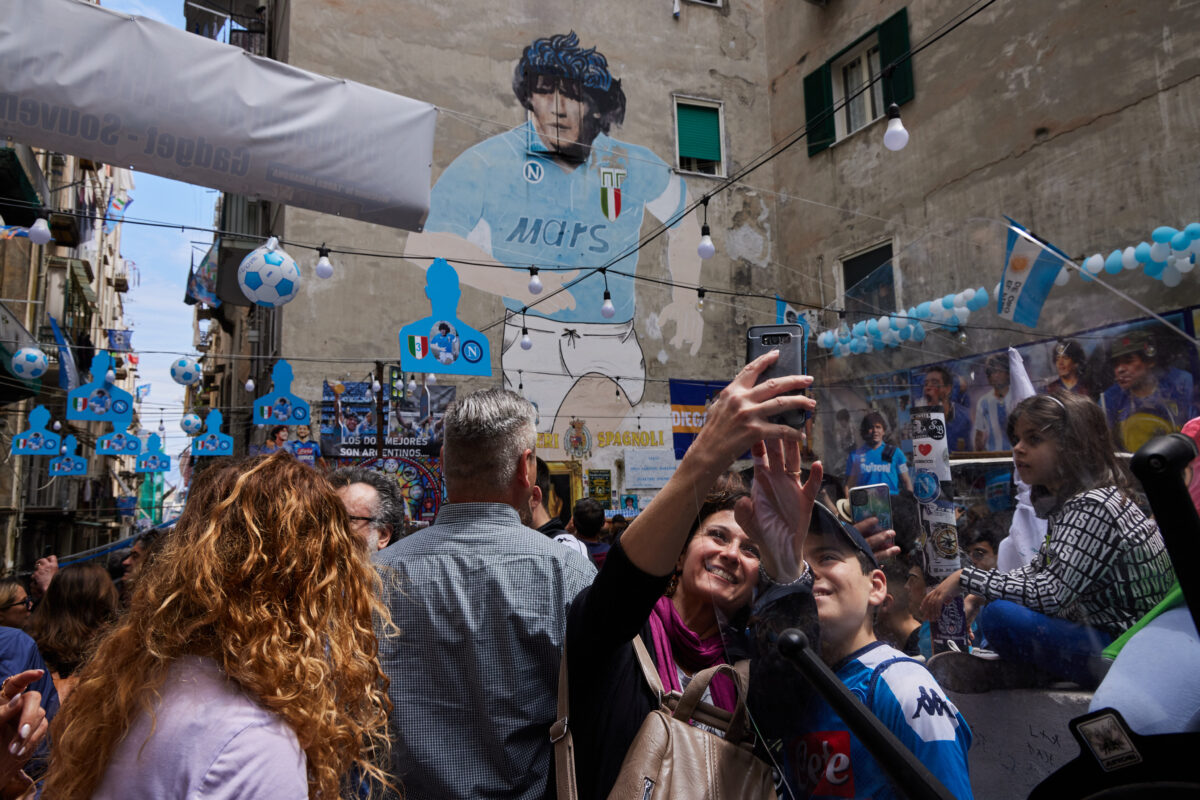
You can still feel that enthusiasm today in the energy brought by visitors, in the chatter of the crowds who come to see the mural, buy a souvenir, then linger nearby for lunch or dinner. Perhaps that is exactly why the sight of the covered face and the closed square hurts so much today, the fear that the symbol could vanish yet again.
Mediation
City officials promise negotiations and a path for the businesses to obtain proper licenses. The Chamber of Commerce stresses that those who turned this corner of the city into a global tourist attraction should be supported.
Some even say that Largo Maradona is now the second most visited site in Italy after the Colosseum, with millions of visitors a year, although there are no official figures because there is no entry ticket.
Whether or not that is accurate, one thing is certain, the mural is more than a work of art on a wall. It is an unwritten pact between a neighborhood and its history. It is a hope of redemption, one that nobody wants to see go away.