
-Essay-
BEIRUT — A woman was telling Gabor Maté about an assault she suffered in her childhood. Maté is a Canadian doctor of Hungarian-Jewish descent, a Holocaust survivor, who has become a prominent voice against the horrific crimes in Gaza, which he considers the pivotal moral issue of our time.
Maté asked her: “Who did you turn to?” She replied: “No one.”
Then he asked her: “If one of your daughters were assaulted and didn’t tell you, how would you explain her not turning to you?”
The response was that it would probably be because “she didn’t feel I was a safe person she could turn to for protection.”
“That’s the trauma,” Maté explained. “That you were alone and you yourself had no one to turn to for protection.”
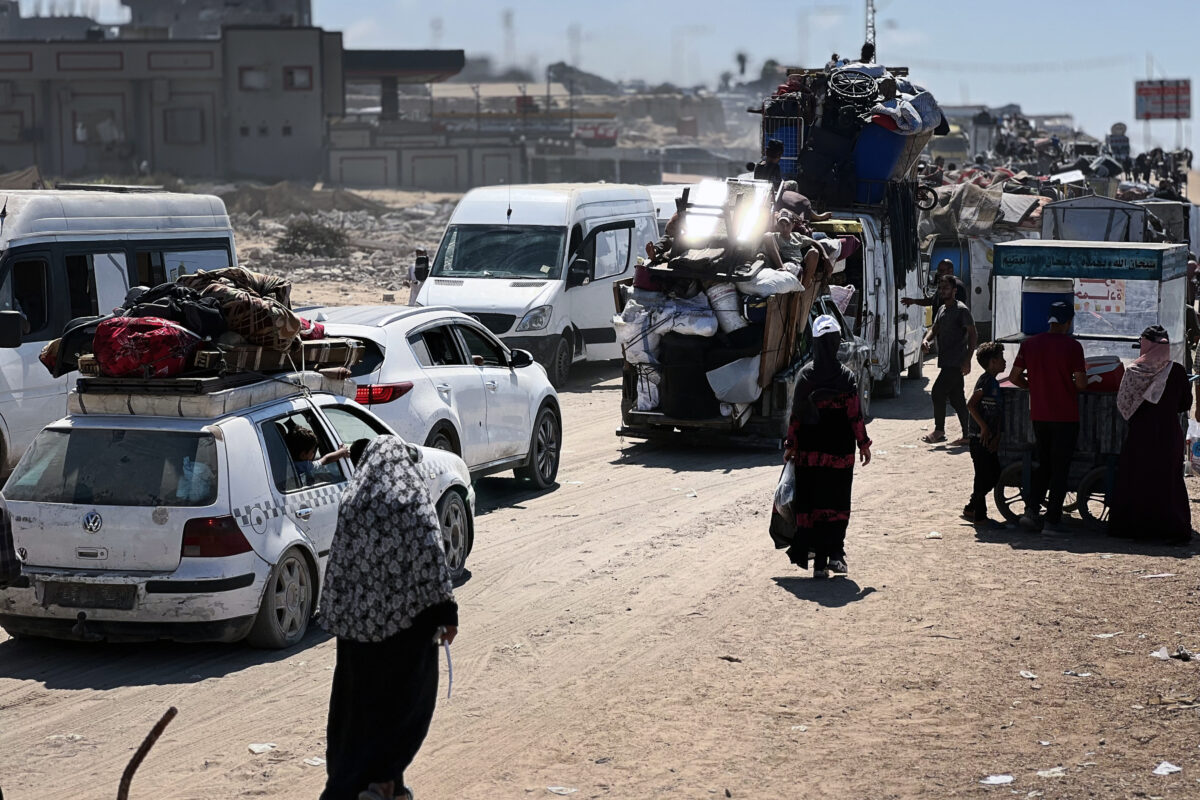
As I watched this clip, I couldn’t stop thinking about the people of Gaza. Their trauma isn’t just from death under bombing or from hunger, but from that bitter feeling of abandonment, in looking at a world that watches their death in silence.
No self-delusion
This sense of abandonment is the wound that global solidarity movements, with their symbolic initiatives, are trying to touch — not to heal, but to alleviate its lethal chill.
We see you, we are with you, you are not alone.
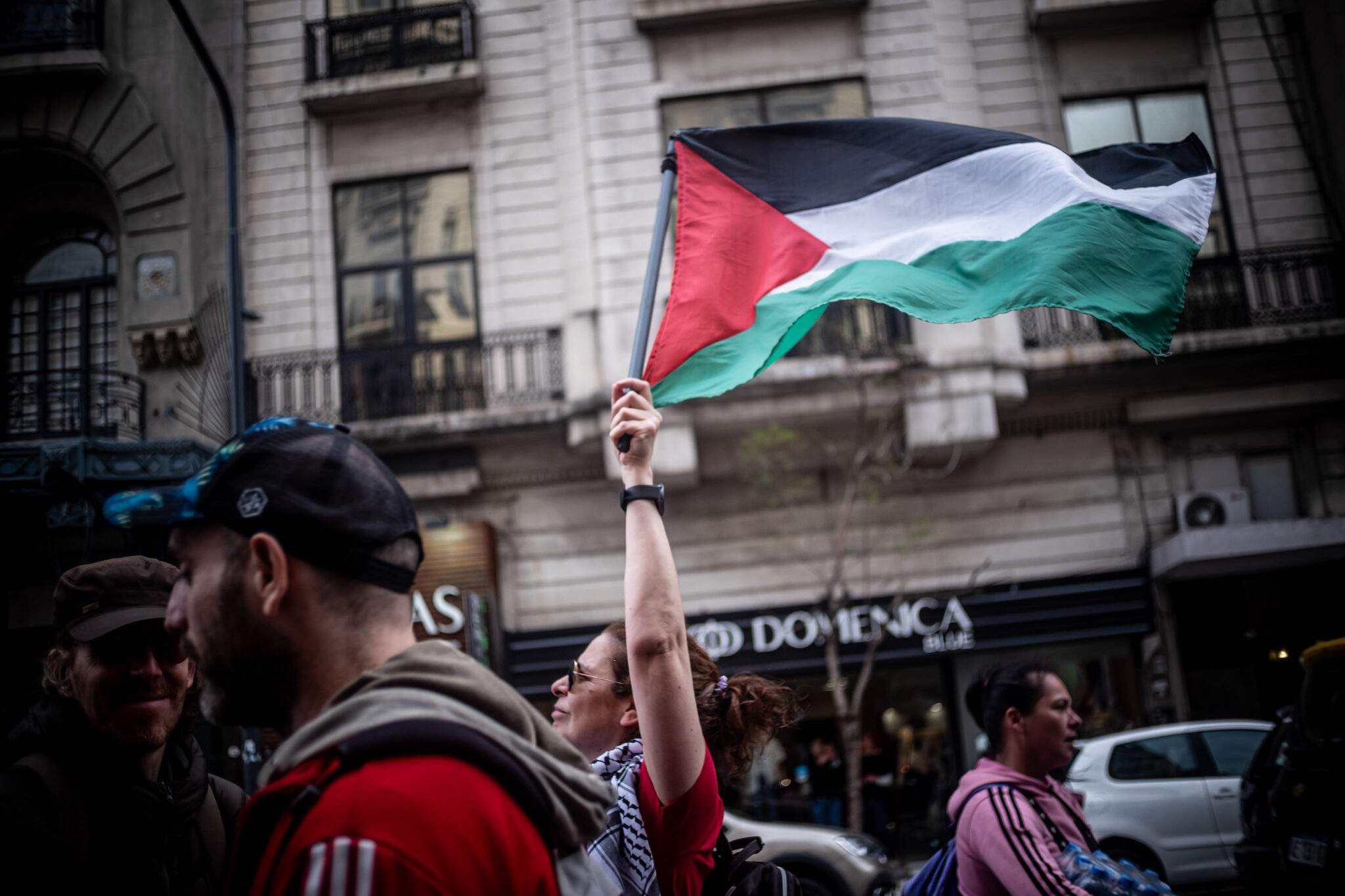
When a small fleet sails toward Gaza, or an activist goes on hunger strike in a distant city, or crowds protest in the streets of world capitals, they don’t delude themselves into thinking what they’re doing will end the siege or stop the blind killing machine. Instead, they are simply saying: “We see you, we are with you, you are not alone.”
The fleet may not open a maritime corridor, and the hunger strike may not end the hunger, but their true strength lies in breaking the psychological isolation, in offering a sense that there is a moral refuge, even if it is materially powerless.
Secondary trauma
These solidarity movements do not emerge out of nowhere; they are born from the womb of a trauma experienced by those who cannot turn their eyes away from the screens. It is a reaction to what is called “secondary trauma,” which is the feeling of astonishment and helplessness that comes over those who watch a catastrophe and are unable to stop it.
The frightening thing about the feeling of helplessness is that it may turn into numbness, as people begin to shut down their painful emotions in order to continue with their daily lives. These solidarity movements are a rebellion against this numbness, an attempt to regain feeling — even if it is painful — and to reject living as if nothing happened, because something monumental has occurred.
The videos we follow show the shock of those who recently had the image clarified for them in the West, those who, until yesterday, were defending Israel’s “right to self-defense.” Citizens, students, journalists, politicians, parliamentarians, and public figures, speaking with astonishment, pain, and obvious anger.
The trauma of these people is not limited to the feeling of helplessness, nor can it be reduced to secondary trauma alone. It goes deeper, into the core of their psychological makeup. The Westerner, raised to believe in democracy, institutions, and the human rights system, was shocked by the collapse of this belief under the weight of the images of atrocities that defied official narratives and cut their way into the conscience of those seeking untied and untainted knowledge.
Their trauma is not just moral, but existential. It touches meaning itself.
Their trauma is not just moral, but existential. It touches meaning itself. The values that the Westerner thought protected him from atrocities appeared to be a fragile facade, quickly crumbling in the face of the brutality unfolding before them.
Symbolic father
What Jacques Lacan calls the “symbolic father” — that organizing entity that represents law, authority, and order, which grants the world meaning and regulates desires — collapsed. These references had played this role in the Western imagination. Thus, the exposure of their complicity generated a sense of psychological orphanhood for many.
The “big other” that had organized the inner rhythm, collapsed, revealing the vast gulf between what is said and what is done. It is a moment of collective psychological disturbance, in which many are trying to find their way amid the ruins of a narrative that once gave them security, but which suddenly and violently collapsed.
What has been mentioned may explain why we do not find such symbolic solidarity in the Arab street.
The citizen in the Arab world has long ceased to believe that there is international or national law that protects anyone, or that there is a human rights system worth trusting.
If the trauma of the West today is the collapse of the symbolic father (law, institutions, justice), this trauma is an old one in the Arab consciousness, and perhaps it was never even a trauma. The citizen in the Arab world has long ceased to believe that there is international or national law that protects anyone, or that there is a human rights system worth trusting. He has grown up in a chronic symbolic void, where there was no “big other” to guarantee justice or provide meaning.
Perhaps this is why the silence of the world, or even his own silence, does not surprise him. He never deluded himself that life is just.
Compassion fatigue
Perhaps for this reason, he now experiences symbolic solidarity as a mere futile gesture, incapable of reversing death or changing the equation. And perhaps, after decades of accumulated disappointments, he suffers from something like compassion fatigue — a psychological exhaustion from the repeated tragedies that he is unable to alleviate, so he has chosen numbness as a defense mechanism and retreated into his silence.
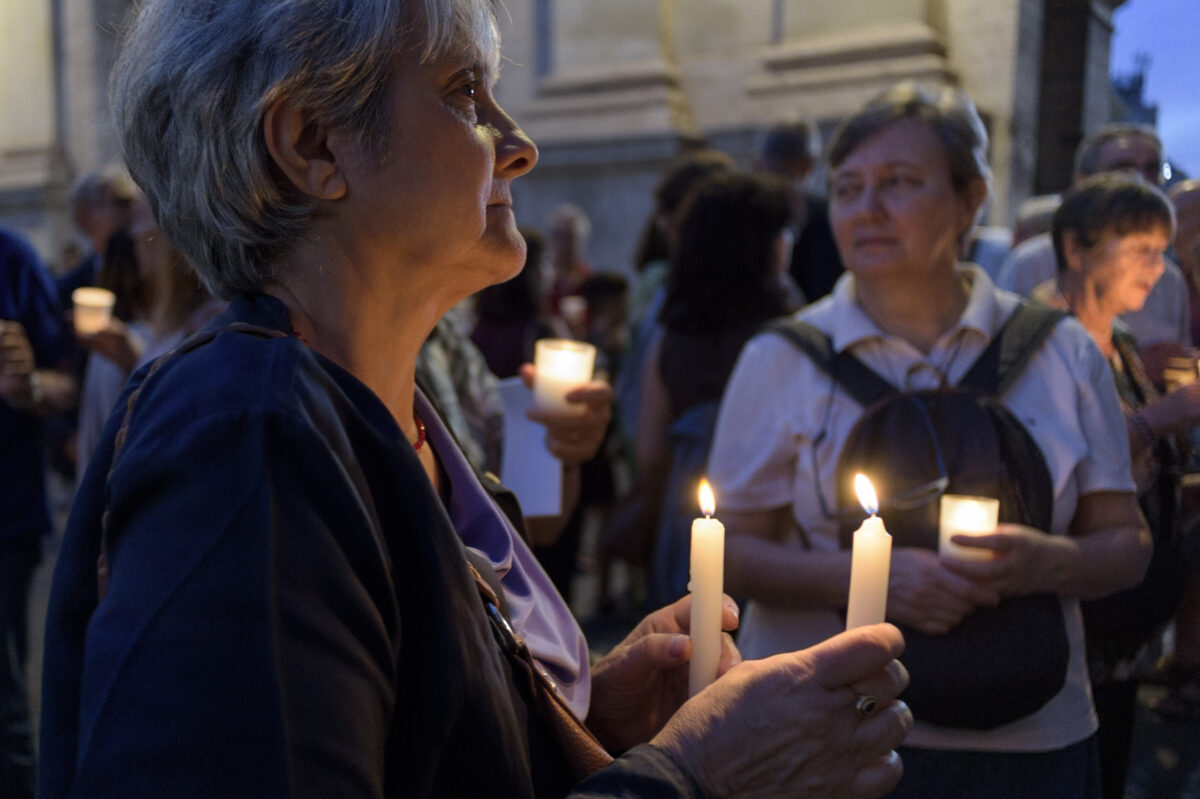
Amid this collective stupor and bewilderment, a group of citizens emerged who rallied to break the silence by joining in the sequential hunger strike in solidarity with Gaza, because they cannot continue their lives as if nothing happened. They know they won’t change reality or save a hungry child, but perhaps they are trying to save themselves from suffocating on helplessness and being buried by silence.
Symbolic action is the simplest form of human solidarity, and it is the possible and available response to the trauma of abandonment that the people of Gaza suffer. It is a sincere attempt to convey the following message to the people of Gaza: You are not alone.
The “With Gaza 2025” group organizes a sequential hunger strike, with independent activists taking turns, and calls for a weekly gathering every Thursday evening in Martyrs Square, with the slogan “Breaking the Silence # We Are Not Helpless.”