
-Analysis-
BERLIN — It is hard to say whether I deserve medals or a court martial. One thing is certain: in the last 15 years I have killed more than 50,000 soldiers. Most I shot, others I blew up with rocket launchers or ran over with tanks. Once I even crushed someone by mistake while landing a helicopter.
Do not worry: all of this violence happened on a screen. I have been playing first-person shooter games since I was 13; over the years the casualties add up. And that is only counting the kills I racked up in multiplayer against human opponents. If you include the “NPCs” (non-player characters, those computer controlled figures) that I have run over or stabbed in games like Grand Theft Auto or Assassin’s Creed, my kill count probably sits somewhere in the six figures.
At this point I should offer a brief reassurance: not a single real world murder has followed my countless virtual ones. That has less to do with my willpower or any saintly pacifism than with a simple fact: brutal video games do not, as a rule, turn people into mass murderers.
I was sure the ban advocates deserved the same eye roll, until now.
The very staid, very German “killer game” debate always struck me as absurd. We may have buried that slightly embarrassing chapter of public discourse, but even 20 years ago the worry about violent games among some citizens and politicians (mostly people who had never actually played one) ran so hot that a pledge to ban them even made it into the coalition agreement of Angela Merkel’s first government. Luckily it never happened.
But since Battlefield 6 came out two weeks ago, I suddenly see that debate differently. Until now I was sure the ban advocates deserved the same eye roll we give Adorno’s disdain for jazz or the 18th century panic about “reading addiction,” when anxious parents warned that novels would rot the minds of the young. New art forms always trigger old fears: once upon a time the bourgeois dreaded The Sorrows of Young Werther by Goethe; today they want to ban Counter Strike.

Bleak panorama
Now I find myself turning into one of those squares. Four years ago I played the last Battlefield entry without a second thought, but Battlefield 6 leaves me deeply uneasy. That has less to do with the game itself than with the world outside my window. In 2021, armed conflicts felt to my peace-spoiled generation like fantasy or science fiction; now, every time I pull the trigger in Battlefield 6 I see images from Ukraine and Gaza and hear the arguments about conscription in my head. I start to wonder: is this still a game, or already a form of virtual military service?
Battlefield 6 does not make it easy to forget the grim mood. The single player campaign is set in the near future, and it is anything but rosy. In 2028, NATO has lost authority and many members, and its secretary general is assassinated. A power vacuum opens and wars flare across the map (in the United States, in Egypt, in Gibraltar) — and you, as part of the elite team Dagger 13, are sent to put out the fires.
So far, so dramatic. But Battlefield 6 refuses to pit the West against any real world foe in this imagined global war. NATO is not up against Russian forces, as the series often suggested in the past and as current events would make plausible. Instead the enemy is “Pax Armata,” a private army that conveniently recruits mercenaries from everywhere and so cannot be tied to any country. It is an elegant way to stage a war for a shooter without touching the conflicts we are actually living through.
It is hard to find a real story in Battlefield 6. Yes, there is a plot, parceled out through missions and cut-scenes, but it is so tangled that even a hardened literary critic raised on Thomas Pynchon and James Joyce would struggle to follow it, let alone retell it.
Take the most political subject on earth, war, and bury it under so many false trails that it starts to look apolitical.
That fog is a standard move in shooters, one the Call of Duty series uses often: take perhaps the most political subject on earth, war, and bury it under so many false trails that it starts to look apolitical. A sharp or even provocative take on an oncoming world war would hardly suit publisher Electronic Arts, not least given its new investors, among them the Saudi state and the hedge fund of Donald Trump’s son-in-law, Jared Kushner.
What little of war’s horror peeks through the smoke in Battlefield 6 feels oddly jaunty. Your avatar and squad mates wisecrack about the daily grind of combat and grin at each other with mannequin-like smiles after you have just killed hundreds with plastic explosives. In Battlefield 6, a third world war seems hopeless, but not especially serious.
Training killers?
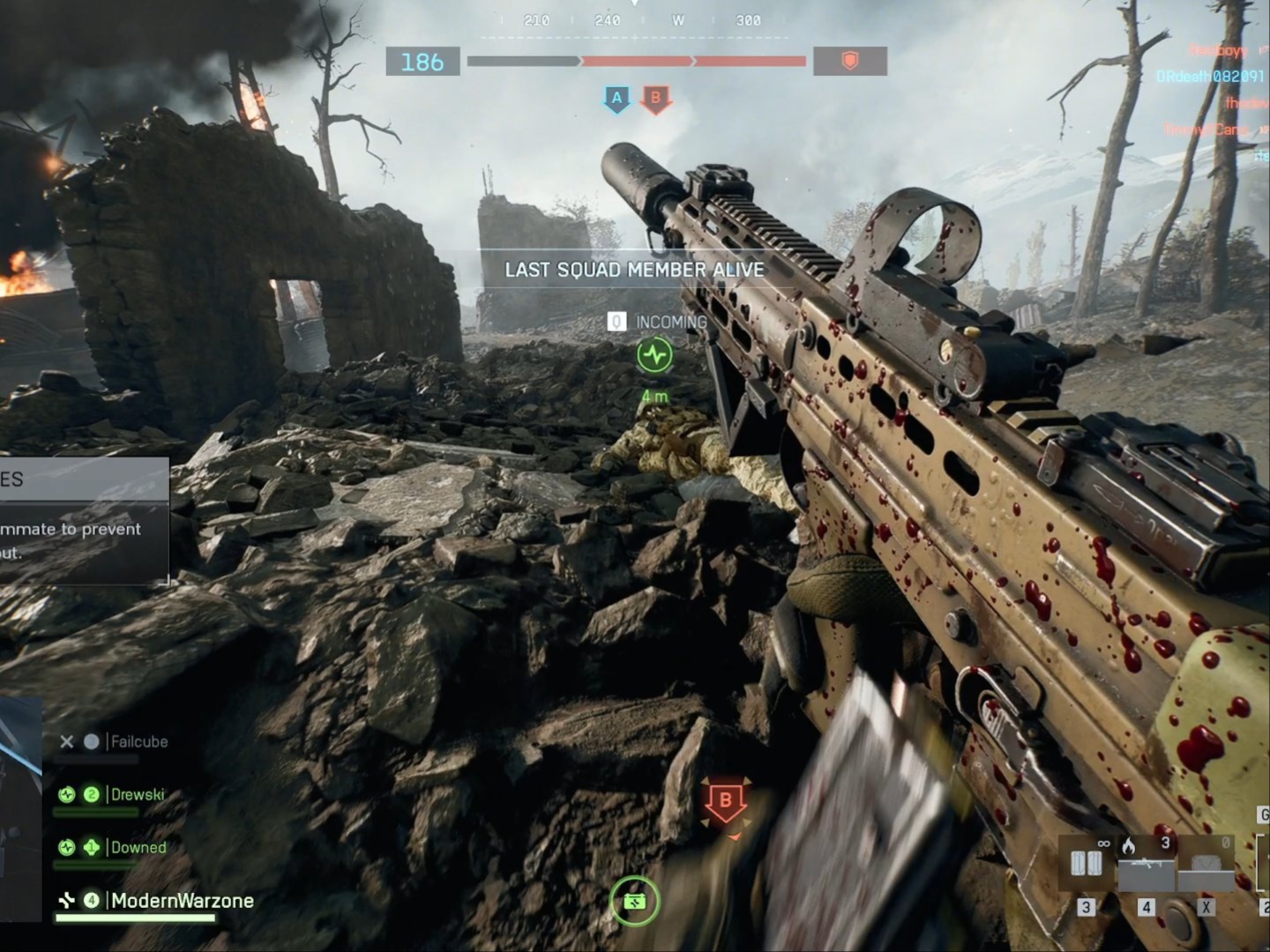
Multiplayer is far more serious. Where computer enemies in the campaign politely line up to be shot, human teammates and rivals fight back. Then Battlefield 6 can be genuinely harrowing: I hurl myself into the mud under heavy fire; I press against a low wall to stay out of a tank’s sights; I go down and bleed out while my squad mates scream over voice chat. For a moment the line between simulation and reality blurs, and I wonder whether I might one day shoot and crawl to save my actual life.
That sense of near death is creepier because I know these drills may prepare me for the real thing. Back in the 1990s, the United States Army partly trained recruits for the second Gulf War using video games, with the result that these so called “Nintendo soldiers” were actually better shots than troops trained the usual way. Today the Army even builds its own shooter series, America’s Army, to attract recruits. Games may not mint mass shooters, but they can make killing feel familiar.
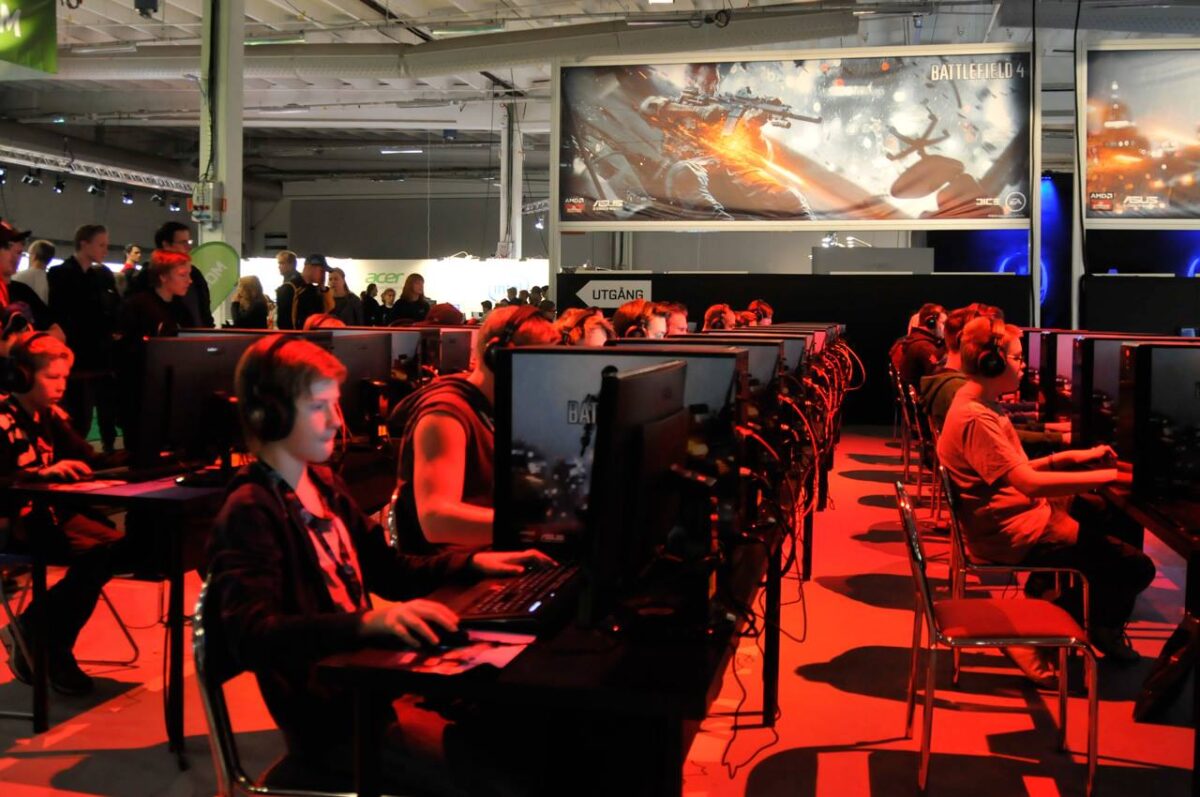
For Germany’s Bundeswehr and a defense minister, Boris Pistorius, who often looks short on options, those training effects are not bad news. One-fifth of German players, more than seven million people, spend time in shooters. Why not recruit the next generation from this pool of virtual veterans rather than revive the draft by lottery? In the medical screening you could sort not by age or sex, but by gamers and non-gamers.
If you can tune out that political subtext, Battlefield 6 is disturbingly enjoyable. The nine maps are cleverly built, with lots of cover and flanking routes; the ranking system, which unlocks new gear, dangles a fresh reward after each round; and the countless weapons feel terrific thanks to slick animations and thunderous sound. Battlefield 6 does not pretend to be especially realistic. It wants to entertain.
A distorted image
Granted, this playful vision of war is nothing new. Shooters cater to an old power fantasy: not getting ground up as one more anonymous body in the line, but shining as an individual hero. If there are heroes in war at all, they are not the people who shoot straightest or invent the cleverest ways to kill. They are the ones willing to give themselves up for others at the one decisive moment. But there is no fun in playing self-sacrifice.
Even so, many recent military shooters at least nodded to the wars in Iraq and Afghanistan, or recreated past conflicts like World War II. Battlefield 6 imagines a kind of fighting that barely exists. Look at the daily attrition in Ukraine and you do not see neat front lines; you see vast belts of death between Ukrainian and Russian forces, spaces you cross only at night and under careful camouflage. The lone soldier may be more powerless now than at any time in modern military history.
Today war is mostly human beings against drones. And the drones usually win.
In Battlefield 6, by contrast, life as an infantryman is, if not exactly fun, then at least noble. Unlike earlier entries, most modes now field far fewer tanks, helicopters, and jets, so the foot soldier is always in the thick of it. Most matches turn on close quarters fights.
Today war is mostly human beings against drones. And the drones usually win. By current estimates, about 70% of those killed and wounded in Ukraine are casualties of unmanned systems. Battlefield 6 ignores this new arithmetic of death. In multiplayer, drones are almost an afterthought. You can scout with them, but you cannot drop grenades or actually injure anyone. The game claims a near future setting, yet its picture of combat is so dated that it tells you little about the conflicts we are already in.
In the end it is not the presence of violence, even in violent times, that makes Battlefield 6 troubling. It is that it feeds a whole generation of players a warped vision of the battlefields they might one day face for real. Its current success seems to reward that choice: Battlefield 6 sold more than seven million copies in three days, a record for the franchise. How we will remember it later, whether we will praise it as a combat-ready training program or condemn it as a herald of corrosive military nostalgia, is anyone’s guess.