
-Analysis-
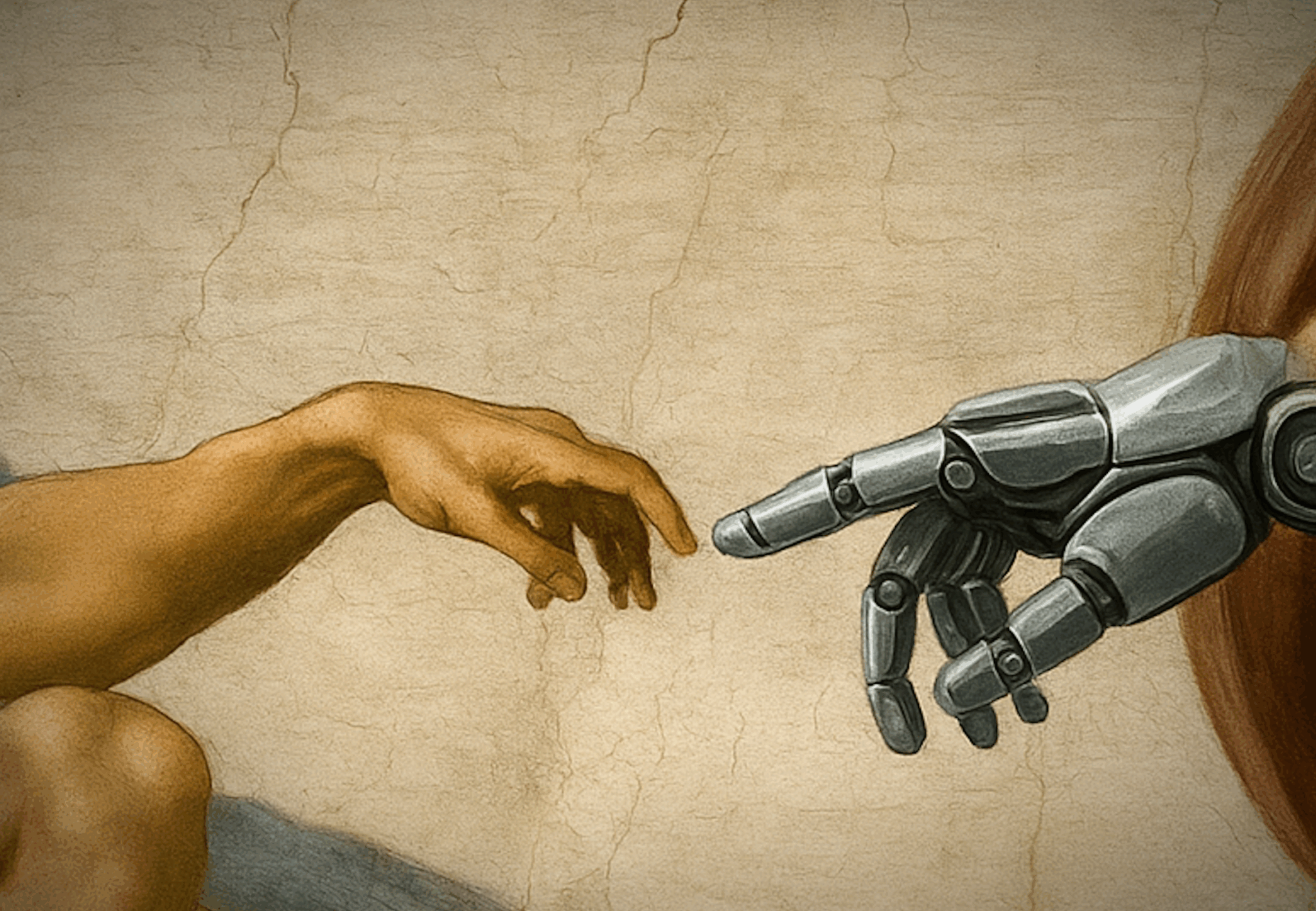
TURIN — I once read that the very existence of a pediatric oncology ward is proof of the nonexistence of God. From that thought came the idea of replacing God with a machine capable of eliminating pediatric oncology departments altogether. The crisis of religion and the crisis of science thus gave birth to Silicon Valley.
Technological religion is the new faith, complete with its own dogmas, messiahs, rituals of belief, and a deity made not of mercy but of electrical impulses and empty flattery.
The Wall Street Journal recently reported that a Silicon Valley startup called Preventive is working on technology that could modify embryos, opening the door to genetically engineered, perfectly healthy children.
In February, a team of researchers led by Japan’s Mie University Graduate School of Medicine published a study suggesting that it might be possible to remove the extra chromosome responsible for Down syndrome using gene-editing techniques.
Last year, the “Wish for a Baby” fair sparked heated debate by showcasing assisted reproduction, surrogacy, and egg donation technologies, even inviting discussions about selecting a child’s eye color.
Birth, or the Beginning, has always been the cornerstone of religion. What we are witnessing now is an attempt to reproduce births free of sin.
Robot womb
The Californian technocracy’s fixation on creating life and conquering death, from genesis to cryogenics, marks the dividing line between the world we know and the one we would rather not face. Not long ago, a (false) report circulated about a robot capable of replacing a woman’s womb during pregnancy. Yet the idea of a machine able to fully replace a human being no longer feels so far-fetched. It may be time to start thinking seriously about that possibility.
I do not have the answers, but I do know one thing for certain: I would not entrust them to Sam Altman.
Where, then, do we draw the line between eugenics and progress? And, more importantly, where do we draw it? Preventive’s stated goal is to modify embryos to prevent hereditary diseases. The problem lies in what comes next (because there is always a next) and the aftermath is impossible to predict.

Preventive’s homepage. — Source: official website
Don’t trust Sam
Where do the boundaries lie? A technocrat might imagine a world made entirely of geniuses and create technology to raise IQs, or a world made entirely of fools, or of only healthy people, or of only the sick.
I do not have the answers to those boundaries, but I do know one thing for certain: I would not entrust them to Sam Altman. If an ethical principle is linked to profit, it ceases to be an ethical principle and becomes an economic transaction. I don’t believe such techniques would ever be available to everyone. If the chance of having a healthy child depends on wealth, then we are talking about exclusion disguised as advancement. Binding survival to wealth is, quite simply, an aberration, before we even begin to speak of eugenics.
In The Technological Republic, Alexander Karp, CEO of Palantir, writes: “When we require the systematic elimination of the thorns, barbs, and flaws that necessarily accompany genuine human contact and confrontation with the world, we lose something else.” He is right. The question is what and how much we are willing to lose in the name of our own supposed well-being.