
TURIN — From rapists to corporate executives orchestrating financial fraud, from the football fan vandalizing a stadium to the reckless driver causing a fatal car crash, the thread running through it all is the same. Crime has a gender, and it is overwhelmingly male.
The problem of male violence is perhaps the most hidden-in-plain-view, dangerous, and costly issue in our societies. Not only for its legal, moral, and even aesthetic dimensions, but for the staggering economic burden society must bear because of entrenched toxic models of masculinity.
We are talking about tens of billions of euros that the state spends every year repairing the damage caused by violent and criminal behavior that can overwhelmingly be traced back to men.
The issue here is not whether patriarchy exists. It is not a matter of ideology, still less of semantics. What is at stake are facts and statistical tables. And these statistics leave little room for debate.
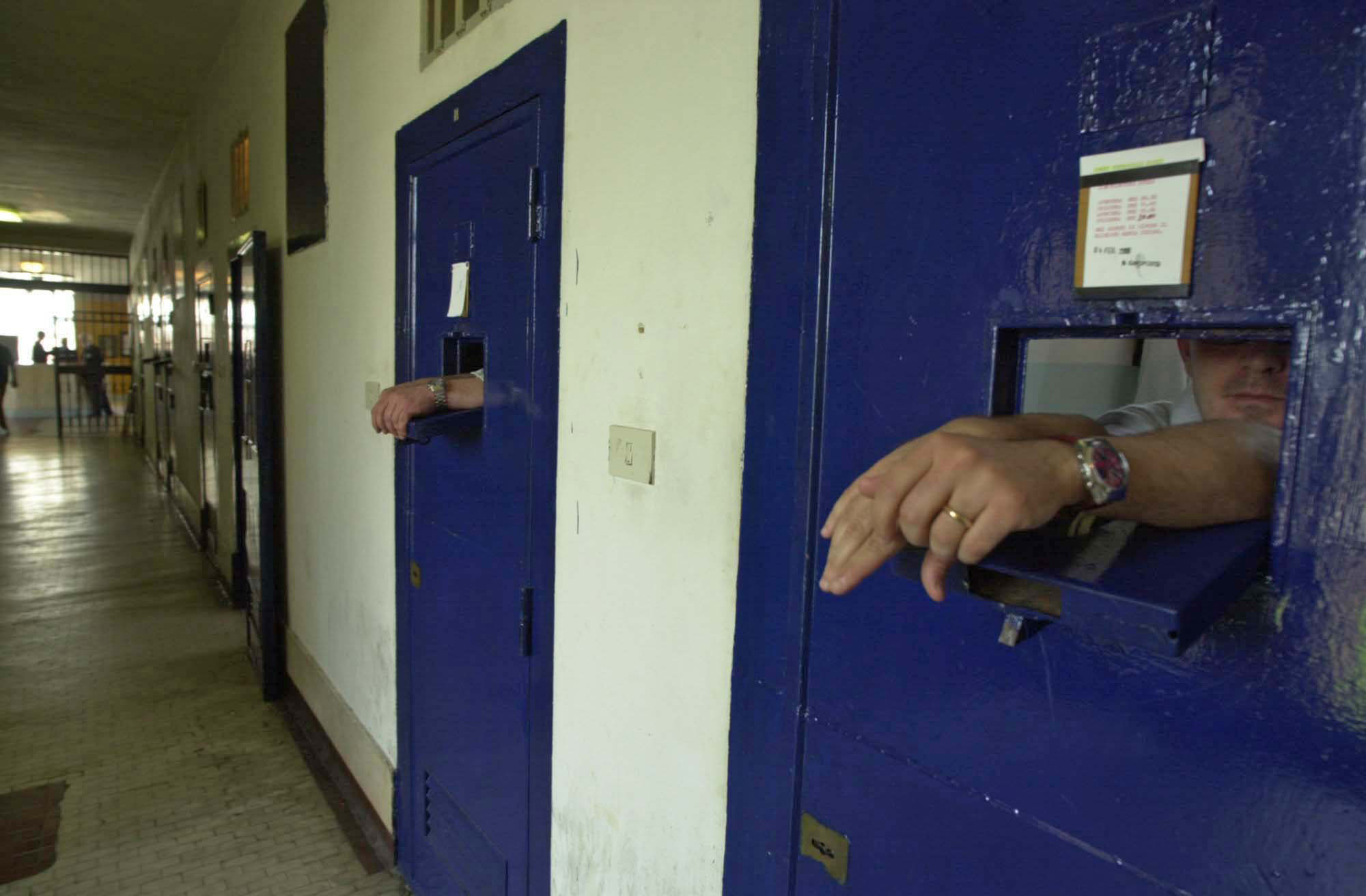
In 2024, women in prison made up just 4.3% of the Italian inmate population, while men accounted for 95.8%.
In Italy, in 2021, 151,860 women were arrested or charged, representing 18.3% of the total, while 679,277 men were arrested or charged, making up 81.7% of those prosecuted that year.
Colossal cost
Not only do women commit fewer crimes, they also receive shorter and less severe sentences. This fact alone should give us pause, if only for pragmatic reasons.
When it comes to homicide, the gap becomes a chasm: 93.9 percent of those charged are men, and in 2023, 93 percent of people killed by their partners were women. Rape? 98.1 percent of perpetrators are men. Only in road-related crimes is there near gender parity, with a difference of around 1%.
No one dares point out the most glaring fact of all: the overwhelming majority of criminals are men.
For property crimes such as burglary, the female share rises to 20.2%, yet remains a minority. And the imbalance extends beyond violent crime to economic, political, and cybercrime. Either women are far better at avoiding detection, or we are facing a colossal problem.
To this must be added a subtler but equally pervasive form of violence: the kind expressed through language, in daily interactions, in ritualized aggression, in obsessive partisanship, in the ways social space is symbolically (and physically) occupied.
These figures are not neutral. They mean that a large share of public spending on justice, security, prisons, and prevention goes into containing the fallout from male violence and deviance.
Invisible care
How much does this cost? Estimates put the price of crime in Italy at around 60 billion euros a year, including both direct and indirect costs. If at least three-quarters of these crimes are committed by men, as the data suggests, then the “criminal gender gap” alone amounts to some 45 billion euros. A mountain of public money wasted managing consequences that could, for the most part, be prevented. And that is without even factoring in the long-term costs: lost productivity, psychological support, health consequences, and lost lives.
There is also another asymmetry, one that rarely gets acknowledged. While billions are spent containing male violence, the immense value of invisible care work, carried out overwhelmingly by women, is almost completely ignored. In Italy, according to the ILO, women devote an average of more than five hours a day to unpaid care and assistance, compared to just one hour and 48 minutes for men. This labor is vital to the functioning of society, yet it is excluded from GDP calculations and recognized, if at all, only as a “natural vocation.”
And yet gender remains conspicuously absent from political debate. Some parties focus obsessively on the ethnic background of offenders, while no one dares point out the most glaring fact of all: the overwhelming majority of criminals are men.
Acknowledging this does not mean criminalizing an entire gender, but making public policy more effective. Reducing male crime by even 10% would save billions every year, freeing up resources for prevention, education and healthcare.
The challenge is not to “re-educate people” but to imagine a different way for males to inhabit in the world. A new relational grammar rooted in complexity, care, listening, and a form of strength defined not by domination, but by the ability to sustain relationships that are non-hierarchical. It’s not just a political issue, it’s economical: we would all be richer if men behaved more like women.