
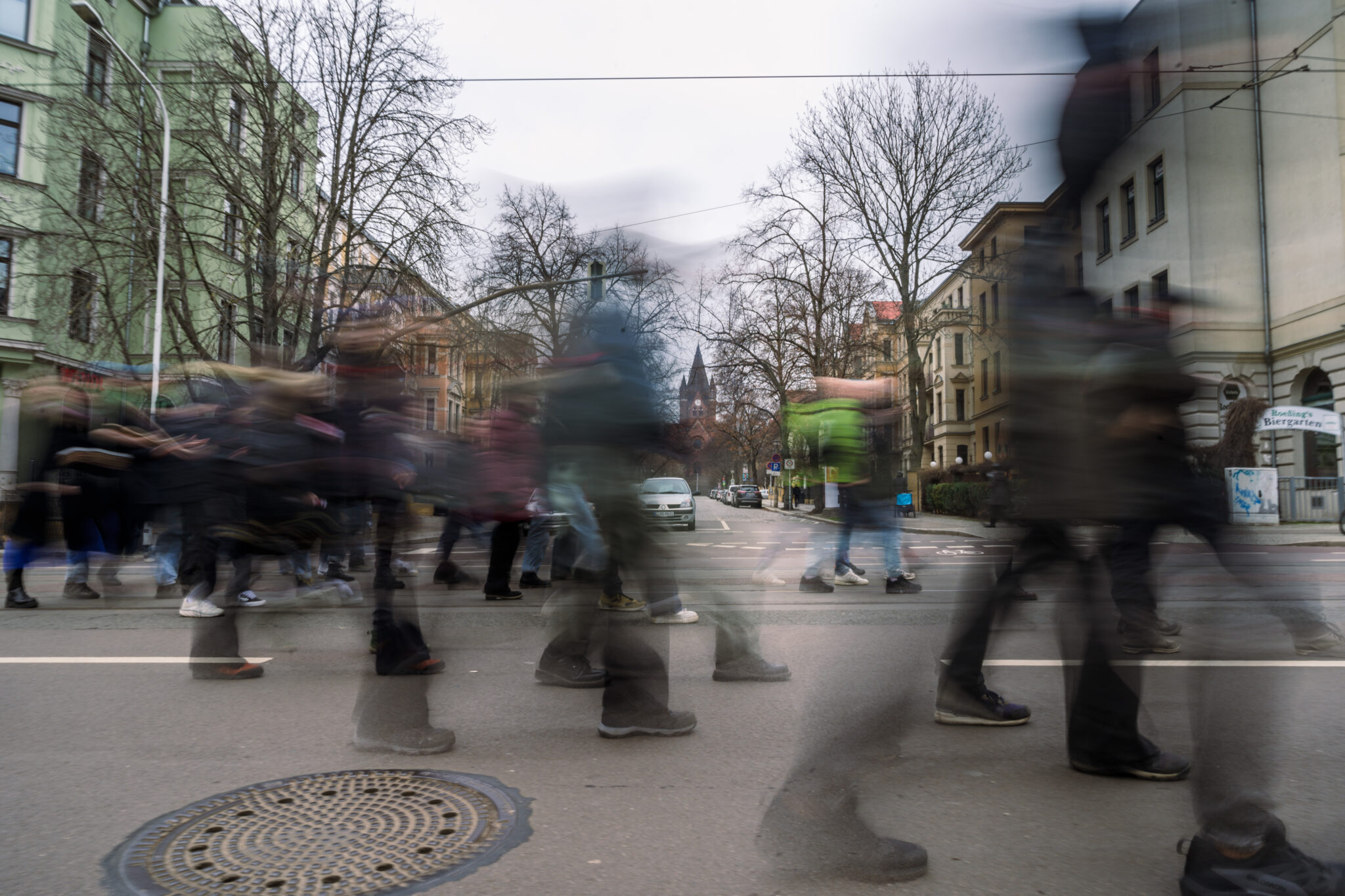
HAMBURG — They sit in traffic on their morning commute, fill out paperwork at local government offices, and pick up their kids from daycare. These are refugees who have become trainees, educators, patients and doctors, bus drivers and bakers, office applicants and taxpayers. When does this transformation take place? When do refugees stop being refugees? It is worth looking more closely at this question, because the role organizations play in this process tends to remain invisible precisely when things are running smoothly.
A modern society is not a collective that one simply joins, nor is it a container that absorbs people. It consists of distinct entities, each with its own internal logic. In our study “Social Docking Points for Refugees,” we interviewed people who engage with refugees as teachers, employers, trainers and doctors, and we are now evaluating the results.
Rather than focusing on a culture of recognition or a “welcoming culture,” which was central during the initial phase of the refugee crisis, we concentrate on the social institutions that newly arrived individuals interact with directly. Starting from this perspective changes how we see the phenomenon of migration.
Docking points
School is one of several docking points we examined. Others include administrative offices, doctor’s practices, workplaces and even theaters. Each of these operates according to a distinct logic and specific criteria for success. But they share one essential aspect: the need to be understood, linguistically above all. It is about being able to receive medical care, earn money, encounter people who can impart the knowledge and skills needed to succeed, have the proper legal credentials to sign contracts, and access cultural institutions like theaters and museums that allow for self-reflection.
Discrimination certainly occurs in schools, workplaces, doctors’ offices and public agencies. To deny that would be to sugarcoat the facts, just as it would be wrong to claim that cultural factors play no role in the challenges of integration and segregation.
But if we assume that is the full picture, we underestimate society’s potential. People can be discriminated against for any number of reasons. But even within these systems, there are mechanisms for success. For instance, school grades can still be influenced, positively or negatively, within the logic of the educational system. This doesn’t always favor children who are vulnerable to discrimination, but it does place limits on what is possible and changes how interactions with “foreigners” unfold.
Crucially, these institutions do not primarily engage with migrants as migrants, but in terms of their own functions and responsibilities. Schools exist to provide students with qualifications, and their activities are organized to serve that goal. Schools, like workplaces, confront migrants with new expectations, day after day, from morning to evening. They create stable, ongoing forms of integration.
A school transforms refugees into students, the workplace, into employees.
Through repetition and routine, they can identify what someone needs to succeed in society, even when confronted with entrenched cultural expectations. This is not to say that diverse, heterogeneous classrooms don’t pose challenges, or that discrimination never occurs in schools. But one of the core tasks of any school, even for non-migrant students, is to put prior experiences into perspective.
School is a place where education and incidental language acquisition go hand in hand. It shows that beyond cultural stereotypes and social inequality, successful integration into institutions hinges on language skills. In turn, this language competence allows institutions like schools to address refugees according to their own internal logic, not simply as outsiders, migrants, or refugees. A school transforms refugees into students, the workplace, into employees, and a doctor’s office sees them primarily as patients.
This also means that even a lack of language skills can be compensated for by the practical routines of each docking point. In our research, we saw trainees learning different types of grain and matching them to the right flour sack, or bus drivers using GPS and photos of tricky intersections to get their bearings. Over time, these refugees pick up more, thanks in part to support from their coworkers. At the end of the day, they earn money they can use. The employer, in turn, has a new bus driver, for whose license he paid good money.
That financial investment should give pause to anyone turning the migration debate into xenophobic rhetoric. Clearly, there is a clear reason, not entirely selfless, to invest in migrants: our economies need them. But this does not help employers who must constantly shield their newly trained staff from hostile public discourse.
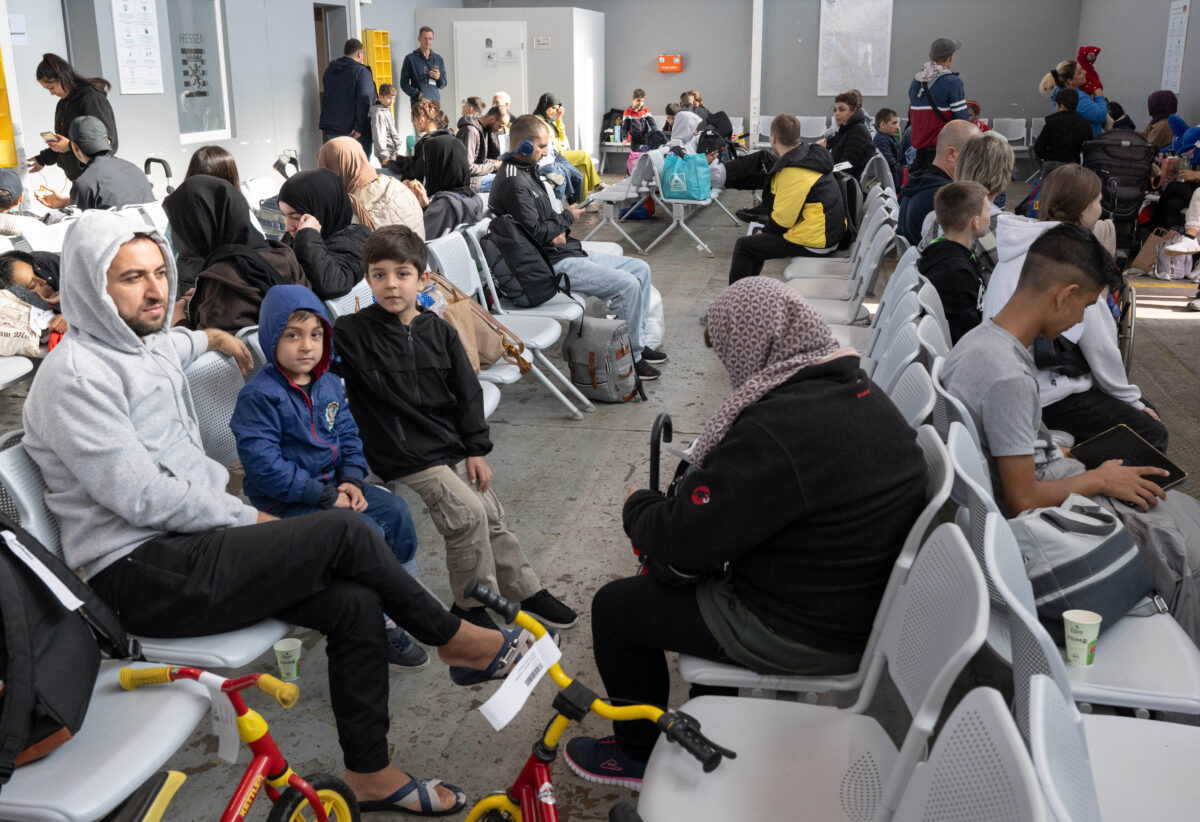
Invisible machinery
The integration taking place through these docking points is substantial. What we observed across all these areas was organizational creativity and adaptive flexibility that produced real results. Yet the broader public debate about migration and integration looks very different.
The successful work being done at the institutional level often goes unnoticed, including how migrants, with consistent and organized support, are integrated by the very institutions of society. The migration debate only picks up on what is visible at the surface. In other words, cultural differences in public spaces. Seeing a Muslim woman with a headscarf on the subway, most people don’t stop to consider that she is on her way to a workplace where the headscarf is no longer the focus.
Current migration debates fixate on ethnic and cultural differences in everyday scenes, along with the very real issue of disproportionate welfare payments to refugees. They point to poor educational outcomes in some communities and rising crime rates in others. But this does not provide a representative picture of migration’s reality, not for migrants in general, not even for refugees. Public discourse and actual experience produce very different portraits of migrants.
Society’s efforts to maintain order often remain invisible because they work as expected.
Society’s efforts to maintain order often remain invisible because they work as expected. But the consequences of disorder grab attention precisely because they disrupt that predictability. This is why disorganized outcomes dominate the debate. Interestingly, both critics and advocates of migration can agree on this: they focus almost entirely on the fallout of disorder.
Critics blame migrants themselves and argue they cannot integrate. Others deny any responsibility on the part of migrants and insist all failures lie in society’s lack of acceptance. This sometimes leads to denying real struggles and failures, and in some cases, a kind of identity politics emerges that paradoxically reinforces cultural and ethnic distinctions.
Germany, where around 30% of the population has a so-called migrant background, has been a country of immigrants for decades. Its success, however, did not stem from a culture of recognition or grand talk of cultural enrichment. For a long time, these things were absent. And that was probably a good thing, because they are apparently not what makes the difference in migrants’ lives.
Germany succeeded as an immigration society because migrants, especially guest workers, but others too, were taken in by the institutional docking points of society. They became recipients of largely invisible services that keep society running. We call this invisible machinery the engine room: the functioning units of daily life where challenges are met under highly specialized conditions.
Today’s debate
These concrete institutions have made it possible for Germany’s migration reality to evolve dramatically: not invisibly but through a process of adaptation. This applies to every arena where expertise is expected, applied and optimized, and where systems adjust pragmatically to the people who engage with them. Yet today’s migration debate, which influences political decisions, barely acknowledges these structures or what they require to be effective. Instead, the problem is portrayed as lying within the migrants themselves, as if they were inherently a security threat.
What stands out in the debate is how easily people join in, even without any real understanding. It reflects a broader trend seen in other discussions: Anyone can take cheap shots at capitalism or make moral appeals about the energy transition, but few dig into the actual workings of society’s engine room. The same goes for AI: Strong opinions are often formed without any connection to real-world expertise.
Germany will need more migration in the future, not less.
Let us be clear: Yes, many municipalities and schools are overwhelmed. Yes, the number of refugees is not declining fast enough. Yes, we lack coherent European solutions. All of that is true. And yes, a problematic Islamist subculture has long offered a kind of compensatory identity, especially for younger people, something even critics of Christian institutions would never have tolerated. The support of migrants and migration by certain segments of academia is unevenly acknowledged. But both critics and defenders seem to assume migrants cannot change. In this view, refugees must either be accepted unconditionally or deported.
But blaming all problems on the migrants is too easy. It solves nothing and, at best, creates the illusion of short-term control. The relentless politicization of migration is unsustainable. It conflicts with the need for skilled labor and erodes the quiet, everyday integration work we describe here.
Some may argue that docking points themselves are under-resourced, and they are not wrong. Schools are overburdened, some neighborhoods are under strain. But this leads to a fundamental question: What should we do about it?

“Yes, the number of refugees is not declining fast enough.” — Photo: European Parliament
Rhetoric vs. realism
One option is to reject migration entirely, but that is unrealistic. Germany will continue to be an immigration society, and it will need more migration in the future, not less. The idea that simply shifting from irregular to regular migration will magically produce well-integrated, problem-free migrants is also naive.
The more realistic approach is this: When docking points like schools, training centers, healthcare providers, and municipalities are overwhelmed, it is often not solely because of migrants. These are already fragile systems, and migration simply adds another challenge. Germany talks a lot about its infrastructure crisis. But the crisis affects not just bridges, trains and energy grids: It also affects institutions that function as integration engines. And these are not only for migrants. Investing in these structures could do more to ease social tensions than ideological arguments that ignore how things actually work.
Of course, numbers must be reduced. Of course, we need a European solution, and the reform of the Common European Asylum System (CEAS), which came into effect last year, may help. And yes, a sense of control is needed to prevent far-right gains whenever migration dominates the headlines. Many activists refuse to acknowledge this, just as their opponents think harsher conditions alone will restore order. Perhaps the most jarring images coming out of Germany today are those of children, teens and workers being taken from schools, apprenticeships or workplaces to be deported. These scenes lay bare the gap between political rhetoric and social reality.
We would gain a lot by tackling migration issues with more realism and evidence. Migration skeptics often say they are fine with migrants as long as they are well integrated, yet they shy away from asking what successful integration actually requires, or why it is economically essential. On the other side, those who frame migration solely as a matter of recognition also miss the reality of what migrants face. For example, the failure to understand just how vital the German language is reflects how out of touch some well-respected discourse spaces truly are.
Our research aims to make the invisible visible.
Here lies the problem: Social routines depend on preconditions that often remain hidden. And so the paradox of public attention: The hard-won success of integration, the efforts migrants make to become ordinary members of society, go unnoticed. Success becomes invisible, and is instead conflated with the side effects of large-scale migration, which are viewed as threatening. Even the dramatic decline in immigration numbers goes unremarked.
Our research aims to make the invisible visible. A closer look at the engine room could offer a more grounded view of the situation by highlighting what works, and challenging the dominance of visible, negative narratives.
From an economic perspective, Germany will continue to rely on immigration. But this becomes harder to justify when the public debate reduces migrants to a problem and migration to a burden. Life for many well-integrated migrants and their children is likely to become harder, precisely because their efforts, their now dormant migrant status, are being re-exposed. We are walking into a self-fulfilling prophecy: Those who only see problems will see nothing but problems. The only way to counter this, and to address the very real integration challenges posed by tightly knit communities built around family or religion, is to adopt a realistic perspective that recognizes the potential society is already developing in its institutional docking points.