-Analysis-
PARIS — The moment for a ceasefire between Israel and Hamas, alas, has not yet arrived — and the war enters its fifth month, with an increasingly heavy toll on civilians.
The gap between the positions of the two parties revealed itself to be too wide Wednesday, though talks have not broken down: they are resuming today in Cairo. There are obviously no direct contacts between Israel and Hamas, with Qatar and Egypt acting as intermediaries, with the United States as sponsor.
For the latest news & views from every corner of the world, Worldcrunch Today is the only truly international newsletter. Sign up here.
The parameters of the discussion are known: the duration of the truce; the release of hostages — keep in mind, civilian and military don’t have the same “price,” if I may use this atrocious word; and finally the release of Palestinian prisoners in exchange: how much for each hostage? It was three for one in November, and no prisoners with blood on their hands; will it be the same this time?
Finally, what will happen with Israeli troops during the truce? These are the key points of an agreement.
Eradicating Hamas
Hamas has made its position clear: it is maximalist, and no doubt negotiable. The Palestinian militants demanded a 135-day ceasefire; a release of hostages in phases, in exchange for the freedom of 1,500 Palestinian prisoners, including 500 sentenced to life imprisonment, and therefore with blood on their hands; and, finally, the Islamist group is calling for the departure of Israeli forces from Gaza.
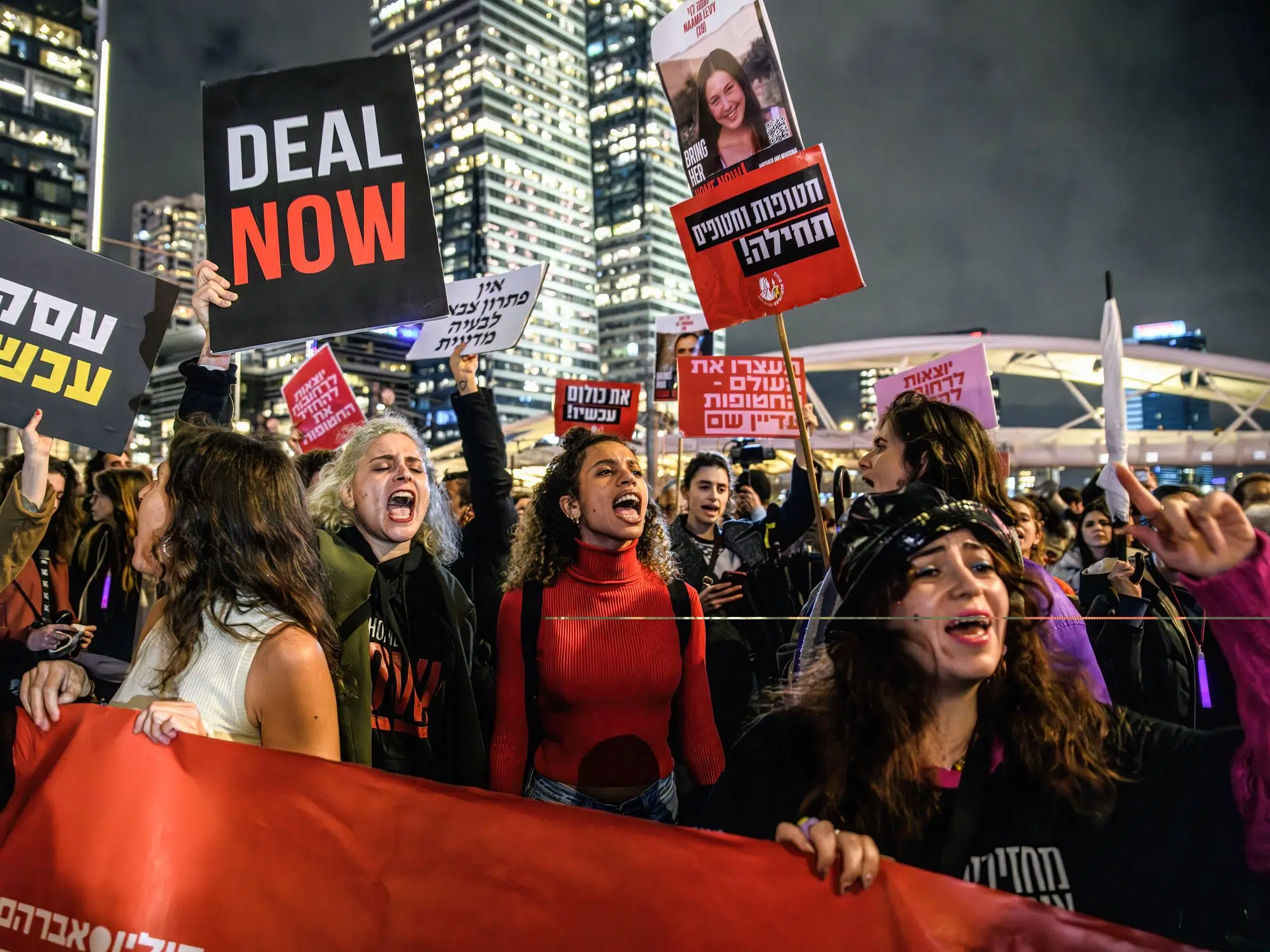
A large part of Israeli population wants to see the hostages returned
This proposal was unacceptable to Israel, and not only to the far-right wing of the government, that wants no agreement at all and threatens to break up the ruling coalition in the event of a ceasefire. It was coldly rejected Wednesday night by Israeli Prime Minister Benjamin Netanyahu, who is sticking to his objective of eradicating Hamas and wants to continue through to “total victory,” even if he hasn’t defined what that means.
But at the same time, a large part of Israeli population wants to see the hostages returned, with the eternal dilemma of the “price” to be paid. In a recent communication, those former hostages released in November stressed that abandoning the remaining hostages in Gaza would be “a stain on future generations.” Their moral standing carries a lot of weight in Israel.

Counter-productive war
In the meantime, the war goes on, taking a more dangerous turn each day. The Israeli army’s objective is now Rafah, the southern Gaza city on the border with Egypt. Much of Gaza’s civilian population has been driven out by the Israeli advance, and has congregated in Rafah, where living conditions are catastrophic.
A ground attack would have a clear cost in human lives — this is not collateral damage. Both UN Secretary General Antonio Guterres and U.S. Secretary of State Antony Blinken made a point Wednesday of warning Israel of the human consequences of an attack on Rafah.
And yet for weeks, the United States has been publicly pleading with Israel to spare civilians, without being heard. There’s not much hope anything will be different for Rafah.
This context does not make us optimistic about the chances of a rapid ceasefire, as we are nonetheless approaching the moment of truth. That will be the moment when Israel will realize that the political cost of this murderous war will be too high — and against its own interest.