
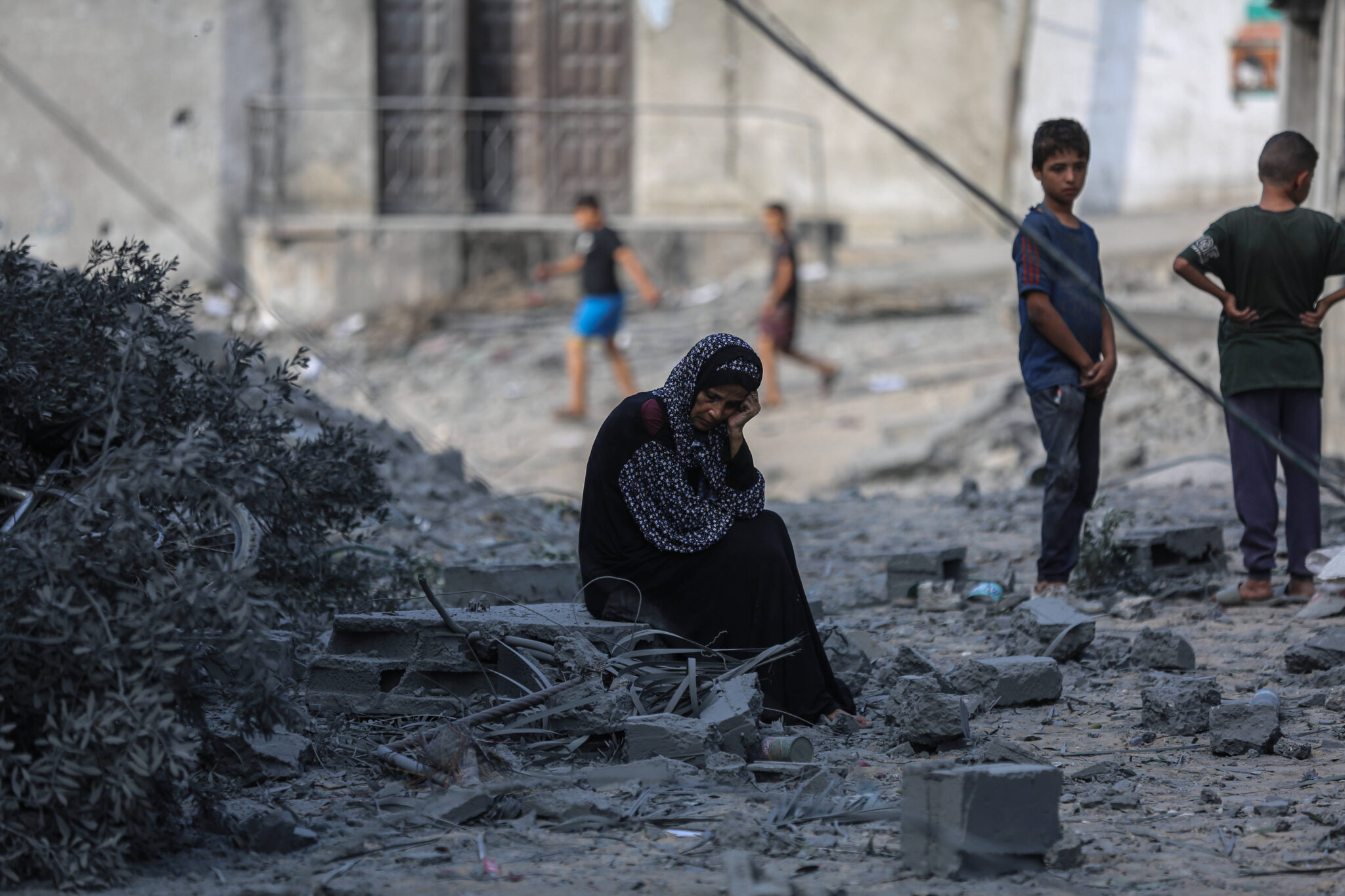
BEIRUT — Inside his home in the Al-Zaytoun neighborhood of Gaza City, Mohamed Nasr stored enough canned food and water for 20 days after deciding not to leave despite continuous Israeli attacks for the past month.
Nasr is aware of the consequences of his decision and is prepared for all upcoming scenarios for his family of six face, which obviously include being targeted by an Israeli army that keeps moving closer to his house located on the eastern edge of the neighborhood.
Nasr refuses to leave his home because he knows very well what awaits him in a displacement tent after having experienced that during his first displacement from Al-Zaytoun in November 2023 at the start of the Israeli war on Gaza.
Nasr told “Daraj” by phone: “The shelling outside does not stop, and the house shakes each time as if an earthquake struck — and despite that there will be no leaving and no displacement.”
Not many of Nasr’s neighbors remain, as most have been displaced to the south of Gaza where other destruction caused by the Israeli army has crammed hundreds of thousands into the Al-Mawasi area which makes up no more than 3 percent of Gaza’s surface area.
Alongside Nasr, Yassin also insists on staying in the neighborhood despite the heavy artillery and air force attack. Yassin says explicitly that he prefers death over the harsh and inhumane life of displacement.
The Israeli army launched its military operation to take control of Gaza City in the north of the Strip in order to destroy what remains of houses, buildings, and infrastructure without officially announcing the start of the operation. It is now getting closer in on Al-Zaytoun the southern gateway to the city and its last border with the central area and the south of the Strip.
Gaza City, which is one of the Strip’s five governorates, has seen three of them almost completely destroyed by the Israeli army and a fourth, Rafah, fully occupied after the displacement of all its residents.
With the military operation Al-Zaytoun neighborhood witnessed a massive displacement movement toward the west of the city instead of the south where the Israeli army demands residents head — despite it being a destroyed overcrowded place filled with displaced people and under continuous attack since May.
Israeli threats
As has become the pattern in areas attacked by the Israeli army since October 7, 2023, bombardment begins by targeting high-rise buildings from the air simultaneously with heavy artillery fire. In Al-Zaytoun specifically the army committed massacres against civilians who remained in their homes either because they could not afford to leave or because there were no alternative areas to flee to.
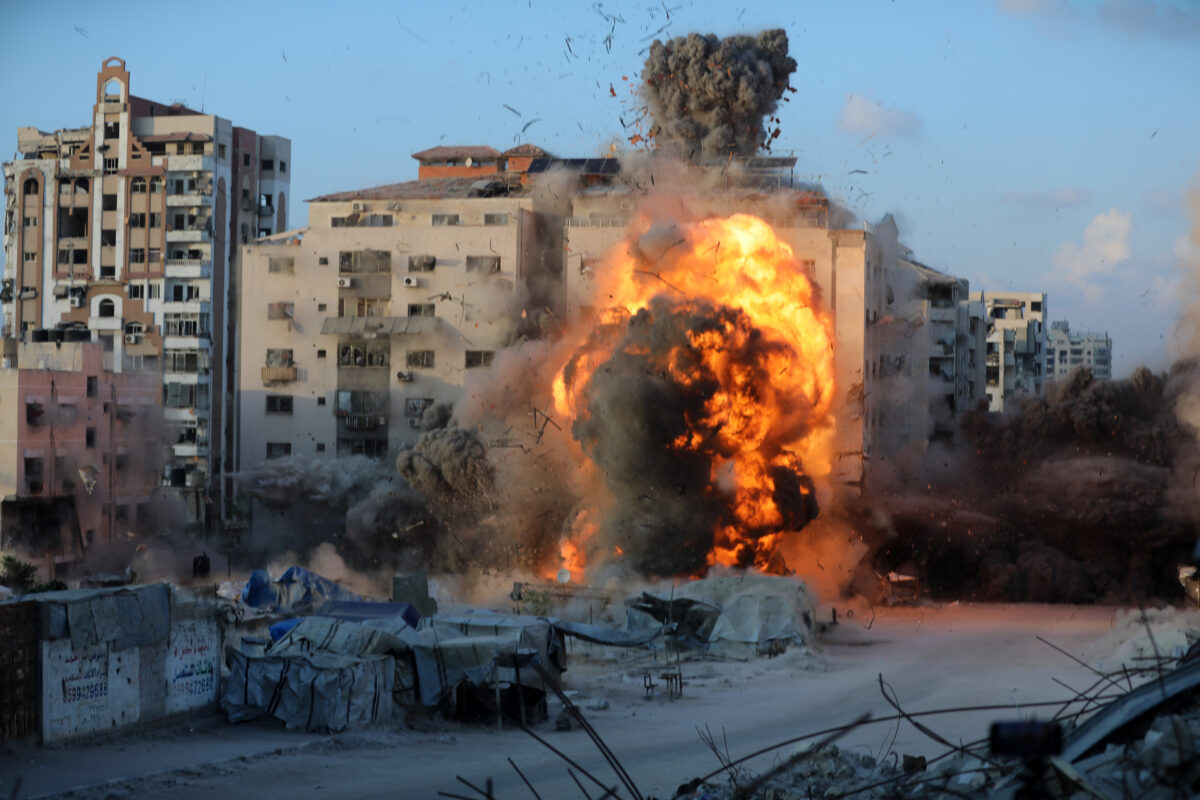
The Israeli army shows no regard for diplomatic efforts aimed at reaching a partial ceasefire agreement — and proceeds with its military plans against Gaza City. With the bombardment continuing, Israel approved the issuance of new call-up orders for reservists. According to a military statement about 60,000 new call-up orders were issued in addition to extending the service of 20,000 who had already been called up.
During the undeclared operation an Israeli officer made a phone call to a health official in Gaza demanding the transfer of medical equipment from the city’s hospitals to the south of the Strip to treat the wounded. The Palestinian Ministry of Health responded by publicly rejecting these demands considering them to undermine what remains of the health system after the systematic destruction it had faced depriving more than a million people of their right to treatment.
Street talk
In the streets fear and despair prevail. Residents wonder what awaits them in the south if the shelling intensifies and the army advances into the city, or if they will die under the rubble of their homes. All people want is a truce even for just one day to catch their breath away from shelling and the sound of planes.
Some residents insist on staying while others prepare to be displaced to the destination that the Israeli army will determine.
Journalist Islam Al-Koumi was one of those forced by circumstances to remain in his home near Al-Zaytoun because he did not have the money for transport. His house was bombed killing him along with several family members and injuring others. Before his death he wrote on Facebook: “Our not leaving is not a choice… but because we do not have money.”
Water began to be cut off from the neighborhoods of Al-Zaytoun, Al-Sabra, Al-Daraj and Al-Tuffah, pushing the remaining residents to flee in search of areas where water is still available.