-Analysis-
PARIS — Just imagine for a moment that you’re a Ukrainian listening to the international news. One morning, you learn that the French President Emmanuel Macron, who in recent months had become one of Europe’s leading supporters of Ukraine, has suffered a crushing electoral defeat; and that his leading opponent, the National Rally (RN), is a far-right party with longstanding pro-Russian sympathies, reluctant to help Ukraine.
For the latest news & views from every corner of the world, Worldcrunch Today is the only truly international newsletter. Sign up here.
The following day, the echoes from Washington are hardly more encouraging. Americans wonder whether President Joe Biden, without whom Ukraine would not have been able to resist the Russian invasion, was fit to stand again. His opponent, Donald Trump, is no friend of Ukraine, and his party long blocked the vote on American aid.
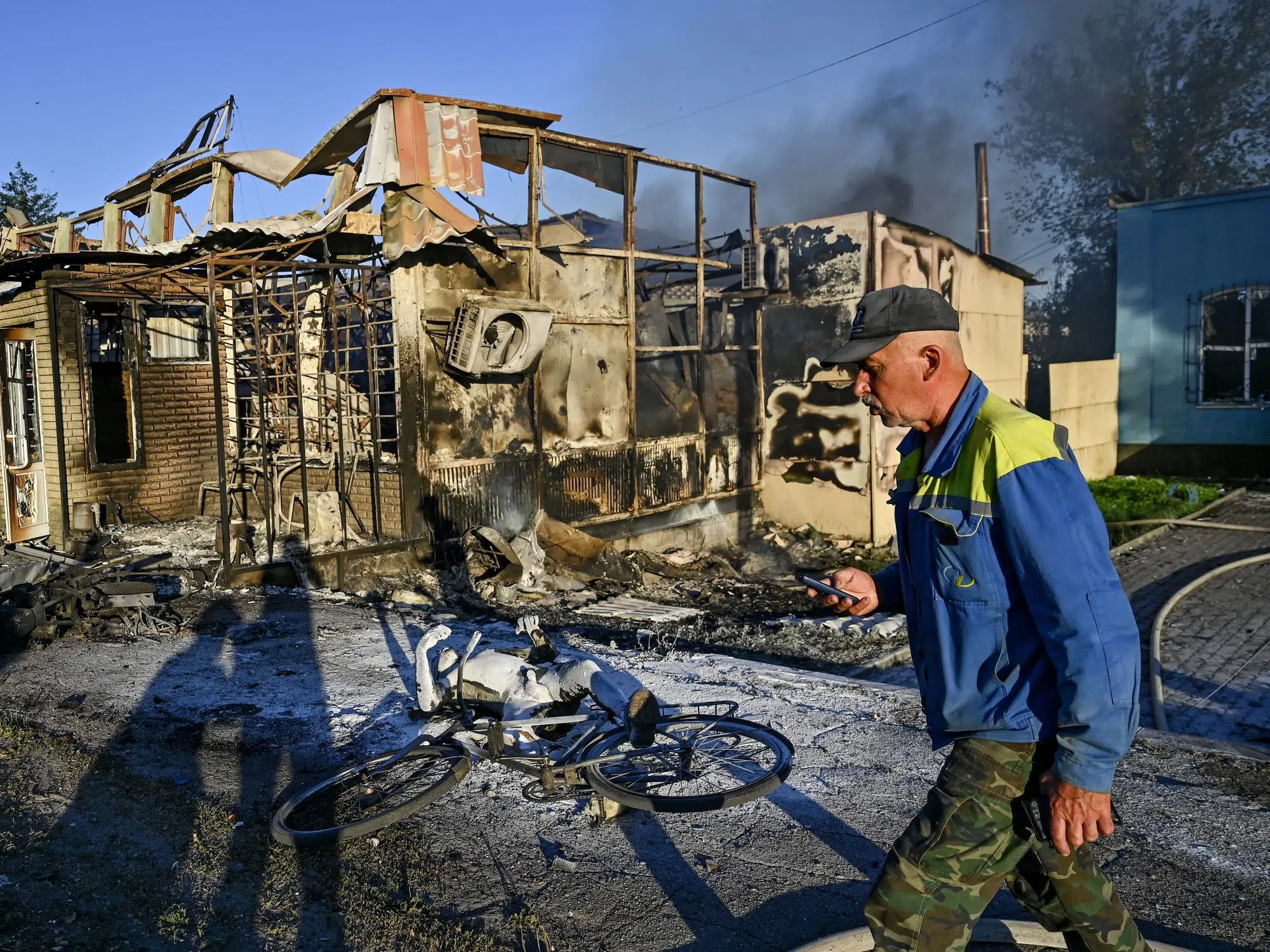
Meanwhile, news from the front is not very good. Although Russia has not achieved any significant breakthroughs, it is continuing to nibble away, and, above all, it has destroyed part of the country’s energy infrastructure with missile strikes on its cities. The next winter will be harsh.
All of this raises the question about the sustainability of Western support for Ukraine. It’s true that French and American voters are not making their decisions based on Ukraine, but it was enough to listen to the RN’s Marine Le Pen on France Inter radio
Tuesday, to understand that, in the event of her party winning control of Parliament, French support for Kyiv would be a sensitive, if not explosive, issue.
Ukraine vs. France
Le Pen starts from a consensual position: support for Ukraine and even arms deliveries to Kyiv. But she draws two red lines that put her in contradiction with Macron: sending French soldiers on the ground, as suggested by the President, who wants to train a Ukrainian brigade in the country; and sending weapons that can be fired deep into Russia.
This is already the case with SCALP missiles, which can strike deep into Russian territory. This would also be the case with the Mirages and their armament that France is proposing to deliver to the Ukraine.
By describing the role of the President-Chief of the Armies as “honorary,” Pen has brought out the knives and Ukraine could be the one paying the price.

Ukraine vs. the EU?
On a continental scale, a study on 15 European countries conducted by the think tank ECFR, published yesterday by the British daily The Guardian, uncovered the general idea of the state of opinion. While Europeans remain largely supportive of Ukraine in the face of Russia’s aggression, they do not believe in its military victory. The percentages vary from country to country, but Europeans are in favor of arming Ukraine to strengthen it before negotiating.
Is Viktor Orban attempting a repositioning similar to that of the RN in France?
In this context, Hungarian Prime Minister Viktor Orban’s surprise visit to Kyiv yesterday raises questions. Orban is the closest of the EU27 to Russia and has often blocked EU aid. He went to Kyiv as head of the rotating EU Council presidency. But one wonders whether he is not attempting a repositioning similar to that of the RN in France: verbal support for Ukraine, the better to curb European aid to its war effort.
In any case, our news-listening Ukrainian has a lot to worry about: the far-right surge in Europe and in the United States do not bring good news for him or his country.


