
-Essay-
I’ll admit that I didn’t feel liberated right away: what I felt was sheer panic.
“My Apple Watch screen is black,” I typed into my smartphone one early August morning from an Italian glamping tent. “What can I do?”
Outside, the Mediterranean was roaring.
“How did it happen?” asked the customer-service person in my inbox, with whom I had recently begun a very Apple conversation.
“I woke up and it was black.”
“Is it still vibrating? Or is it completely dead?”
“It vibrates.”
I thought back to my last bout of COVID. Sitting in my room after a positive test, I had wondered: How am I supposed to reach my 10,000 steps now?
It was the same panic. But that morning in the glamping tent, another feeling quietly began to surface: maybe this is your chance to escape. Your captor has looked away for a moment.
Jumping imaginary rope
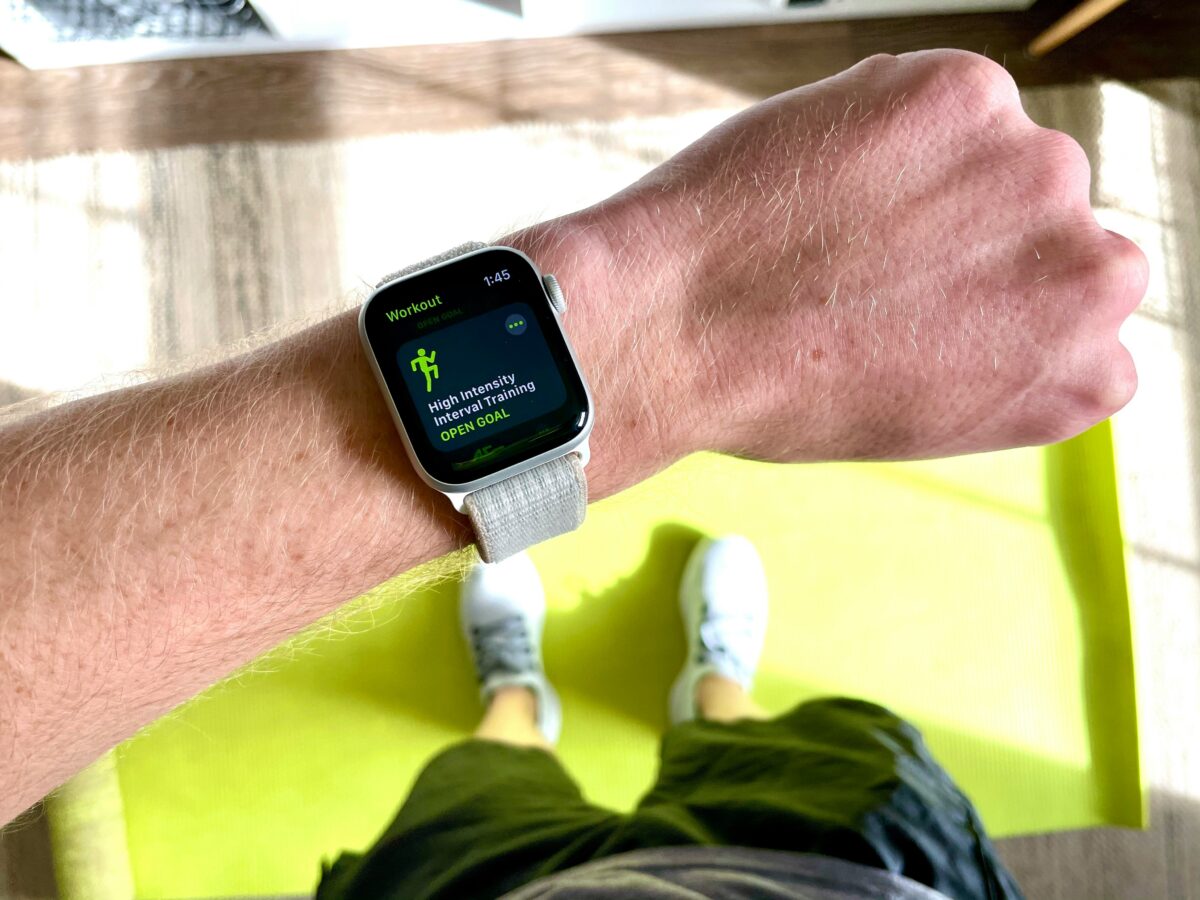
There are plenty of things I would never have done without this watch: jumping imaginary rope in the office instead of grabbing another coffee. Walking through fields around small Bavarian villages in the evening. Taking one minute just to breathe in the morning. Pointlessly hauling out the recycling. Sprinting short distances from my bike to the apartment. Stretching discreetly but widely during conferences to make it look like I had stood up. All for the sake of movement, for the 10,000 steps.
“Close your rings!” my Apple fitness coach Kyle reminded me every morning. And I did.
Accumulate 10,000 steps. Stand up at least once every 12 hours. Have your 30 minutes of workout.
Perfect week after perfect week after perfect week.
During the day, the three rings competed to grow, and in the evening they burst into colorful fireworks, night after night, year after year. Aside from a brief COVID break, it was perfect week after perfect week after perfect week.
It pressed gently against my wrist. Knuff-knuff. Stand up. Knuff-knuff. Breathe. Knuff-knuff. Congratulations. A long, intense knuff-knuff. Warning: your heart rate dropped below 50 bpm for a few minutes. Knuff-knuff, knuff-knuff, knuff-knuff. My colleague has sent three texts in a row again.
I admit, without my wife, I might not have given in so quickly to that feeling. “Maybe you should ask yourself if you even need it anymore,” she said.
Vacationing with a watch
In the first few days, as it became clear this might really be the end, I resisted. Without warning, I began looking for excuses to move.
Should I take the swimsuit back? Maybe I could go for a swim again. I definitely did not want to turn into a couch potato without the watch.
Then again, we were in Italy. On vacation.
Taking a vacation with a watch is its own contradiction. The concept of a vacation and the concept of a smartwatch simply do not fit together. This becomes clear right from the start, when you spend long hours sitting in a car, a train, or a plane. Unlike at a conference, contorting yourself behind the wheel to meet your goal can have serious consequences.
Notifications, straight into my veins
Our vacation began in the countryside, where my watch, as always, reminded me that people just do not move as much there. In Hamburg, I cycle to work every morning (a 15-minute “workout”). Back in my hometown, only tourists ride bikes. Over the years, my watch had trained me to take long walks while on holiday in the countryside: along rivers, across fields, through towns.
Truly missing
Overall, I had the impression that the watch had mostly made my life better. I had bought it mainly, oddly enough, to stop checking my phone so often. And it worked. Instead of pulling out my phone every minute while watching my kids at the playground to make sure I didn’t miss a call, I now missed nothing at all. At first, that was actually calming, even liberating.
But during my many walks between the glamping tents, I began to realize how little I was truly missing. Although my smartphone is set to alert me only to the essentials, I still learned on Sunday evening that someone had updated a conference schedule for next semester. Knuff-knuff, knuff-knuff, knuff-knuff.
I was now receiving important messages directly into my bloodstream, so to speak
I had developed a kind of low-grade anxiety in conversations because I was now receiving important messages directly into my bloodstream, so to speak. A gentle vibration, a quick glance, and my pulse would spike under the plastic strap as I started thinking about how to respond, how to fix whatever issue had just arrived. I felt the watch’s pressure even when lying in bed reading with my daughter. And she felt it too.
Did the walks and the mindful breathing really make up for the fact that the watch tethered me to every stress in my life until I took it off each night to charge it (and yes, you have to charge it daily, never forget the special cable)?
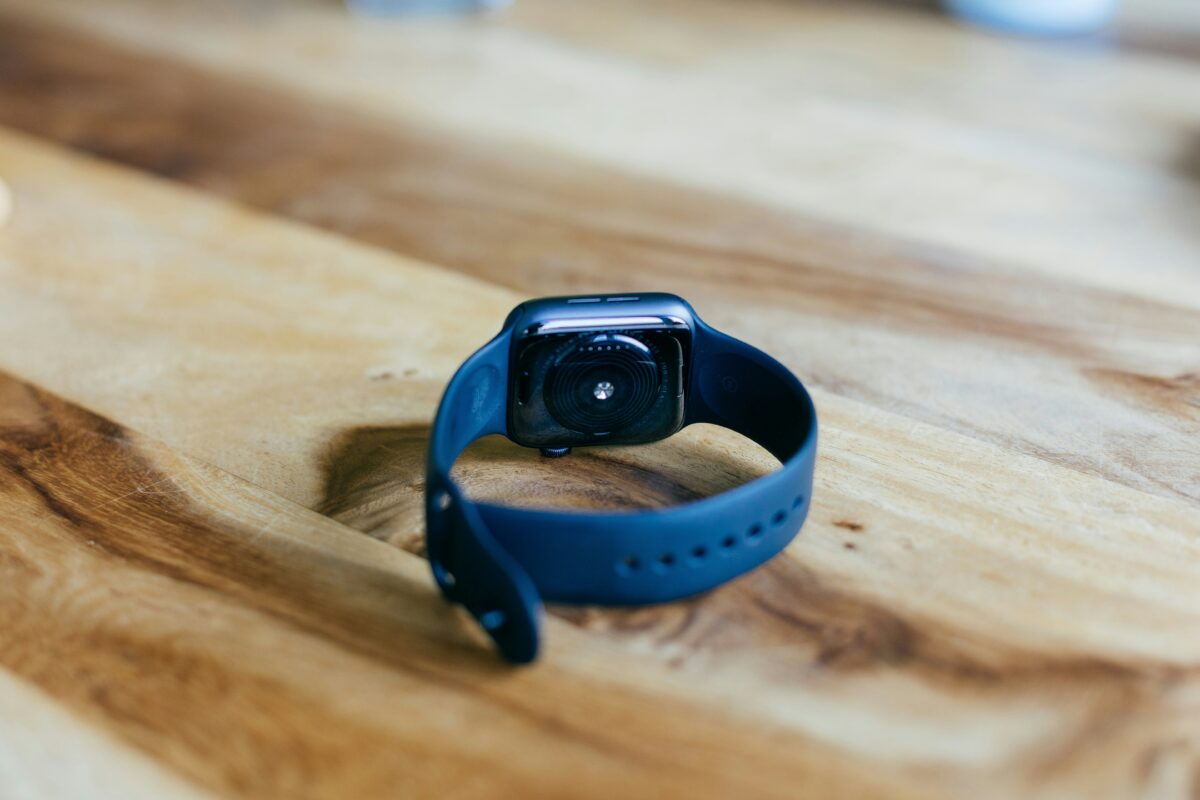
So, in the middle of our vacation, I made a decision: if it could not be repaired, I would not replace it. Even if no one would cheer me on that evening with digital fireworks for completing three perfect tasks.
“That’s probably for the best,” a colleague said over lunch before I headed to the Apple Cathedral, where the verdict awaited. We both felt wonderfully relaxed, and agreed we should slow down in the future, for the kids’ sake and everything else.
The Apple Cathedral
The Apple Cathedral has always struck me as the overly bright, slightly hectic library of a newly opened private university. I was asked to sit at a table and wait. I had an appointment, after all.
A young, friendly woman in a blue shirt examined the watch, asked the same questions as the person in my inbox, tried the same reboots I had already attempted countless times in the tent, and then gently prepared me for the bad news. The screen itself could not be repaired, she explained, so the watch would have to be replaced. And that replacement would cost as much as buying a new one.
Before that, she rubbed the edge of the watch, which had always been wrapped in protective cases, and suggested that a strong impact might have caused the failure. At that point, I lost my temper. “If this is the kind of junk you are selling, I don’t need it,” I snapped, not without a twinge of shame, and walked out of the cathedral.
And here is my money-saving tip: only replace the things you genuinely want in your life. Especially when a new model costs 500 euros.