
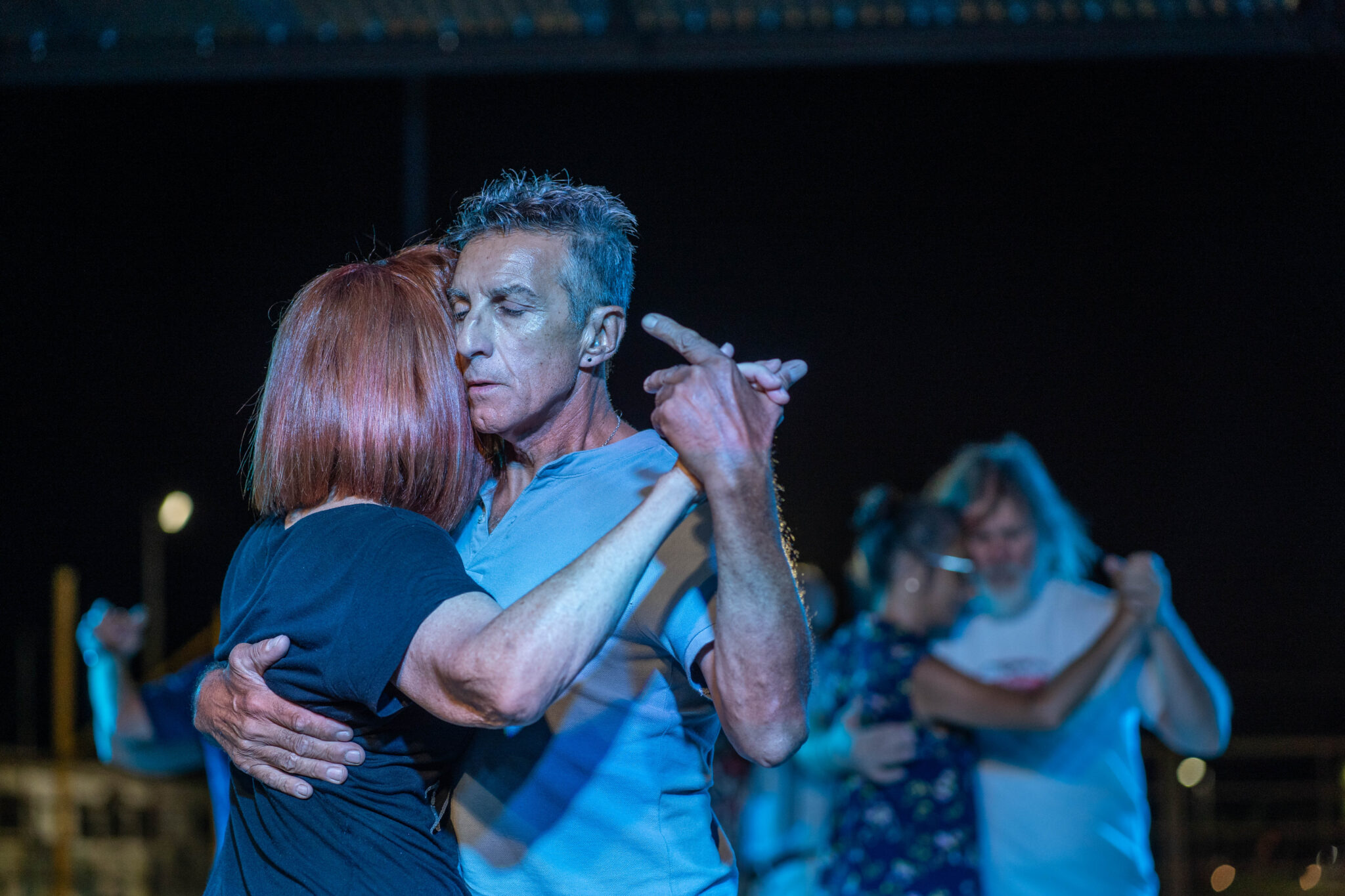
BUENOS AIRES — In the heart of Buenos Aires, where the bandoneon sighs ancestral melodies and feet trace stories on the parquet floor, the tango is more than just a dance. It is a refuge for the soul, a space where life finds its true pulse and the essence of human connection is rediscovered. But in this world of seduction and passion, not everyone will easily find that “dream embrace” that means happiness for a while. Thankfully, there is a service for that, a lifesaver for anyone yearning for a partner: taxi dancers, or tango partners for hire.
The capital is seeing an increasing number of professionals who devote their time, body and spirit to the genre, being hired to dance at tango venues. Dancing for money — which inevitably demands the highest standards — has thus become a promising option for many who have taken their love of tango to the next level.
Who are the customers? Mostly foreign and retired women visiting the country to live out their passion for tango. On average, they pay between $35 and $40 an hour, although the most sought-after dancers can cost up to $100 or more for the evening. Cristian Titanes, a taxi dancer who entered this profession 12 years ago, insists there is still a taboo around the practice. But he clarifies that his work is not just dancing, but an experience.
“For me, tango is an embrace. It’s communication, it’s listening with the whole body. Also with the ground, which is something people sometimes forget: tango comes from the earth,” Titanes says.
Born to dance
He took his first steps thanks to a German woman named Christine Garbe, who “discovered” him and suggested he dance. Since then, he hasn’t stopped. He has been offered work at festivals in Hawaii and Germany, but for now he prefers to stay in Buenos Aires, for its singularity and its people. “I like to chat between sets; it’s part of the charm. I dance two or three hours; I’m not one of those who keeps going all night,” Titanes explains.
Garbe is a tango fanatic and says that for more than 15 years, she has been living for six months in her country and the other six in Argentina, because she doesn’t want to be far from her passion. In Germany, she seeks a way to stay connected with this dance through her experiences and recommendations: “I run a Facebook group where I aim to bring this movement to everyone.”
For his part, Damián Lenzima, a native of the Buenos Aires province who encountered tango by chance, recalls that at a time in his life when he “went out a lot” and felt nightlife was “consuming” him, he found “a refuge in tango.” That was when he began taking classes before starting, some years later, as a taxi dancer.
Our role allows the other person to focus on themselves and enjoy themselves.
These professionals work with a range of options: some independently and others as permanent variadores, or in-house dancers at tango halls. There are also specific events that guarantee you’ll be dancing with a tango professional, like the Che-che Tango Premium, organized by Sara Parnigoni twice a week.

“We created it so women can be sure of a good dance. Sometimes you go to the milonga [a tango event], get dressed, pay for a taxi, get drunk and just sit there all night. That hurts. They don’t choose you,” Parnigoni says. Her clientele is around 60 years old or older, and most are foreigners. “Imagine coming from another country just to dance and nobody asks you [to dance]. We were born to dance,” she concludes simply.
A human space
Her team of taxi dancers include men and women, though the mix depends on demand at an event. Each is carefully selected to create a unique experience for all their clients. Parnigoni takes into account the dancers’ technique, interpretation, aesthetics and education. “They must know how to embrace,” she emphasizes.
Another client who crossed the ocean is Catherine LeDuc, a French retiree and absolute tango fanatic. She moved to Argentina four years ago. “There is nothing else in my life but tango. When I’m in Paris, I miss Buenos Aires. But when I’m in Buenos Aires, I don’t miss Paris. That helped me make the decision to leave everything,” she says passionately.
Tango has no age or social class.
She also talks about the reasons that led her to hire taxi dancers: “There are older men who don’t know how to dance, I avoid them. And those who do, if they’re 40 or 50, they don’t ask me out. In the world of tango, which is a world of seduction, you know what happens: if you’re ugly or old, they don’t choose you. So I have no other choice.”
While most taxi dancers are men, there are also female dancers. One is Diana Cianca, a Mexican woman who has lived in Buenos Aires for 15 years and is a dancer, tango teacher and DJ.
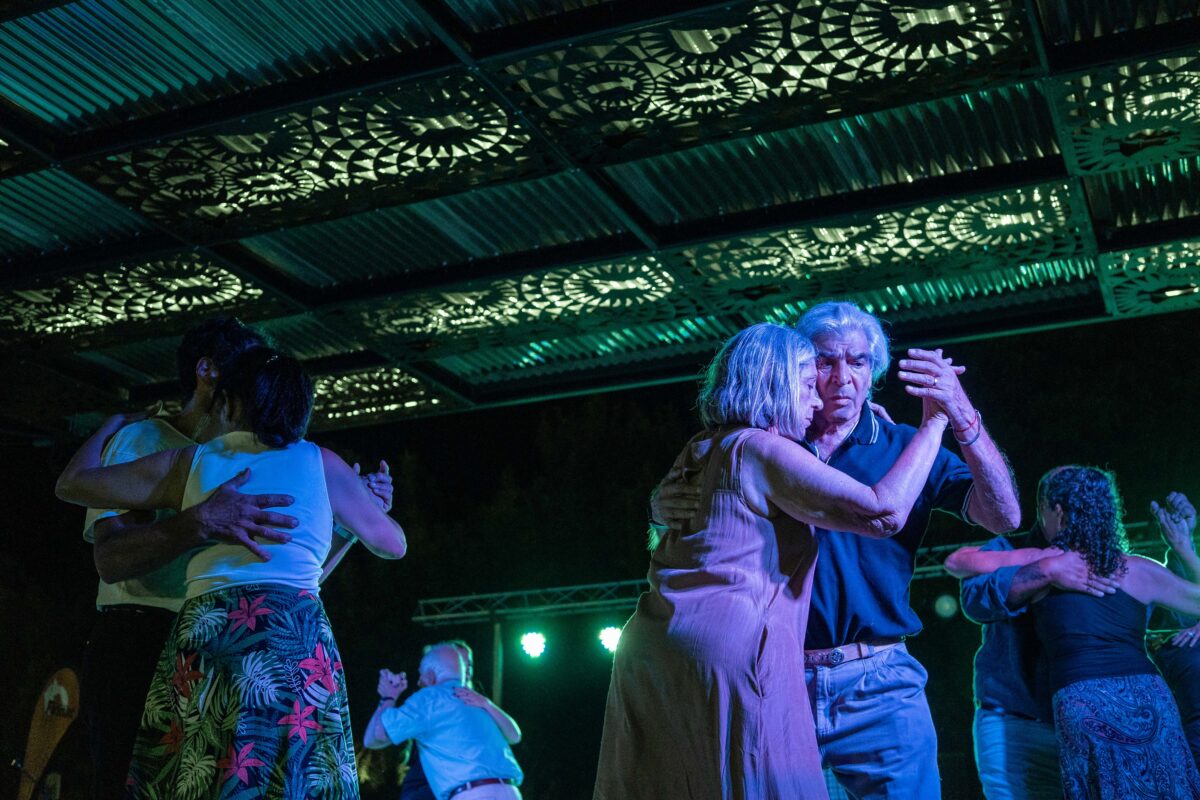
“Our role allows the other person to focus on themselves and enjoy themselves. Tango has no age or social class. It’s a human space, where we can return to the essentials: the body and the embrace,” she says. Cianca is clear, this is more than a vocation: “It’s a job like that of a doctor. I am a psychologist, but I make a living from tango. It requires perseverance, study, discipline. And yes, it’s wonderful to be paid to do what you love.”
Avoiding misunderstandings
It is essential to emphasize that taxi dancing is a professional activity and should not be confused with “taxi boys” (male prostitues). In fact, dancers establish clear boundaries to avoid misunderstandings. They enjoy their work, especially when there is good chemistry or good treatment with the client. But they may find themselves in situations where they are badly treated as “employees” or their role is not clear.
Ultimately, “taxi dancing” reflects the unwavering passion for tango that pervades Buenos Aires. It’s an ingenious solution and a profession that allows dancers like Damián, Sara, Diana and Cristian to devote themselves to what they love, while offering tourists and locals the opportunity to experience the magic of the “tango embrace” and feel cared for and chosen and, quite simply, to let “their hearts beat to the beat of the tango.”
This service not only boosts the Buenos Aires scene, but also reaffirms the Argentinian capital as an unmissable destination for anyone looking to immerse themselves deep into the soul of tango. As did LeDuc, who says she can no longer imagine her life without tango: “For me, it’s everything; it’s health, the joy of living, it’s what fills my soul.”