
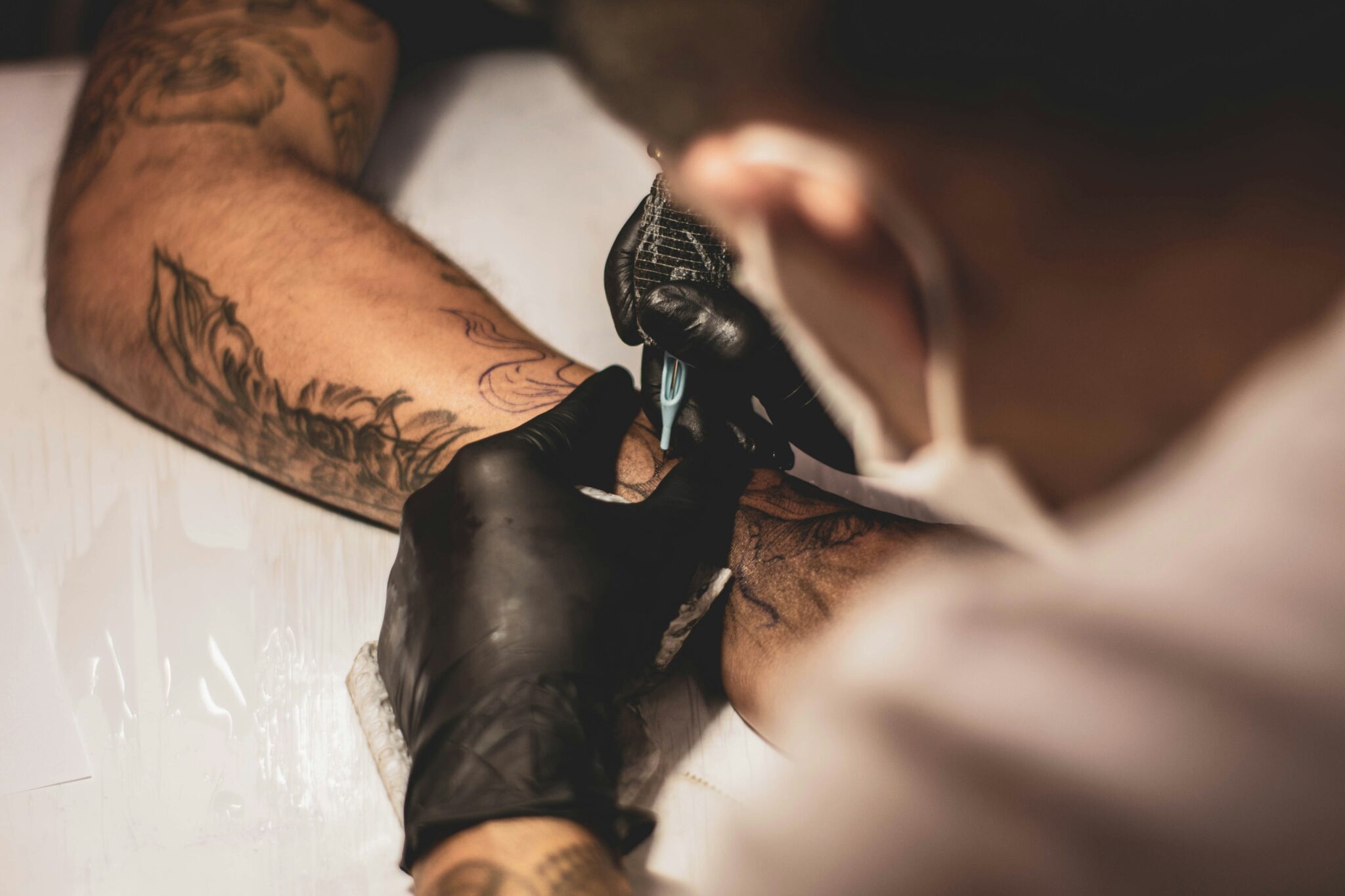
PARIS — Like passport stamps of sorts, some people choose to immortalize their visit to another country on their own bodies. Others are ready to hop on a plane to reach a distant artist for an original tattoo, or to cover a scar. The motivations are as varied as they are personal, but together they’ve made tattoos part of the travel itinerary. Dubbed “tattoorism” in the Anglophone world, this still-niche phenomenon is spreading as fast as the global appetite for ink itself.
The figures speak for themselves: there are one billion tattooed people worldwide. In France alone, the number of artists has increased by 50% in ten years, attracting a majority of 18-35 year-olds, some of whom travel regularly and take the opportunity to bring back a unique souvenir from their trip. Has this age-old art become a motivation to cross borders?
“I only communicate in English”
At the Monkeys Factory studio in Paris’ 2nd arrondissement, some tourists chose to stop to have an illustration engraved on their skin that reflects their personality — or evokes the French capital, like a croissant or the Eiffel Tower. “Between 40 and 50% of our regulars come from abroad, and that number has been increasing since we opened in 2023,” says Phu Phi, tattoo artist and co-founder of the studio. Some come from far away, like Amanda and Shelby, two cousins in their thirties who traveled all the way from California.
“We often visit Paris for the food and to go shopping. But also for the tattoos, since we make a point of getting one on every trip,” says Amanda, who has been coming to the tattoo parlor for over a year. Both women admit: finding the perfect parlor is no easy task. “We spent several hours researching online and on social media before finding what really suited us, based on the number of stars and positive reviews,” adds Amanda. Thus, during their stay, the two vacationers budgeted between €60 ($64) and €200 ($231) extra for this activity alone.
They’re not the only ones making the trip to get a tattoo from Phu Phi. She regularly gets American and British clients. Her personal touch? Her fine line style, highly sought after by tattoo enthusiasts. But that’s not her only asset: “On my website and social media, I only communicate in English. The goal isn’t to attract only tourists, but rather enthusiasts ready to travel for beautiful pieces,” she explains.
Up to 2,000 euros per session
In Barcelona, a few meters from the Sagrada Familia, the Black Ship Tattoo parlor receives walk-ins daily. As one of the artists, Armine Ayvazyan, reveals to Le Figaro, “tourists make up 80% of our clientele.” “One of the tattoo designs that we’re often asked for are Barcelona roses, the symbol of the city, which has even become a kind of must-have in the profession here,” jokes the artist, who has been wielding the needle for eight years. For the past five years, she’s noticed another trend: “Many choose small tattoos in hidden places, for fear of getting bored of them.” Should this be seen as a fad or a deep-rooted passion? A bit of both, in fact.
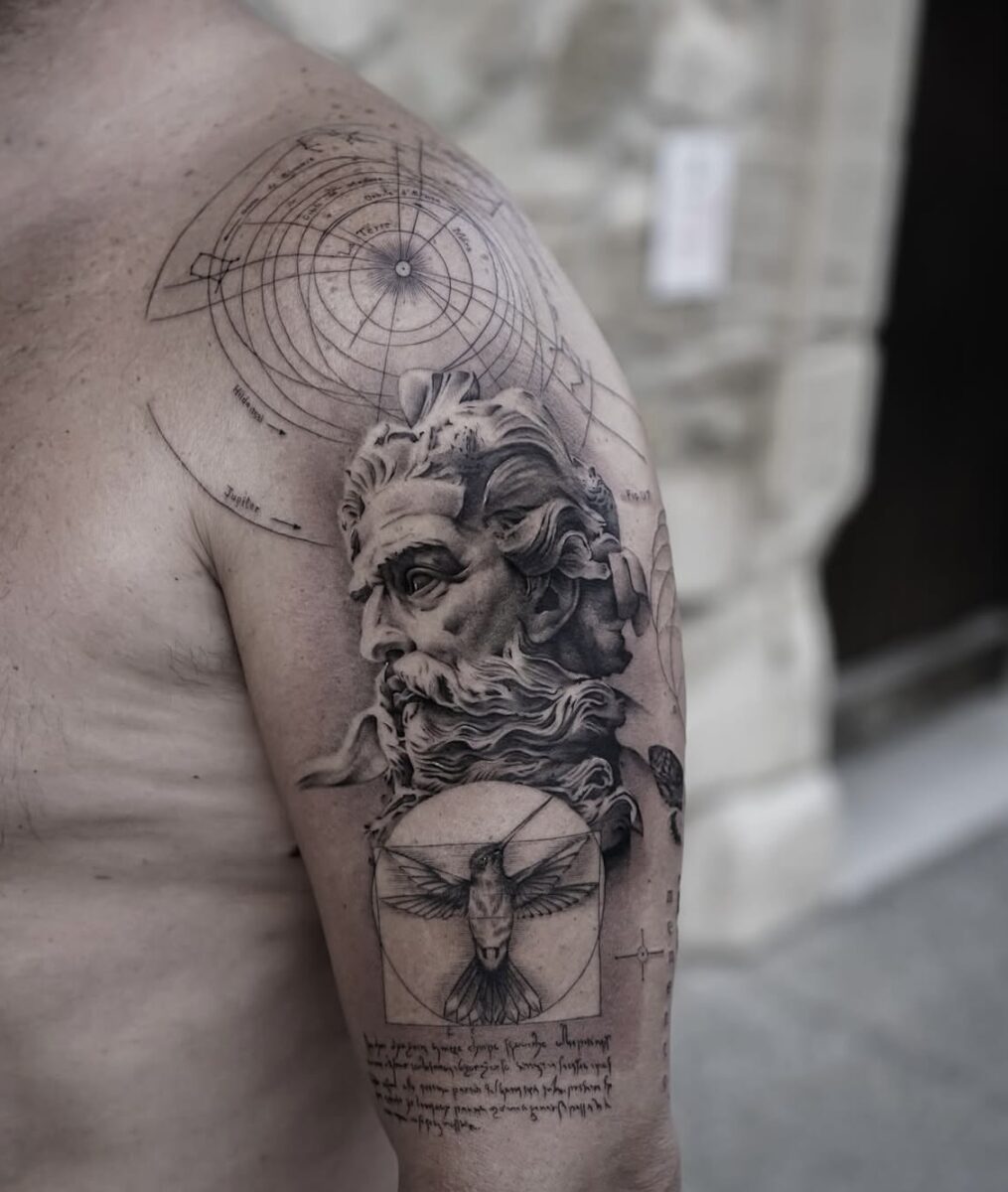
“The setting is ideal for combining tattooing with a beach getaway, especially for my regulars, as most come from far away and book one or two nights in a hotel,” explains the tattoo artist. He knows that he reaches a “premium” clientele here, choosing one-day sessions, whose prices range from $1,000 to $2,000. “I’m very active on social media and specialize in sculpture drawings, that’s how people know me,” continues Julien Rimbaud. He has even managed to retain his French clientele, who don’t hesitate to travel to him to get tattooed.
Americans are willing to travel and pay more for their tattoos.
Lovers of this art form may even get to visit the tattoo parlor of Julien Rimbaud and his wife Samantha — two artists from Aix-en-Provence have just settled in… Florida. “Americans are willing to travel and pay more for their tattoos, which is one of the reasons we decided to settle here,” says the Aix native. Their parlor is now located in Tampa Bay, a coastal city known for its turquoise beaches and tropical climate.
Tattooing, a traveling and restorative art
Others decide to pay the price — and travel for miles — to be “reborn.” Near Draguignan in southern France, Alexia Cassar, a former cancer researcher, is behind the Tétons Tattoo Shop. “I reproduce the image of a nipple for women who have undergone a mastectomy due to breast cancer, using a 3D drawing technique,” explains the woman who set up the first studio of this type in Europe. Since then, she has welcomed women from Russia, South Korea, Poland and Belgium.
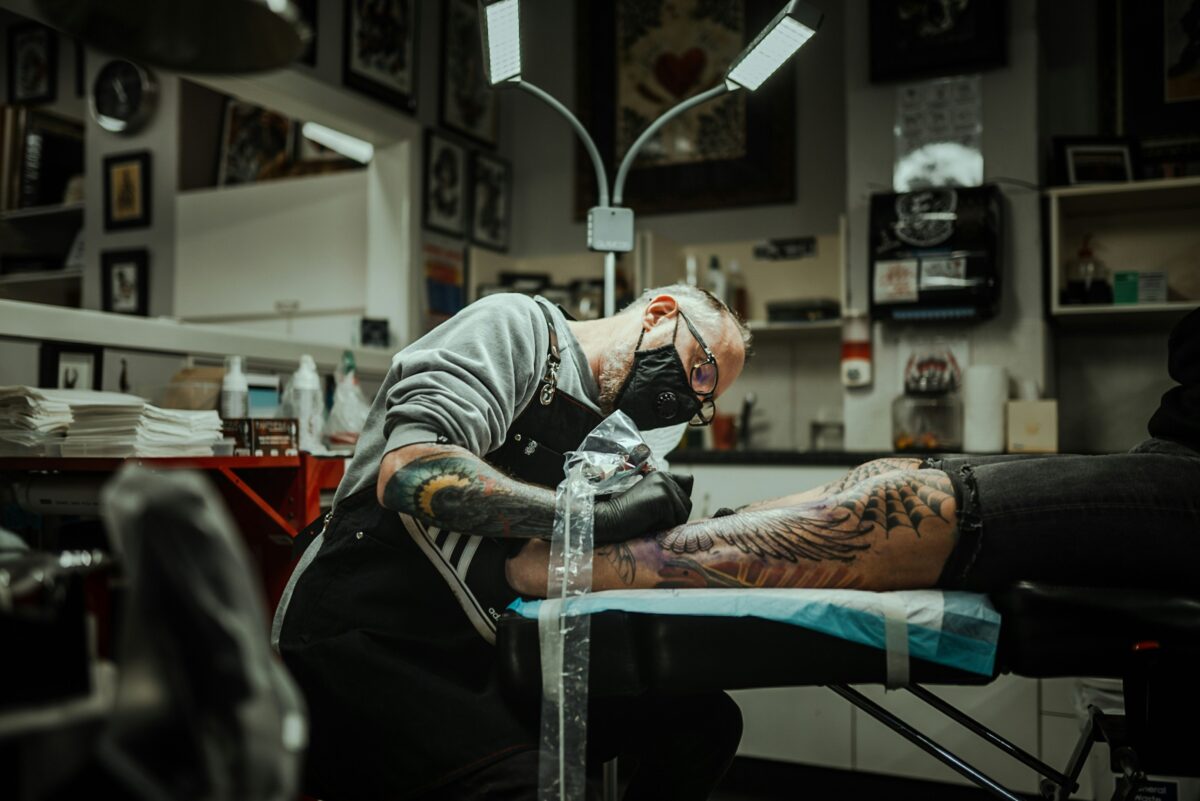
“It goes beyond aesthetics and becomes a true reconstruction experience, the end of a medical journey and the beginning of another life,” she says. In total, she has enhanced the scars of 1,500 people since 2017. These clients stay for a week or a weekend, also taking the opportunity to explore the Var region. “I suggest several accommodation options on my website to make their stay easier, from guesthouses to four-star hotels,” explains Alexia Cassar. In addition to the travel costs, they pay up to €750 ($867) for a procedure on both breasts, which is sometimes covered by some health insurance companies.
It’s more often a way to mark the occasion.
Are tattooing and travel two themes ultimately more closely linked than we think? “Apart from these cases of illness and enthusiasts, the practice is not yet a real driving force for traveling the world,” explains Héloïse Guay de Bellissen, author of the book Because Tattoos Are Our Story, to Le Figaro. She adds: “It’s more often a way to mark the occasion.” She also sees a psychological aspect to it. “In another country, you change, you feel freer, you don’t do the same things: it’s also this other side of ourselves that we don’t necessarily want to lose and that we decide to engrave on our bodies,” she explains.
However, she warns against one aspect of this kind of tourism, which is sometimes perceived as cultural appropriation. “If you go to Polynesia, Thailand, or Latin America, you should first learn about the traditions associated with tattoos,” she recommends. Born in Polynesia, where it still obeys ancestral rules, tattooing has spread far beyond its islands of origin. Discovered by British sailors in the 18th century, the practice spread to the United States and reached Europe in the late 1900s. “In fact, it has always been a traveling art since it came to us via the fleets of the Royal Navy,” says Héloïse Guay de Bellissen.