
-Analysis-
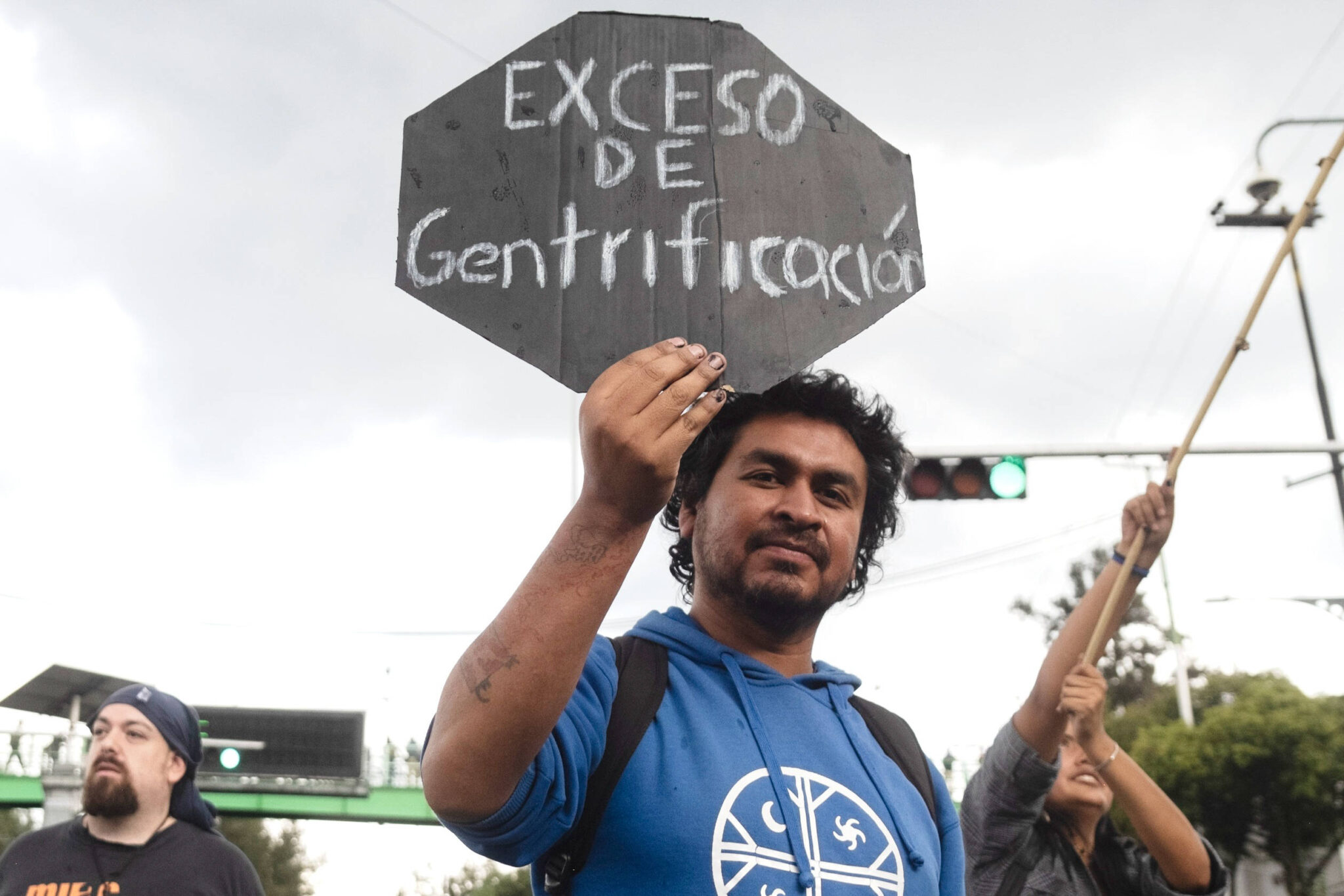
MEXICO CITY — In the first week of July, residents of Mexico City met to discuss the growing problem of gentrification, especially in the most central and touristy neighborhoods. The gathering spontaneously turned into a march that channeled citizens’ anger at their forced displacement and the lack of guarantees regarding their right to housing.
Gentrification, which is a worsening problem worldwide, is pushing people out of places where they lived their entire lives. As Viridiana Ríos told the Spanish newspaper El País: “From 2005 to 2021, prices throughout Mexico have increased by 247%.”
Many of the signs at the march rejected the arrival of “digital nomads” from the global north, particularly gringos, who often pay less taxes than locals and do not even integrate in the community. For foreigners from the “global north” who earn dollars or euros, it is so easy to come to Mexico and rent properties locals can no longer afford.
Migrants who bring gentrification
For that reason, many of the posters criticized the arrival of Americans with a colonialist attitude fleeing their own country in crisis, to flock to Mexico, which is attractive for its vibrant culture and cheaper prices. As some of the placards at the protest pointed out: Many digital nomads love Mexico but not Mexicans.
Perhaps the most problematic aspect of the march were signs saying “Mexico for Mexicans” or “Spanish spoken here,” which suggest widespread xenophobia, as if all migrants had the same gentrifying impact. But not all migrations gentrify; gentrification is marked by inequalities of power (economic and before the law) that generate first-class migrants (“gringos” and Europeans, or “expats”) and second-class migrants (racialized migrants and those from Central and South America and the Caribbean).
And while it is desirable for those who arrive to adapt to a new context, for example by learning to speak Spanish, that language itself was imposed by colonizers and erases local languages that are still used, like Náhuatl. Economic inequality is not, furthermore, restricted to foreigners: The wealthiest in Mexico also lead and benefit from real estate mafias.
A real-estate speculation
The crisis is also due to the fact that new housing construction has slowed, and most developers prefer to build luxury homes, which are more profitable to sell. The condition of city neighborhoods must also be improved, so it’s not just the few who have facilities like the parks, green spaces and hospitals that make living in these central neighborhoods seem a privilege.
Housing is being viewed as a commodity and not as a human right.
Naturally there is also the problem of corrupt officials awarding construction contracts and the lack of regulation that has allowed the Airbnb model to become a plague: large real estate firms accumulate hundreds of properties for temporary rentals, destroying the communities and sense of belonging that habitually develop in neighborhoods and turning them instead into cardboard and rootless spaces. As a result, large tourist cities are filling up with empty apartments, while their residents are displaced to the outskirts.
The problem of housing and gentrification is a global one. The world has been divided between tenants and landlords. The former work from dawn to dusk to pay rent that increases every year and may even double overnight, which entails being turfed out of their homes. The latter live off that rent, often without lifting a finger.
This is because, as academics like Carla Escoffié have pointed out, housing is being viewed as a commodity and not as a human right — and it is always a mistake to defer access to our rights to the “free market.”