
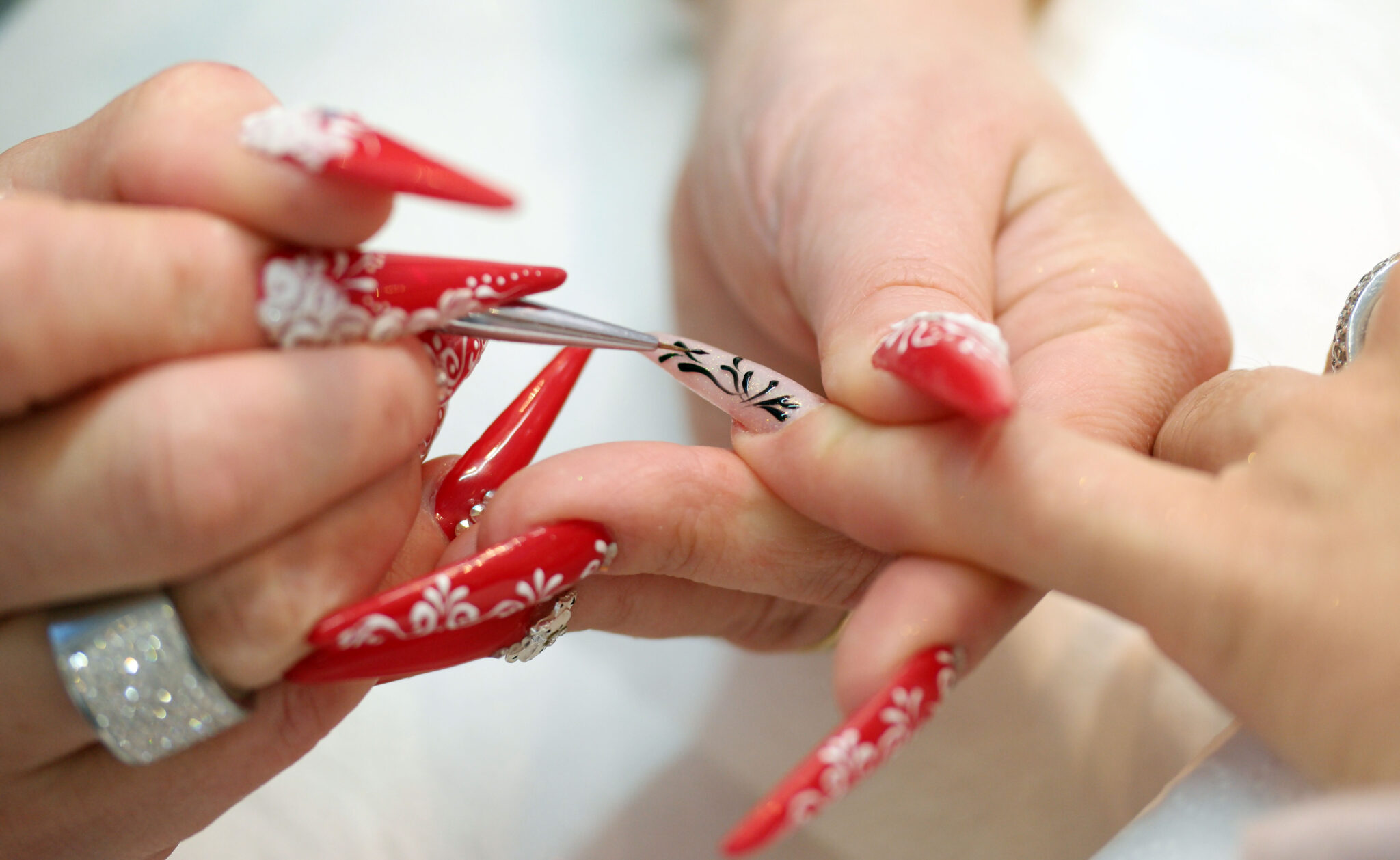
BERLIN — A young Vietnamese man carefully paints his client’s toenail. The woman shifts slightly in her massage chair. A customs officer, wearing a bulletproof vest with a weapon at his hip, stands among nail files and bottles of polish in the salon.
“How long have you been working here?” the officer asks.
“Next question, please,” the nail technician replies, without looking up.
On this November day, officers from the Financial Control Unit for Undeclared Work are present in three nail salons in Berlin. On a reception desk, among other paperwork, they find trial employment contracts that have already been signed by the owners. Anyone arriving for work in the morning is expected to write their name on one. This turns every day into an alleged trial day and allows owners to avoid paying social security contributions.
A Vietnamese woman with dyed blond hair shows customs officers a copy of a residence permit. She later admits that it does not belong to her. Federal police officers take her fingerprints and she begins to cry during their interrogation.
In each of the three studios, there are employees who are properly registered and who readily answer questions about wages and working hours. And then there are those who appear frightened. They claim not to know how long they have been in Germany, where they live, or who supervises them. All the questions that the officials’ digital translator produces are ineffective, including perhaps the most important one: “Do you need help?”
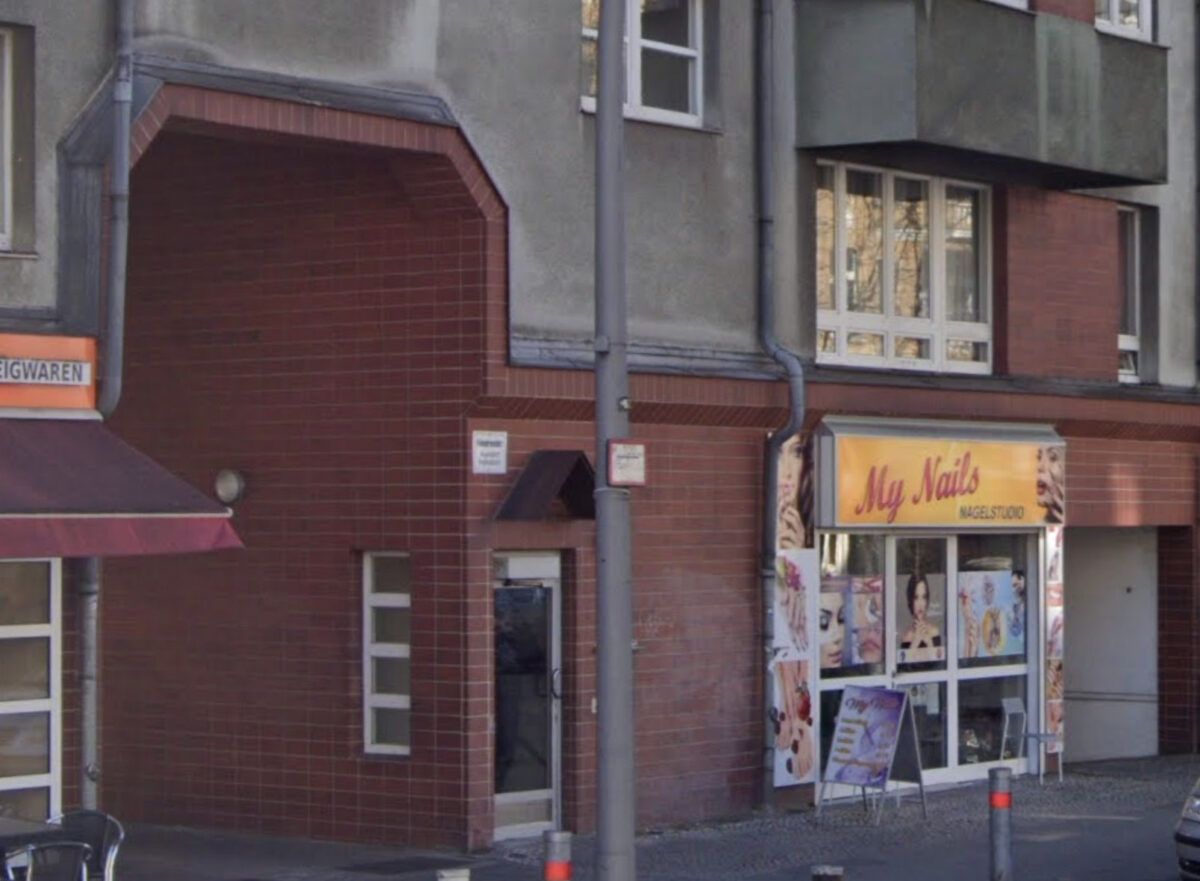
Anyone paying attention while walking through German city centers will notice the constant appearance of new nail salons. In Berlin alone, according to the Chamber of Industry and Commerce, there are currently 1,182 such businesses, around 150 more than last year. They carry names like My Nails or Beauty Nails, and the industry association Cosmetic Professional expects nationwide sales of 420 million euros by 2025. The German Association of Nail Designers estimates that about 60,000 people work in this sector and that two-thirds of the salons are owned by Vietnamese operators.
The popularity of nail art is fueled by social media. Influencers such as Cherry Nails from Bremen, who has 1.6 million followers on TikTok, present their designs under hashtags like #Nailtok. For many in Generation Z, long gel nails carry a message. They are seen as an expression of self care or queer identity. Studios where a new set can cost up to 100 euros are often unaffordable for young customers. This increases demand for cheaper alternatives. But the boom has a dark side. Young Vietnamese people are being exploited to make these low prices possible.
On one side of the manicure table sit customers who consider themselves sensitive to discrimination and oppression. On the other side, work modern-day slaves. Exploiter and victim look directly at one another. Customs officials estimate that anyone who regularly visits nail salons has already placed their hands in those of exploited workers. Police officers and social workers say, however, that awareness of this reality remains limited among the German public.
@cherry_nails_by_liza Eure nail fails 🥹
Parallel economy
Investigations and reporting on human trafficking and labor exploitation are largely based on estimates, observations, and professional experience. No one knows the true number of victims. Investigators assume that there is a significant number of unreported cases.
It is important to distinguish carefully. Not every Vietnamese-run nail salon exploits workers. Most owners do pay social security contributions, though not always and not necessarily for every employee. Often, the majority of staff are properly registered, while two or three people per salon work illegally. To understand how this exploitation functions, it helps to step into a different world that exists within Germany itself.
Above metal gates in Berlin Lichtenberg, the words Dong Xuan Center appear in yellow letters. Behind them lies a Vietnamese wholesale market covering 165,000 square meters. Large halls made of concrete and corrugated metal house import goods from Asia. The German Federal Criminal Police Office considers the site a central hub for trafficking Vietnamese people across Europe.
Those who pass through the sliding doors of Hall 6A enter a maze of restaurants, nail salons, and clothing stalls. Cameras monitor the aisles. Vendors scroll on their smartphones while waiting for customers. The air smells of pan-fried garlic mixed with nail polish remover.
Nail design is not a recognized apprenticeship trade.
Inside a nail design school, trainees sit at tables, bending over clients’ hands. Instruction is conducted in Vietnamese. Customers who have gel nails applied by trainees pay ten euros. These prices make it difficult for owners to pay fair wages. Upon completing the course, participants receive a certificate that is of little practical value. Nail design is not a recognized apprenticeship trade. Unlike hair salons, nail studios are not subject to licensing requirements and can operate without a master craftsman’s certificate.
For many young Vietnamese people, the path to Germany runs through private agencies, says Mimi Vu. The researcher from Hanoi specializes in human trafficking and travels to Germany several times a year. While walking through the Dong Xuan Center, she explains how service providers promise young people monthly earnings of 3,000 euros through Facebook or the Zalo app. In Vietnam, they would earn between 150 and 250 euros.
According to Vu, the agencies offer packages that include residence permits and rapid family reunification. They arrange short-term visas, after which the migrants do not leave Germany.
Debt trap
According to experts such as Mimi Vu, agencies charge up to 40,000 euros for transport and paperwork. Many families begin saving for their child’s journey to Europe shortly after birth. They go into debt and mortgage their homes. A well-known Vietnamese proverb translates roughly as: Parents sacrifice their lives to strengthen their children. Those who succeed in the West send money home. These remittances account for around four percent of Vietnam’s gross domestic product.
The journey typically begins with a flight to a European country, depending on which state grants a visa. From there, migrants continue overland in vans. Even along these routes, they are put to work in nail salons. This is documented in files from a security agency that Die Zeit was able to review.
In response to an inquiry, the Federal Police stated that last year they apprehended 19 suspected human traffickers with Vietnamese citizenship and identified 911 people who entered Germany illegally from Vietnam. In October, a Vietnamese man from Würzburg was arrested for allegedly bringing young migrants into Germany via Hungary for illegal placement in the labor market, according to the Dresden public prosecutor’s office. Some of the roughly 30 affected individuals are said to have worked in nail salons.
The reality ooften fails to match the promises made before departure from Vietnam.
The reality of working life in Germany often fails to match the promises made before departure from Vietnam. Cathrin Schauer Kelpin, a street worker and managing director of the KARO association, which has been fighting human trafficking and forced prostitution for three decades, reports that Vietnamese women often work 12 hour days for less than half the minimum wage. A study by the Federal Criminal Police Office confirms this.
In some cases, employers do not pay wages at all, providing only food and accommodation. Many victims are unaware that they are entitled to the minimum wage. Schauer Kelpin recounts cases in which Vietnamese women are exploited multiple times. In the German-Czech border region, some work in nail salons during the day and are forced into prostitution at night.
Investigators describe the agency structures behind this system as organized and commercial. Perpetrators and victims are almost exclusively Vietnamese. In April 2025, a district court in Baden Württemberg convicted a married couple who smuggled four fellow Vietnamese into Germany and employed them in their nail salon. The workers were housed in the apartment above the salon. By failing to register employees, the couple saved around 120,000 euros in social security contributions. Their lawyer stated that the defendants did not intend to exploit anyone, but wanted to enable young people to live in Germany.
Typically, so-called “aunties” assume responsibility for newcomers. They arrange housing and provide SIM cards. For this assistance, they charge service fees with high interest rates. As debt grows, so does dependence. Despite this, many migrants trust these parallel Vietnamese structures more than German authorities. Investigators describe the community as closed and secretive.
Reluctance to cooperate
Die Zeit also made extensive but unsuccessful efforts to persuade affected individuals to speak out. Fear appears widespread that smugglers could exert pressure on families back in Vietnam. Many victims also wish to remain undetected in Germany. They do not want the costly smuggling process to have been in vain. Investigators report that those who remain silent, endure the situation, and eventually receive residence permits — but often never escape the system. Instead, they become further embedded in it. Victims may later become perpetrators themselves.
This reluctance to cooperate also hampers the work of prosecutor Christine Höfele, pursuing human trafficking and labor exploitation cases with a joint investigation team from the Berlin State Criminal Police and Customs Office.
Yet in Berlin, no perpetrator has been convicted under the relevant criminal code provisions in connection with nail salons. “The justice system is not lazy,” Höfele says. “We are dealing with a massive problem.”
To secure a conviction for human trafficking or labor exploitation, prosecutors must prove that the perpetrator exploited the victim’s vulnerable situation. Objective indicators such as high debt, harsh working conditions, or isolation in a foreign country are not sufficient. Victims must describe their subjective experience of coercion. So far, this has not happened. On the contrary, many minimize their situation.
Without undeclared labor, prices for services in many sectors would rise sharply.
“We are off the hook as soon as someone says that eating from the same plate as rats does not bother them,” Höfele says.
In such cases, perpetrators can no longer be prosecuted for trafficking, only for undeclared work or smuggling. According to the prosecutor, this benefits society at large. “Without undeclared labor, prices for services in many sectors would rise sharply,” Höfele says. “That is why exploitation is tolerated.”
Raising barriers to entry
The German Association of Nail Designers is therefore calling for nail design to become a recognized apprenticeship profession. This would raise barriers to entry and reduce the risk of exploitation. In November, the German Bundestag passed a reform of the law on undeclared work, introducing stricter regulations for nail salons. The goal is to curb exploitation primarily through automated data analysis and more inspections.
Justice Minister Stefanie Hubig has also proposed holding customers accountable. Anyone who visits a salon knowing that workers are being exploited there should face prosecution.
Whether this will make prosecutions easier remains unclear, since there are no reliable warning signs. Prosecutor Höfele mentions indicators such as nail technicians’ lack of German language skills, surveillance cameras in salons, or unusually low prices payable only in cash.
Even prices can be misleading. While customs officers question employees in a nail salon in western Berlin, a customer waits outside for her appointment. She has pink gel nails, with the color slowly growing out. She visits the salon regularly and is surprised by the inspection. Prices here are higher than elsewhere, she says. “I thought people would be better off if you paid more,” she adds. Inside, a poster on the wall awards the salon five out of five stars. Shortly afterward, officers lead an employee out of the salon in handcuffs.