
This post was created by TheDetailingNerd
The electric vehicle revolution isn’t just transforming how we power our cars—it’s reshaping how we protect them. From California to Shanghai, Berlin to Sydney, a clear pattern has emerged across global markets: EV owners are adopting paint protection film, ceramic coatings, and high-clarity window tint at rates far exceeding traditional vehicle owners. The reasons go beyond aesthetics, rooted in practical concerns about sensors, aerodynamic efficiency, and the unique characteristics of modern electric vehicles.
The Global EV Paint Challenge
Electric vehicle manufacturers worldwide face constraints that directly impact paint quality and durability. Industry data shows Tesla owners—representing a significant portion of the North American and European EV markets—spend significantly more on paint repairs compared to traditional luxury vehicle owners. Similar patterns emerge with other EV brands, including BYD, NIO, Volkswagen ID series, and Hyundai Ioniq models.
Environmental Regulations Drive Paint Formulation Changes
California and European Union environmental regulations drove the adoption of low-VOC systems (often waterborne basecoats). These eco-friendly paints reduce manufacturing emissions by up to 35%, aligning with the sustainability mission of electric vehicles. China’s increasingly strict VOC (volatile organic compound) standards are driving similar transitions across Asian manufacturers.
According to automotive coating specialists, water-based formulations require near-perfect preparation and application. The thinner mil thickness means any imperfections in bodywork show up almost instantly. While water-based paint isn’t inherently inferior to solvent-based alternatives, it is significantly more sensitive during application. Many EV owners have discovered this firsthand, with new vehicles showing swirl marks and minor scratches within months of delivery.
Industry analysts note these soft paint characteristics aren’t quality control failures—they’re byproducts of environmentally conscious manufacturing processes becoming mandatory worldwide. As regulations tighten globally, this challenge affects virtually all new vehicle production, not just specific manufacturers.
The Protection Market Response
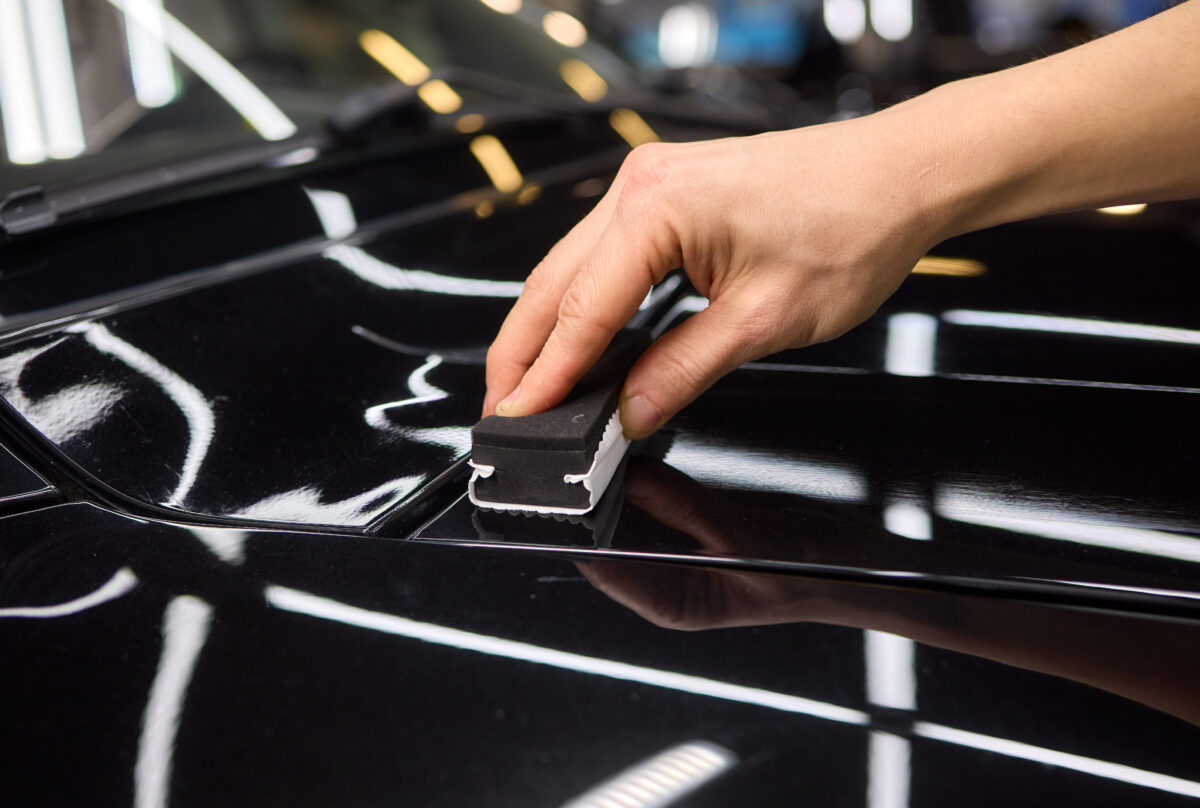
The global paint protection film market’s explosive growth—doubling over five years to exceed $1 billion with expected annual growth exceeding 10%—has been partially driven by expanding EV adoption.
Market research confirms that the surge in EV adoption has been a major driver of growth within the paint protection film industry, contributing billions in new revenue.
The consensus among EV ownership communities worldwide increasingly favors professional PPF installation immediately after purchase—ideally coordinating delivery directly to protection specialists rather than accumulating initial damage during the drive home.
Sensor Integration Demands Specialized Expertise
Modern electric vehicles incorporate extensive sensor arrays supporting advanced driver assistance systems (ADAS). These cameras, radar units, and ultrasonic sensors require unobstructed operation for features like autopilot, adaptive cruise control, and automated parking. Paint protection installation must accommodate these sensors without interference.
Premium paint protection films are optically clear and do not interfere with sensor functionality when properly installed. However, the proliferation of sensors across EVs has increased demand for professional installation over DIY approaches. Incorrect application can block sensors or cause distorted readings, triggering warning lights or disabling safety features. Recalibration costs following improper installation can exceed €1,000 / $1,100 / £900.
Window tinting services present similar considerations. Modern nano-ceramic films provide excellent heat rejection and UV protection without metallic content that could interfere with electronic systems—critical for heavily-sensored electric vehicles with cameras integrated into windshields and rear windows.
Aerodynamic Efficiency and Specialized Components
Electric vehicle range depends heavily on aerodynamic efficiency, with manufacturers pursuing unprecedented drag coefficient reductions. Smooth underbody panels, active grille shutters, and specialized aerodynamic components all contribute to extending battery range. These elements often use lightweight composite materials more vulnerable to damage than traditional metal panels.
Some manufacturers specify that certain aerodynamic panel damage requires complete replacement rather than repair, with costs ranging from $2,000-$5,000 USD / €1,850-€4,600 / £1,700-£4,300. Paint protection film applied to vulnerable aerodynamic components serves dual purposes—preserving aesthetic appearance while maintaining precisely engineered surface smoothness critical for optimal efficiency.
Highway Exposure and Long-Range Driving
The expanding global charging infrastructure and improving battery range enable extended commutes previously considered impractical for EVs. This increased highway exposure dramatically elevates rock chip and debris impact risks.
Highway driving at 100-120 km/h (65-75 mph) subjects vehicles to constant bombardment from stones, gravel, and road debris. For EV owners accumulating 30,000-50,000 km (20,000-30,000 miles) annually—increasingly common as range anxiety diminishes—unprotected paint deteriorates rapidly.
Statistics show EVs are kept in service longer than traditional vehicles, with owners averaging 43% lower annual maintenance costs. This extended ownership period means preserving appearance becomes increasingly valuable. Paint protection film absorbs high-velocity impacts, protecting factory paint beneath. The self-healing properties of premium PPF mean minor scratches from daily highway debris literally disappear when exposed to heat—particularly valuable for EVs where thin, soft paint would otherwise chip extensively.
Battery Range Optimization Through Window Tinting
One surprising benefit involves battery range extension. Air conditioning represents one of the largest auxiliary power draws on electric vehicles, with climate control potentially reducing range by 15-25% in hot weather. High-quality ceramic window tinting significantly reduces this impact.
According to automotive film manufacturers, premium nano-ceramic films block up to 60% of solar heat gain while maintaining 99% UV rejection. By reducing cabin temperature, these films decrease air conditioning load required to maintain comfortable conditions. The automotive tinting film market’s growth from $4.2 billion to an expected $7.0 billion by 2035 reflects increasing recognition of this energy-saving benefit.
Industry calculations show compelling efficiency gains: vehicles using 20% of battery capacity for climate control in summer months can reduce that draw to 12-15% with proper window tinting, effectively extending usable range by 5-8%. Over tens of thousands of kilometers annually, this efficiency gain translates to fewer charging stops and reduced electricity costs—significant factors for EV owners globally focused on maximizing range and minimizing operating expenses.
Cost-Benefit Analysis Across Global Markets
Electric vehicle purchase prices remain elevated compared to equivalent internal combustion vehicles, with average new EV prices exceeding $45,000 USD / €42,000 / £36,000 globally. This substantial investment motivates owners to protect assets more aggressively than traditional car buyers.
Consider a typical ownership scenario: A $55,000 USD / €51,000 / £47,000 Tesla Model Y or equivalent vehicle driven 40,000 km (25,000 miles) annually over eight years. Without protection, soft paint will accumulate significant damage. Repainting high-impact areas costs $3,000-$5,000 USD / €2,800-€4,600 / £2,600-£4,300. Interior UV damage requiring repairs adds another $2,000-$4,000 USD / €1,850-€3,700 / £1,700-£3,400.
Compare this to a comprehensive protection package:
- Full front PPF coverage: $3,500 USD / €3,250 / £3,000
- Ceramic coating for remaining surfaces: $1,200 USD / €1,100 / £1,050
- Premium window tinting: $800 USD / €740 / £690
- Total investment: $5,500 USD / €5,100 / £4,740
The protection package costs less than subsequent repairs while maintaining appearance throughout ownership. Additionally, industry data shows protected vehicles command 10-15% higher resale values, potentially adding $5,500-$8,250 USD / €5,100-€7,650 / £4,700-£7,100 to the vehicle’s resale value.
Professional Installation and EV-Specific Knowledge
The complexity of modern electric vehicles demands installers with specific EV expertise. Tesla, BYD, NIO, and other manufacturers have unique body panel configurations, fastening systems, and sensor placements requiring specialized knowledge. Attempting DIY installation or using inexperienced installers risks expensive mistakes.
Professional shops experienced with EV applications understand sensor locations and required clearances, optimal coverage patterns for aerodynamic components, paint characteristics of water-based formulations, and proper surface preparation for thin paint. The investment in professional installation pays back through flawless results and confidence that advanced vehicle systems remain unaffected.
Industry Growth and Future Outlook
The vehicle protection service market is projected to grow from $146.31 billion in 2025 to $292.46 billion by 2032, at a compound annual growth rate of 10.4%. Electric vehicles and their unique protection requirements drive significant portions of this growth across all major automotive markets.
EV owners demonstrate a higher willingness to invest in premium protection products compared to traditional vehicle owners, recognizing long-term value preservation. Comprehensive protection combining PPF, ceramic coatings, and window tinting has become standard rather than exceptional for new EV deliveries in premium markets.
Conclusion
The convergence of environmental regulations, advanced sensor systems, aerodynamic optimization, extended ownership periods, and premium pricing has made paint protection and window tinting particularly valuable for electric vehicle owners worldwide. What might seem like a cosmetic luxury for traditional vehicles becomes a practical necessity for EVs.
The soft, environmentally-friendly paints mandated by global regulations require protection from day one. The sensors enabling advanced driver assistance need surrounding surface protection without interference. The aerodynamic panels optimized for maximum range need preservation to maintain efficiency. The long distances EV owners drive expose vehicles to extensive road debris and UV radiation.
These practical realities explain why EV owners globally adopt paint protection services at rates far exceeding traditional vehicle owners. As electric vehicles continue displacing internal combustion engines, paint protection and window tinting services transition from aftermarket accessories to essential components of the EV ownership experience. Smart EV buyers now factor protection costs into purchase budgets, recognizing that several thousand dollars invested immediately saves substantially more over ownership while ensuring their electric vehicle maintains the pristine appearance that attracted them initially.
This content was produced independently from the Worldcrunch editorial team.