
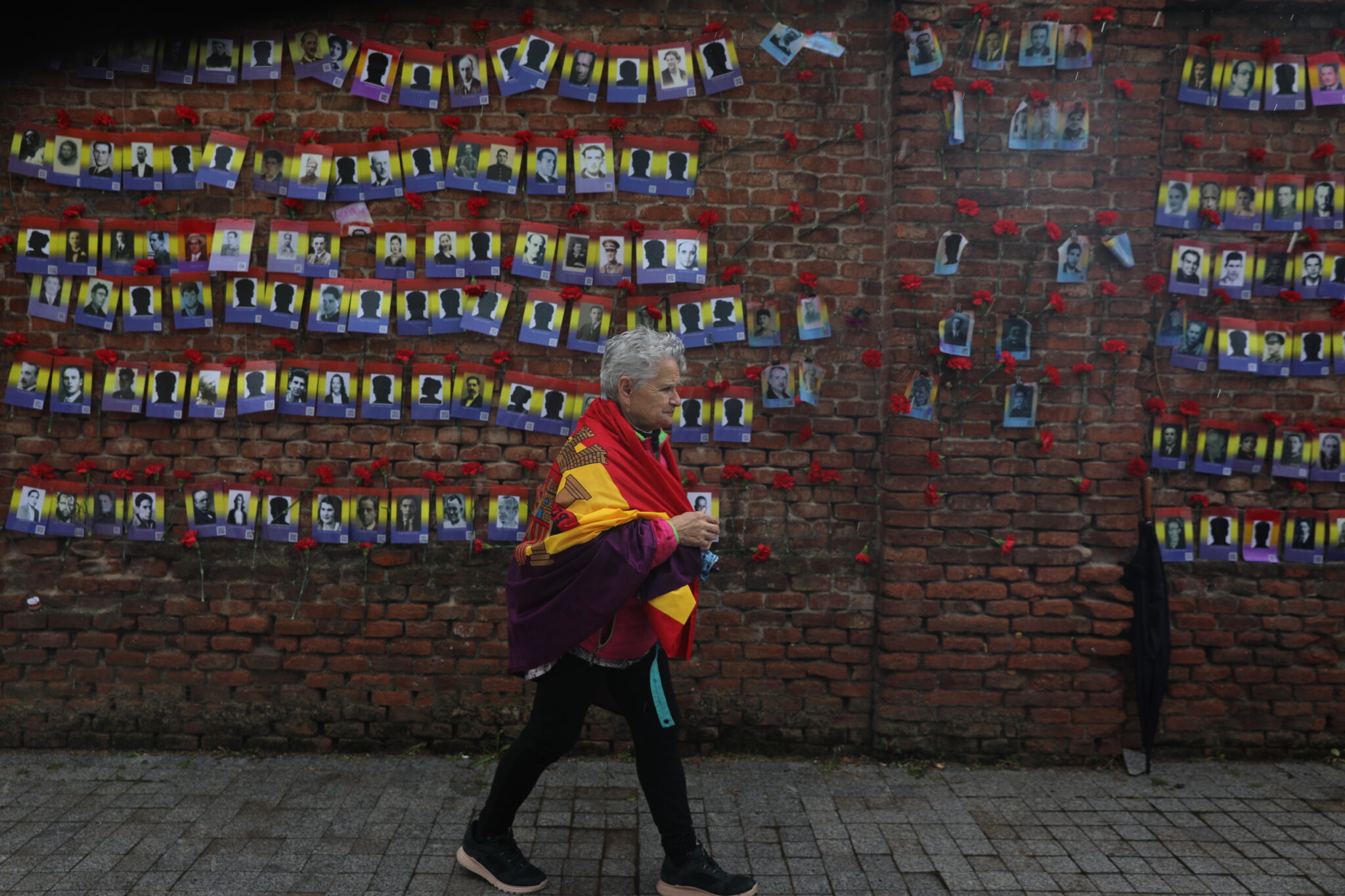
MADRID — It was not a grand event — at least, not what is usually referred to as a grand event — on the day Antonio felt that someone was listening to his story. That he could tell them that his father and mother were killed when he was a three-year-old child, he did not remember their faces, but that he wanted, with all his heart, to know where their remains were.
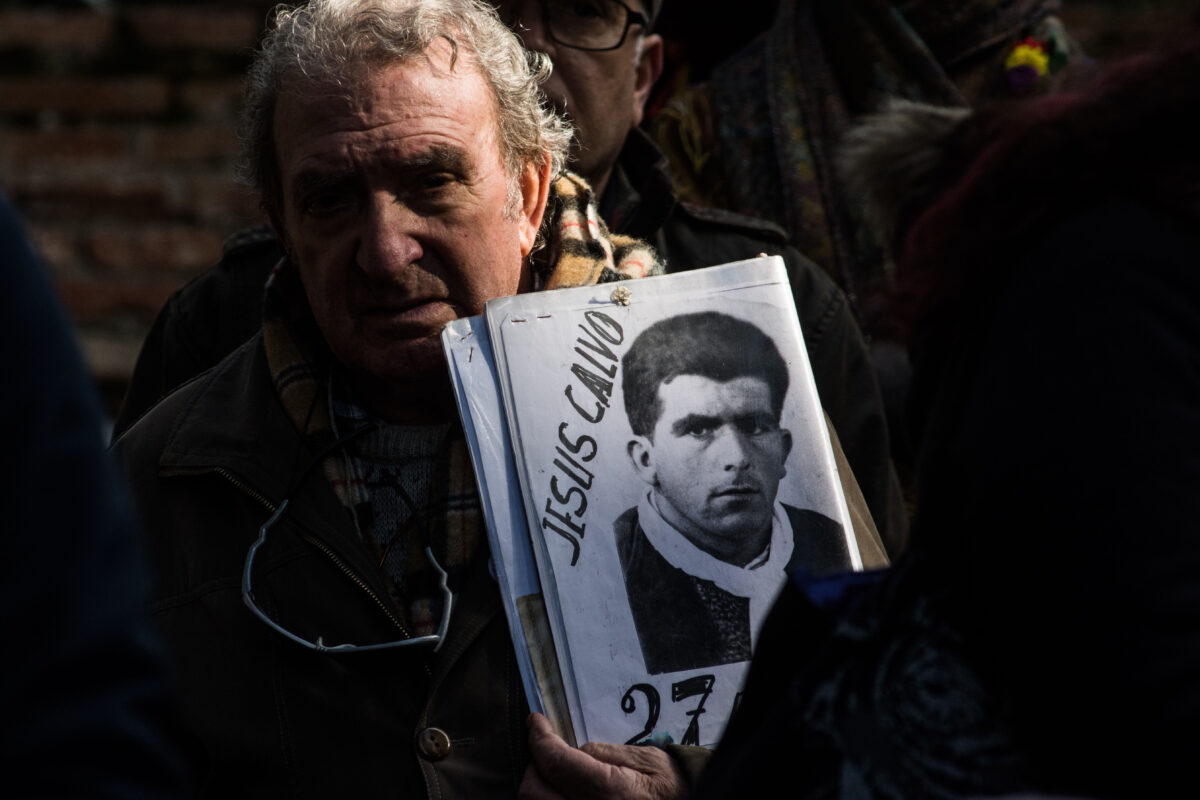
That is why, on that morning without news reporters, without spotlights, without politicians, and like almost every last Saturday of the month, Antonio, with an old photo pinned to his chest as the only physical evidence of the disappearance of those who had brought him into this world, asked, along with other victims of Francoism in Seville’s Plaza de la Gavidia, for someone to help him find their bones.
Nor was it what you would call a grand event when Paqui and her friend Isabel — with the same determination and joy as Thelma and Louise speeding along even while knowing they’re about to crash — set off in their car to a court in Aracena to file a complaint about the discovery of a mass grave. In less than three minutes, they were dismissed. But they did what they believed they had to do.
Likewise we don’t consider it an “event” when we recount Manuel’s determination to honor his great-grandparents Luisa and Antonio, and the unbreakable love they professed for each other — which a priest tried to destroy when they were already elderly and in the last years of their lives.
Village victims
And they were certainly not grand events when on random days of the week, in small villages, without reserved seats, in the cold or the heat, in any classroom, in the most unexpected square, José María or José Luis or Pura or Ángel or Emilio or Susana, gave speeches. Perhaps there weren’t many people there.
Because at these events, almost everyone knows each other from having been before, far removed from sanctioned anniversaries and formal commemorations, which, nevertheless, aren’t a bad thing. Quite the contrary.
For many years, the victims of Francoism have asked to be recognized in public by the state, in these homemade, voluntary, altruistic forms, to which Lucía often contributed — and continues to contribute — her music and her voice. During those same many years, the state has looked away.
Progress made?
It is true that laws have been passed. Some people believe that progress has been made. But it is no less true that Paqui Maqueda was alone when Queipo de Llano’s remains were removed from the Basilica of La Macarena. José was alone in front of his father’s grave — in a small village in Portugal where the whole family had had to go into exile — when he told him that finally, after so much fear and silence, he had acquired Spanish nationality.
Fascist acts continue to be celebrated with impunity.
The victims of Francoism have been alone for too long, as have those of the Spanish Transition, all of whom continue to watch in bewilderment as fascist acts continue to be celebrated with impunity, as crimes against humanity continue to go unpunished in this country, and as polls show increasing support for the far right among young people.
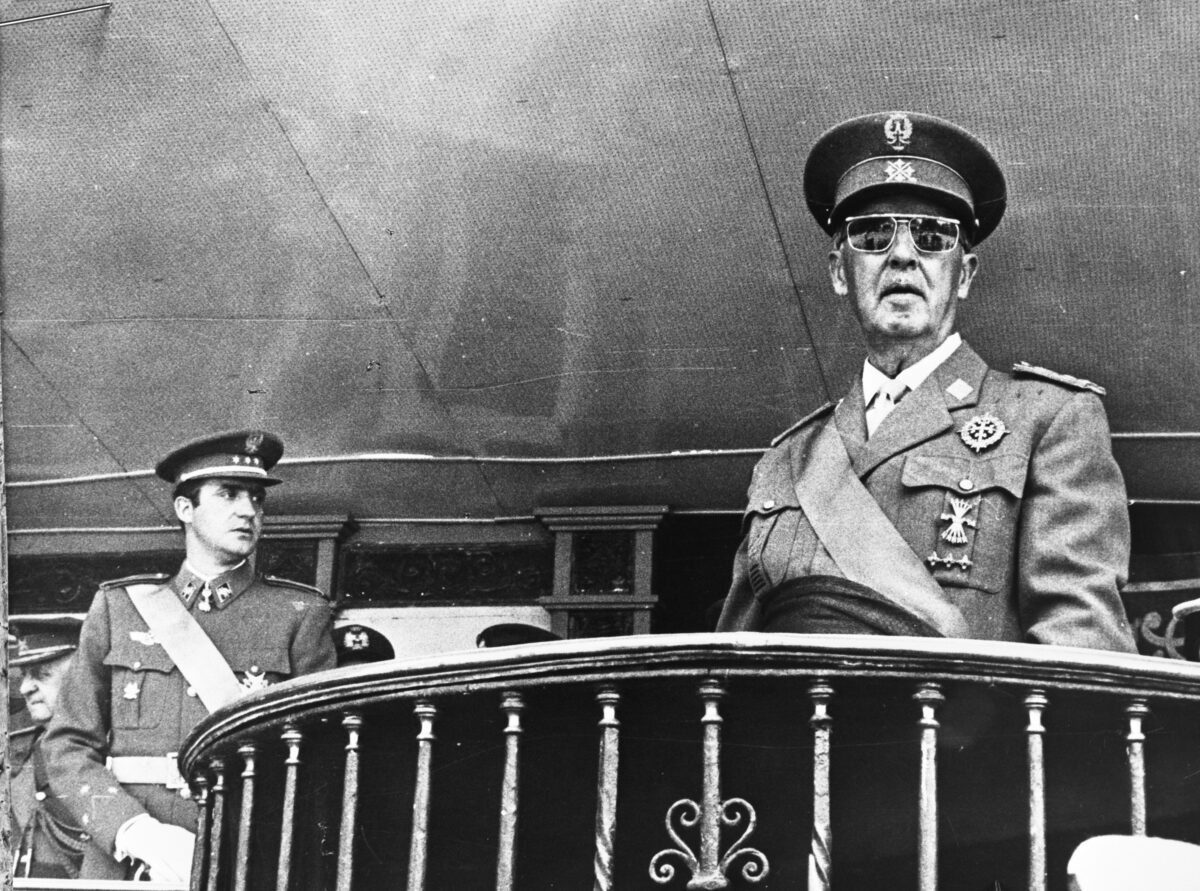
Perhaps this year, which marks the 50th anniversary of Franco’s death, that round number that always seems to invite celebration, will be what everyone considers as the grand event.
But it has been all those small events put together, without an official date, that have allowed Spain’s memory to be held together in recent times, the memory of children like Antonio, the first person mentioned in this article, who was unable to find his parents and who is no longer alive to continue searching for them. In these moments of celebration, it is important not to forget them all.