
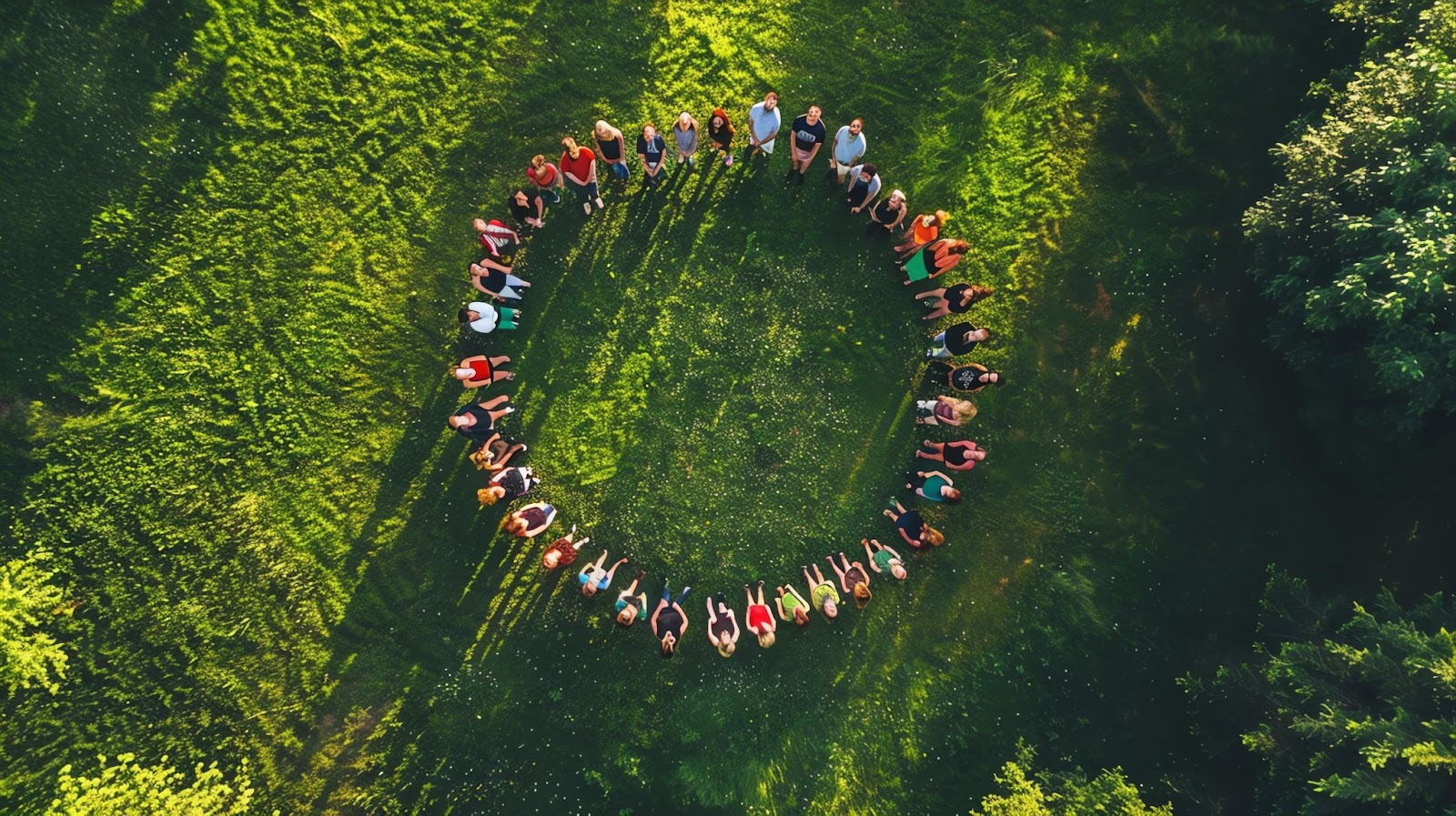
It has long been the case that access to certain technologies has been restricted to a limited group of users, usually for work reasons. This also happened with satellites, which were first restricted to military use and later to certain groups, such as scientists, government agencies, and large companies able to afford the high initial cost of their imagery.
Luckily, those days are behind us. Technological advances, combined with easier access to the Internet and a growing number of digital platforms, have made it possible for any user to get environmental information anytime, anywhere. To get started, all it takes is a live satellite map of Earth or historical images to assess topics such as deforestation or air quality.
A New Era of Environmental Transparency
The environment and the conditions of our planet have been a frequent point of controversy in recent years. Part of this controversy stems from the biased, selective use of data to favour or oppose political measures, leaving the target audience without the context to assess claims independently.
With the rise of satellites, the way environmental information is evaluated is radically different. Thanks to the most recent satellite images, anyone with basic data interpretation skills can see changes in forests, coastlines, and cities around the world without leaving the comfort of their home.
This factual information is creating unprecedented transparency, allowing people to stay informed about what is happening on the planet that affects their lives and to form their own opinions based on what they see, not what others tell them.
What Can People Monitor Today?
The enormous amount of data and sources available allows us to observe any place or feature that is relevant. Some of the most common uses of a satellite view of the Earth are as follows:
- Floods, droughts and water availability. Comparing historical data and recent satellite images helps determine water availability in a given region by assessing how river and lake levels vary over time. In addition, climate assessment helps us anticipate periods of low or heavy rainfall so appropriate measures can be taken.
- Deforestation and changes in land use. The degradation of forests and jungles is a major concern. For this reason, companies and individuals use satellite imagery to monitor vast tracts of land for signs of damage and report findings to the authorities. Satellite data also supports the evaluation of reforestation projects.
- Air pollution. Certain satellite sensors can measure greenhouse gases to determine air quality, its effects on human health, and its relationship to certain climatic phenomena.
Why Real-Time Access Matters?
The use of a real time satellite view responds to the need to have as much information as possible without any delay. In the past, data collected on a particular feature could be days, weeks, or even months old, meaning it could not be used in the analysis needed at that moment because it was no longer relevant.
One of the advantages of satellites is that they provide data almost instantly, letting decision-makers promptly spot and address issues. This rapid awareness enables swift solutions and improved planning, ensuring problems are identified and addressed effectively.
One of the best examples of the need for real-time data is agriculture. Pests, diseases, adverse weather conditions, or even small deviations in crop health can ruin an entire season’s work, now more likely due to climate change and alterations in natural patterns. Without real-time data, discovering the problem when it has just begun and can still be contained or solved is practically impossible, except by a stroke of luck, given the difficulty of detecting it across fields covering dozens of hectares. Thanks to real-time information, the farmer can immediately explore the field to investigate the problem and take corrective action as soon as possible.
A New Relationship Between The Planet And Its Citizens, Thanks To Technology
It is said that protecting the planet is everyone’s responsibility, and this is true. Sometimes it is possible to do so actively (for example, by recycling), but fostering a sense of collective responsibility also can make a difference. With the help of technology, especially satellite technology, people can get more involved in environmental matters and the changes happening to our planet. When things take a turn for the worse, they have enough information to push their leaders to make better decisions to protect and preserve our planet.
Digital monitoring tools based on satellite data are invaluable in this process due to their educational impact. By revealing what was previously hidden or unknown, environmental awareness becomes tangible civic engagement rather than academic theory, often disregarded in everyday life. Through the blend of scientific insights, community involvement, and open data, a fresh relationship is emerging between our planet and its people—one where understanding fosters better stewardship.
As global access to this technology continues to grow, public awareness and participation in decisions about nature will play an increasingly important role in creating a sustainable future for all of us.
______________
Author :
Kateryna Sergieieva has a Ph.D. in information technologies and 15 years of experience in remote sensing. She is a scientist responsible for developing technologies for satellite monitoring and surface feature change detection. Kateryna is an author of over 60 scientific publications.