
AMSTERDAM — World-renowned as a vacation paradise, the Maldives archipelago intends to remain so. Made up of nearly 1,200 coral islands stretching over 800 kilometers in the heart of the Indian Ocean, it is nevertheless one of five countries that are at risk of literally being wiped off the map by the year 2100, due to rising sea levels.
The political representatives of this small republic of some 500,000 inhabitants (half of whom live in Malé, the capital city) tirelessly show up to climate conferences calling for greater efforts to limit temperature rises and for financial support for their adaptation efforts.
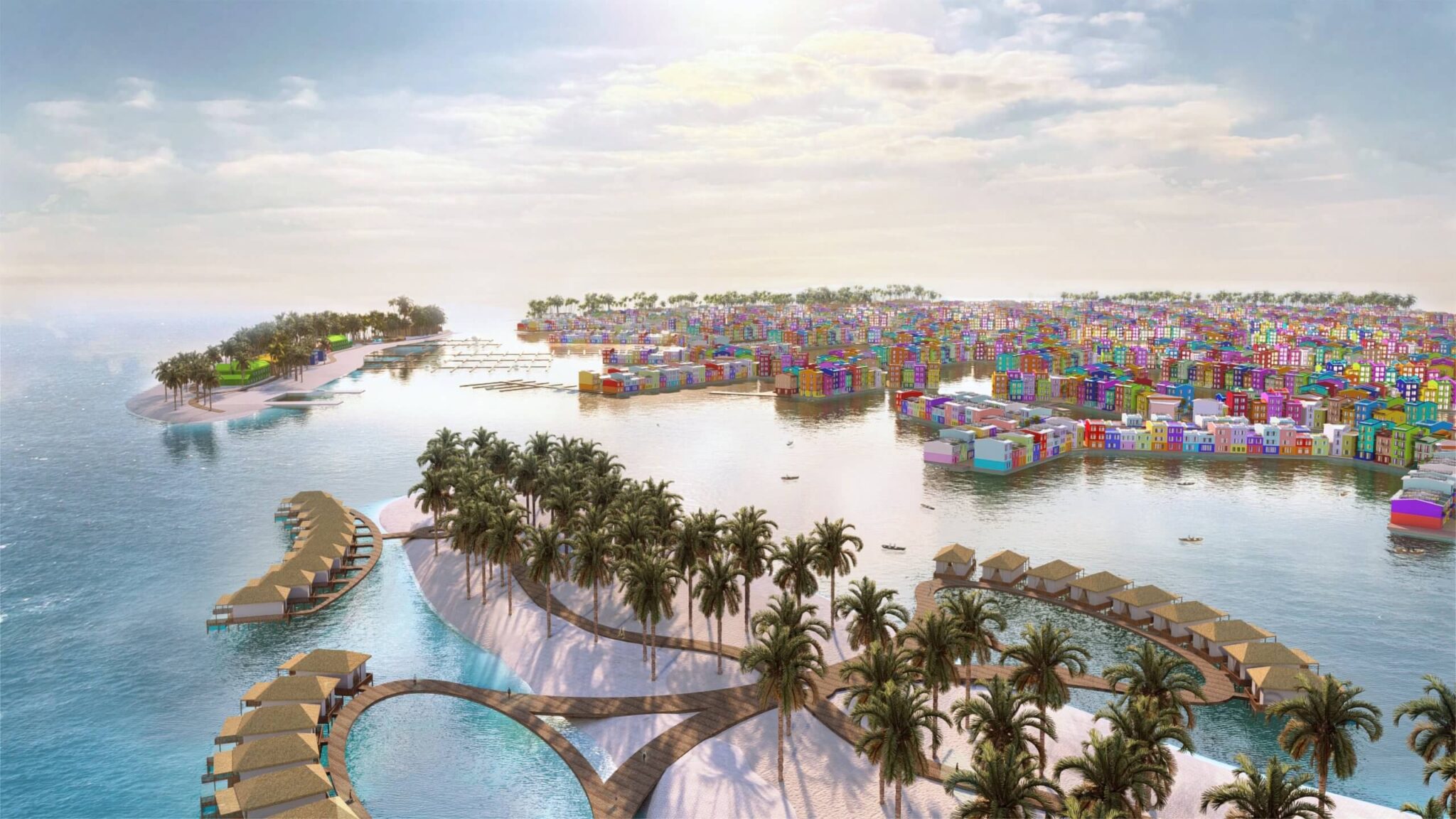
The most important project, with a confidential budget, is to create the world’s first floating city, located about 15 minutes by boat from the city center. Featuring 7,000 colorful houses, as well as schools, hospitals, shops, and parks, it should provide 20,000 to 30,000 people with a new place to live within this lagoon, protected from the waves.
Construction began in 2022 and has been entrusted to Dutch developer Dutch Docklands. It is expected to be completed in 2027, ahead of the project in Busan, South Korea. Led by American start-up Oceanix and supported by the UN, the latter was due to welcome its first residents at the end of 2025, but the project has been delayed.

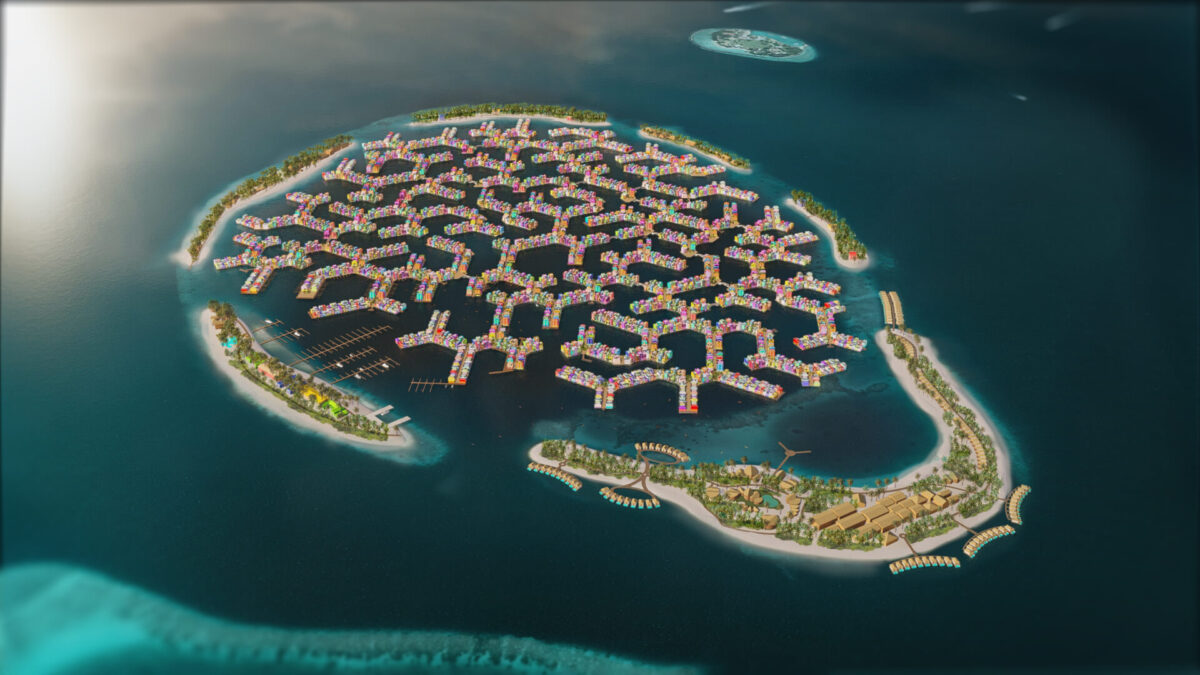
“Imitating the shape of the Meandrina coral brain, the floating city will consist of several interconnected platforms anchored to the seabed. The first section, manufactured in Sri Lanka, has already been shipped to the site,” explains Koen Olthuis, founder of Waterstudio, which designed the project. “The local population is very supportive. Mostly fishermen, the inhabitants do not have the same apprehension about living on the water as we do. They see the floating city as a simple extension of the capital, where houses will be more affordable.”
This form of housing, has long been in use in the Netherlands, where it continues to develop. Located partly below sea level, the Dutch, who built the Asluitdjik, Europe’s longest dyke (32 kilometers), north of Amsterdam in the 1920s to protect part of the country from the waves, is ahead of the game in this area.
More affordable homes
“Climate change calls for more hybrid cities, partly floating and partly on land, as land will become scarcer; they have the advantage of being scalable. The biggest challenge is logistical and therefore budgetary,” continues Koen Olthuis. After starting with villas, he is now building more and more large complexes, including the new floating theater in Lyon and even, soon, a forest on the water in the Middle East. His Dutch architectural firm above all wants to make this way of life accessible to as many people as possible and aims to build 10,000 low-cost floating homes in two years, similar to those built in Bihar, India.
To stay one step ahead in the fight against the sea’s encroachment, the Maldives is also building artificial islands, which are more controversial: between their supposed environmental impact, even though 73,000 coral colonies were relocated during construction, and the fact that they are mainly reserved for tourists, they are less legitimate.
These projects are also being carried out by Dutch companies, such as dredging specialist Van Oord, which since 2015 has reinforced 11 kilometers of coastline and created 200 hectares around the Addu Atoll, home to the country’s second largest city. “This new land promotes economic growth, helping to finance new protections against the sea in the Maldives,” argues the company, which is seeing demand for this type of project increase around the world.